
As second-home owners leave, Berkshire towns struggle to house workers year-round
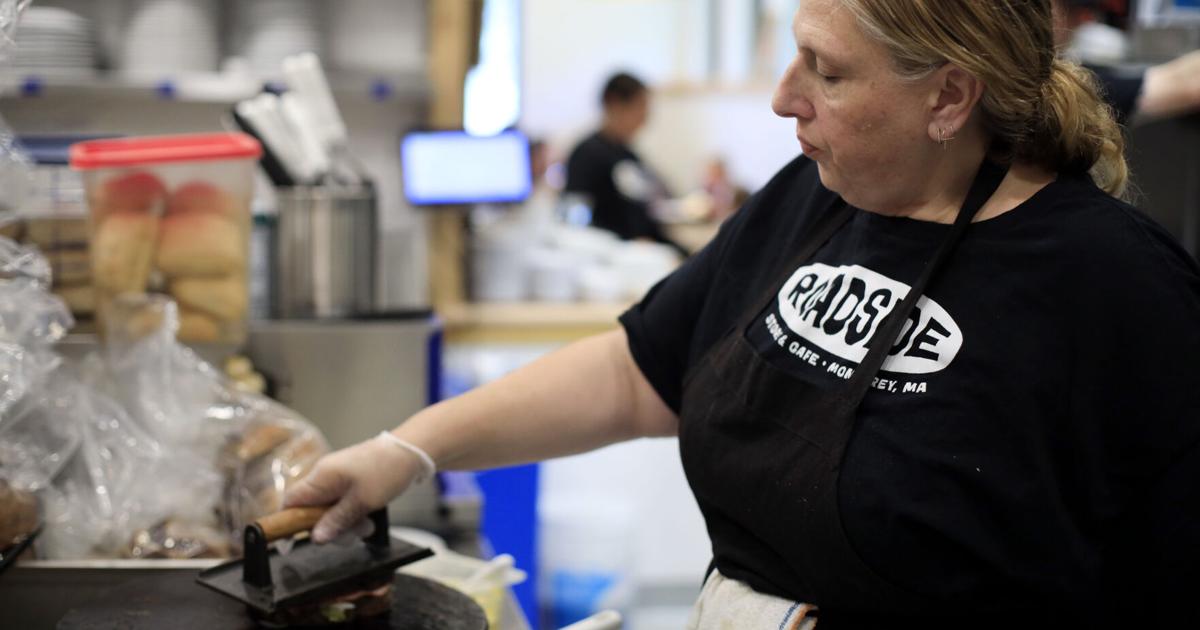
MONTEREY — Locals know that summer is officially over in Monterey when you can easily find a legal parking spot outside of the Roadside Store & Café.
The breakfast-and-lunch restaurant is a stalwart of the rural town with just over 1,000 residents. But the spot on Route 23 is especially busy in the summer.
"Cars are parked all the way up here," said Francie Leventhal, chef and manager of the café, pointing to an offshoot of the state route that abuts the restaurant’s lot. "And then they're parked on 23, and the police get mad at us constantly, and we can't stop the customers from parking there."
The seasonal drop in customers this time of year isn't simply the normal ebb and flow of the restaurant business, locals say; it's because the second-home owners have left for the winter. The empty parking lot is visual reminder every fall that more than 55 percent of homes in Monterey are seasonally vacant, according to the Census Bureau.
The effects of having half the town leave after Labor Day spreads beyond business too.
“One of the biggest challenges, if not the biggest, is there's no housing for people that are, you know, cooks and waiters,” Leventhal said. "[That is] always kind of the eternal problem … There's less and less places to live.”
For towns like Monterey and other seasonal communities in the Berkshires, the ebb and flow of part-time residents creates a persistent challenge: finding housing for the workers who keep restaurants, shops, emergency services and tourist attractions running year-round.
With more than half of the housing stock in some towns owned by second-home owners, local officials and business owners say essential workers often struggle to live nearby, highlighting a tension between the economic benefits of seasonal residents and the need for affordable, year-round housing.
In an effort to combat the state's housing crisis, lawmakers have introduced the idea of designating towns and cities in the commonwealth as seasonal communities, which would then give municipalities tools to provide housing for year-round residents.
Francie Leventhal, the chef and manager of the Roadside Store & Cafe in Monterey, presses a sandwich on the griddle. She has served as the restaurant's primary chef for all but three-months since moving to Gould Farm.
As defined by the state, seasonal communities in Berkshire County are municipalities with a seasonal vacancy rate of at least 40 percent.
Eight towns have crossed the threshold to be considered seasonal communities, although the towns still have to approve the designation through a vote.
Those towns are Alford, Becket, Hancock, Monterey, Mount Washington, Otis, Stockbridge and Tyringham. While Alford did not cross the 40 percent threshold in 2023's data, it did so in previous years.
If these towns vote to accept the designation — by a simple majority vote — each will then have access to specialized policies and grants designed to address the specific housing challenges brought with a seasonal influx of visitors and second-homeowners.
In Southern Berkshire County, many towns have a long history of second-home ownership that dates back to America’s Gilded Age.
Stockbridge is "the home of the first cottage," said Patrick White, chairman for the town's affordable housing trust. "It was the Emily Vanderbilt house at Elm Court."
"People have been coming up here for nearly 150 years as seasonal residents, and bringing with them wealth and jobs and a lot of other good things to come with that," he said.
Seasonal communities are prominent throughout the county, with nearly half having seasonal vacancy rates of at least 20 percent.
"You do get a little bit of why people kind of love having a second house in Monterey or in the Berkshires in general," said Roger MacDonald, town administrator of Monterey. "Let me tell you, the Berkshires are beautiful."
The impact of seasonal populations isn’t just economic — it also affects daily operations for local businesses.
Ryan Eley's Becket Country Store, located on Main Street just next to the town park, has two modes: summer and off-season.
"We stay open until about 10 [p.m.] on weekends in the summertime," Eley said. "That definitely doesn't make sense for us in the wintertime. We close at 7."
It's just one of the many quirks Eley, who opened the store two years ago, has to be mindful of while running a store in a town where 44 percent of residents aren't full-time. He has to be careful ordering products, making sure not to over buy perishable items. And, of course, he is worried about staff.
Eley said he got lucky with the workers he has now but worries about future hiring.
The Roadside Store & Cafe serves a traditional breakfast and lunch. Over the summer, the influx of seasonal residents provide a large portion of the café's revenue. During the off-season, it struggles to find employees due to the lack of affordable housing in the town.
Housing for the workers who keep towns running, like those at Eley's store, is a major concern for seasonal communities.
For the Southern Berkshire Ambulance crew, of the 30 full and part-time employees on staff, 25 of them "can be an hour or more to their job as an EMT or paramedic," according to White, who is also the chief financial officer at the Southern Berkshire Ambulance.
"A lot of them have told me, 'I'd rather live locally; I can't find housing I can afford,'" he said.
According to Indeed, an EMT makes roughly $21 an hour, which is about $3,600 a month.
The average rental in Great Barrington — where Southern Berkshire Ambulance is based — is $2,500, according to Zillow. This would mean an EMT attempting to live in the town would be spending nearly 70 percent of their income on rent.
For a seasonal town, the worst-case scenario is anything "that blocks first responders from getting in," said Peter Most, chairman of Great Barrington's Zoning Board of Appeals.
"There's only so much capacity and capacity is hard to create," White said.
For many essential workers, "they come in here to work and then they go home," MacDonald said.
The Roadside Store & Cafe sees an intense influx of patrons during the summer months when the seasonal community takes the town by storm. Francie Leventhal, the chef and manager, said the cafe mostly relies on summer workers who come when they have their summer break from school.
The initial draft of regulations for seasonal communities came out earlier this year, giving insight into what tools towns will have to help sustain their communities.
For White, he saw two important regulations.
"First, it allows us to increase — and we get to set it — up to 250 percent of the area median income for people who would qualify for subsidies," he said.
This allows the town to expand who is eligible for housing programs, opening them up to some who wouldn't qualify for them in the first place, as most programs have limits placed at 30, 80 and 120 percent.
The second thing it allows towns to do, White said, is give housing preference for municipal, essential, town and district workers.
Those two regulations just scratch the surface of the possibilities afforded to seasonal communities.
"The designation would give towns like Great Barrington a new set of tools to protect year-round housing," Most said.
Most is advocating for Great Barrington (which has a seasonal vacancy rate of 12 percent) to be added to the seasonal communities list because of regulations like giving housing preference to essential workers.
It's this forward-thinking approach that might make the biggest impact in the Berkshires.
"I would just make the point that doing nothing is doing something," White said. "We can do nothing and basically have a Cape Cod style crisis."
A barista makes intricate latte art at the Roadside Café in Monterey.
For Leventhal and the Roadside Store & Café, the seasonal community provides a dilemma.
"In terms of running a business, we rely on the seasonal [community], absolutely," Leventhal said. "We make the majority of our money between July and August."
The Roadside Store & Café sees a noticeable uptick in patrons depending on the season. The establishment has outdoor seating to help accommodate the increase. The relative quiet of the café marks the end of the seasonal residents' time in Monterey.
It's not just Leventhal's café, it's Eley's country shop and the whole of the seasonal towns that have built a delicate relationship with part-time residents.
"The secret sauce in the Berkshires has always been seasonal folks who want to enjoy the place and the jobs they bring for the rest of us," White said. "That's not a bad thing."
Yet the reliance on the part-time homeowners and tourists adds to the strain, as their demand on the housing stock continues to pose issues for towns.
For White, Most and MacDonald, the forthcoming regulations and how towns might be able to use them are vital to keeping the balance of full-time and part-time.
"We just need to make sure that we don't have so much demand on the seasonal side for housing that there isn't enough housing that is affordable for the people who are going to support those seasonal folks," White said. "That's what I'm worried about is the equilibrium."
Read the Original Article
This article was originally published by Berkshire Eagle. Click below to read the full article on their website.
Visit Berkshire Eagle