
Columnist Johanna Neumann: After 250 years, here’s one thing that still makes Americans happy
For Bay Staters, “the pursuit of happiness,” as the Declaration of Independence put it, has often taken place in nature. In 1836, Boston-native Ralph Waldo Emerson described the benefits of time spent outdoors on the human soul in his essay, “Nature.” A few years later, Henry David Thoreau’s “Walden” inspired more Americans to connect with the land.
As the United States celebrates its 250th birthday, recent polls confirm that to lift our spirits, Americans still look to the great outdoors, from the sweeping beaches and dunes of Cape Cod National Seashore to the heights of Mount Greylock, and many other parks, monuments, refuges, forests, seashores and reserves. For a 2022 survey, researchers asked Massachusetts residents to rank the importance of four potential benefits of getting outdoors — increasing happiness, improving physical health, improving emotional outlook and reducing stress. On a scale of 0 to 10, with 10 deemed “extremely important,” each benefit received a mean rating of 8.8 or 8.9, with consistent scores across regions and demographic groups.
Some argue that we’ve squandered too much of our natural wonder in the name of economic progress. They have a point. Centuries of logging have decimated our state’s old growth forests. Drainage ditches designed to help agriculture and control mosquitoes stand out like scars across most of our state’s 47,000 acres of salt marshes, which otherwise could be among the most productive ecosystems on earth. Even more recently, nearly 25,000 acres of open space in Massachusetts was paved over or developed between 2012 and 2017.
It’s easy to assume that the people who felled the giant elms and American chestnuts that defined our forests, dug the offending ditches through wetlands during the Great Depression or earlier, or flattened fields for subdivisions didn’t know better. But Emerson, Thoreau and others were trumpeting warnings about the breakneck pace and emerging consequences of unchecked economic growth well before shovel (and later, heavy machinery) hit ground.
History shows us that you don’t have to be a famous author to protect nature. In 1876, hikers and adventurers formed the Appalachian Mountain Club, the nation’s oldest conservation and recreation group. Then, in 1890, a Boston-based landscape architect proposed a statewide nonprofit to preserve land for all to enjoy “just as a public library holds books and an art museum holds pictures.” The following spring, the Massachusetts Legislature established the Trustees of Reservations. Today, this homegrown group is the oldest regional land trust in the world, caring for nearly 52,000 acres of Massachusetts landscape across more than 120 properties.
As the movement to protect nature spread beyond Massachusetts, national leaders got with the program. Teddy Roosevelt signed into law the Antiquities Act in 1906 (allowing presidents to protect lands or waters under federal jurisdiction); created the U.S. Forest Service; and protected approximately 230 million acres of public land. Over the 120 years since the Antiquities Act was passed, presidents have used it to protect many dozens of ecologically, culturally and/or historically significant areas by declaring them national monuments. State and local leaders, nonprofit groups and private philanthropists — backed by strong public support — have all played an important role in protecting places where Americans can explore and enjoy the great outdoors.
Economic prowess and nature can coexist. We’ve managed to protect and preserve some of the best natural places in our state and our nation, from pristine, peaceful beaches to continent-spanning hiking trails. It’s beyond ironic that now, when resource scarcity is largely a thing of the past, some people in the federal government are actively working to unravel many of the protections that have safeguarded America’s natural beauty.
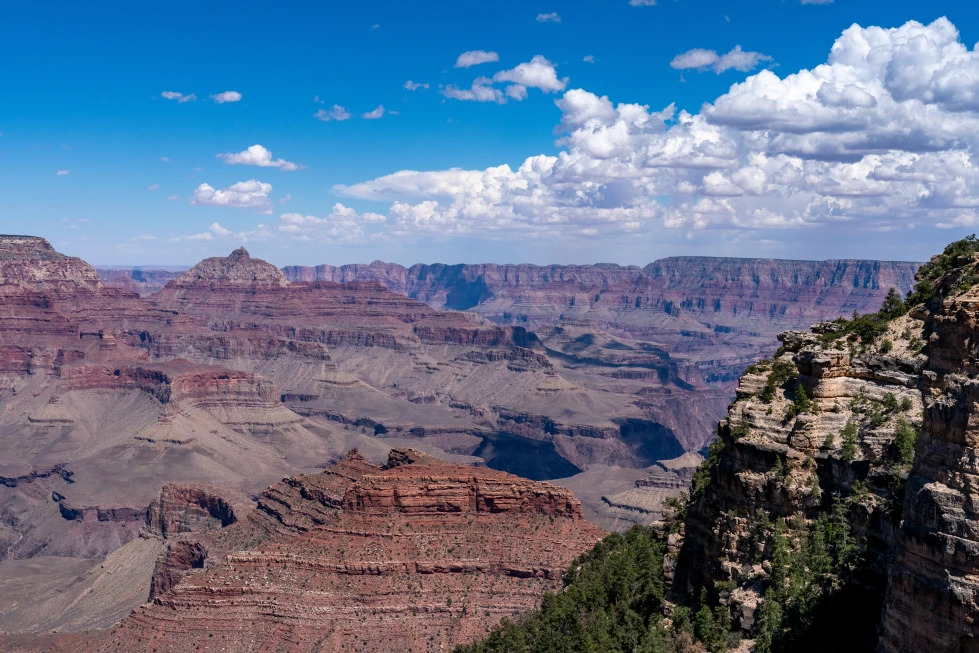
Speaking at the Grand Canyon in 1905, President Teddy Roosevelt warned against actions that, “treat any part of our country as something to be skinned for two or three years for the use of the present generation, whether it is the forest, the water, the scenery.” Instead, Roosevelt urged, “handle it so that your children’s children will get the benefit of it.”
Roosevelt was wise. Today, in a far wealthier nation, with far greater comforts and conveniences than Roosevelt could have imagined, we have to ask: Aren’t the last roadless areas on our public lands worth more than the lumber or minerals we can extract by putting roads through them? Wouldn’t our rivers be worth more if we let them run clean and wild? And wouldn’t our lives be richer if filled with more birdsong and butterflies, even if it meant fewer same-day deliveries of more stuff?
How America answers those questions will shape how we pursue happiness tomorrow as well as 250 years from now.
Johanna Neumann of Amherst has spent the past two decades working to protect our air, water and open spaces, defend consumers in the marketplace and advance a more sustainable economy and democratic society. She can be reached at [email protected].
Read the Original Article
This article was originally published by Daily Hampshire Gazette. Click below to read the full article on their website.
Visit Daily Hampshire Gazette