
Amherst schools failing to narrow equity gaps, report says
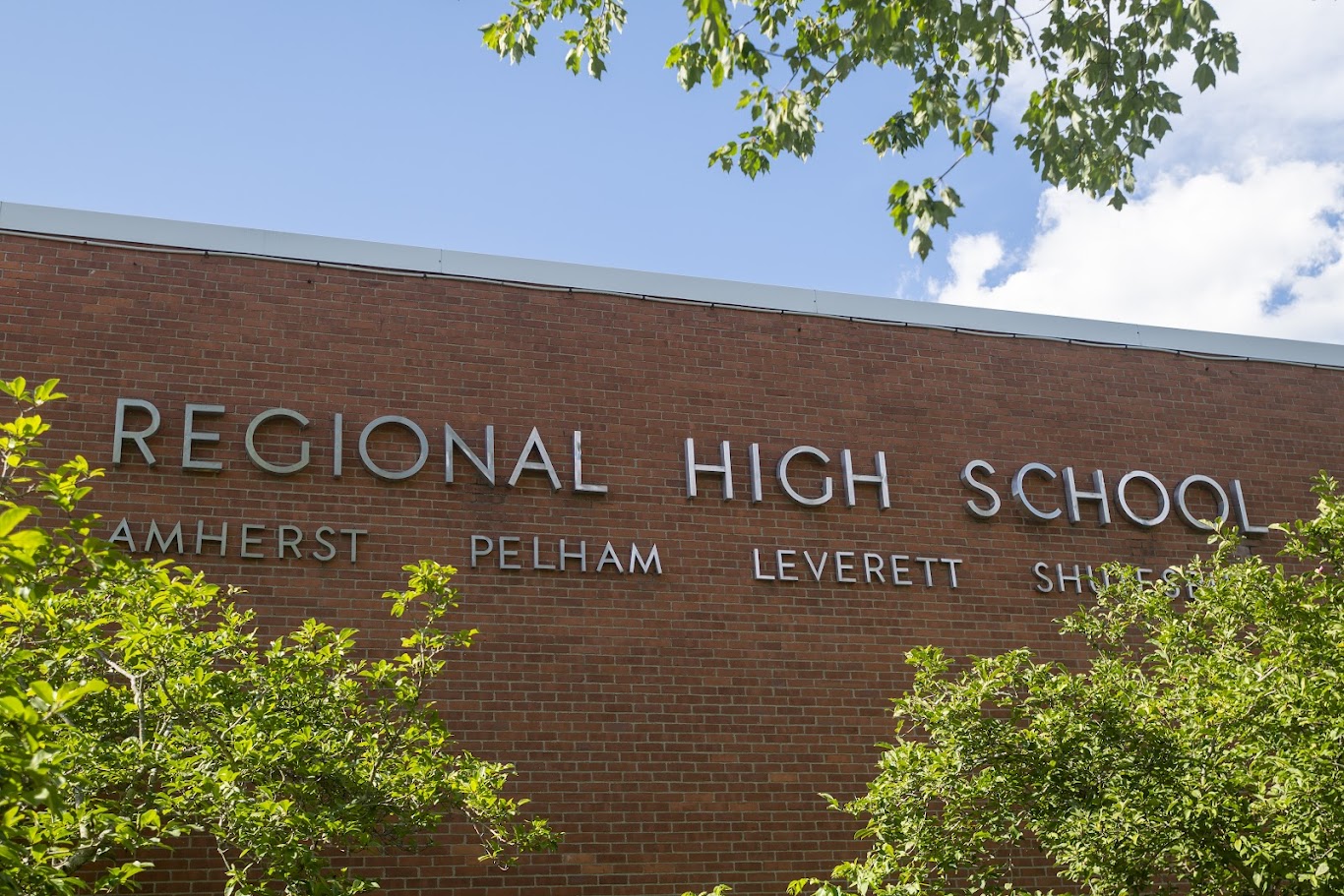
AMHERST — Continued disparities in academic achievements and discipline for students of color and marginalized populations are raising concerns for members the School Equity Advisory Council, which in its end-of-year summary notes a lack of progress on various equity objectives.
In a presentation to the Amherst Regional School Committee last week, Amherst representative Bridge Hynes, who serves on the advisory panel, said there is distress over failing to meet targeted equity benchmarks between 2023 and 2025.
“Over those two years, to not see any progress, it was depressing,” Hynes said. “This is unacceptable. We’re leaving a lot of children behind.”
Hynes said this stands in contrast to what was happening in 2017 to 2019, when equity gaps were shrinking.
The report states, “Overall, academic disparities tied to race, income and disability status remain largely unchanged. Academic improvement has not translated into more equitable outcomes.”
On discipline, students of color and those with disabilities face more punishments than other students.”While total amount of serious disciplinary actions remain low, both SEAC analysis and the superintendent’s State of the District presentation show persistent disparate outcomes in discipline,” the report states.
The report also notes there is no demonstrated increased participation for some students. “Access to advanced coursework remains unequal and as best as we can see, unchanged.”
The 2025-2026 report explains that there were district goals presented to Superintendent E. Xiomara Herman last year. Those goals were to ensure that middle school and high school students had equitable access to advanced placement courses, and to reduce discipline disparities by 25%.
Additionally, the goals called for all staff to participate in anti-racism and culturally affirmative training, and to improve school culture and climate, especially for groups reporting the lowest sense of belonging and safety, in part through implementing a new bullying policy.
“While there has been progress in the district in terms of education gains overall, and positive intent in regard to disparities, many of the equity challenges we identified in the in-depth 2025 SEAC report remain and have not improved,” the summary reads. “In addition, a few key areas have gotten worse and/ or raise concerns regarding sustainability.”
Hynes said while significant gains have occurred for the overall student body, gaps haven’t narrowed and some areas have worsened. “We’re just not seeing the gains, the gaps are real in all our areas,” Hynes said.
English language arts, science and math have more success overall for students, but not for Black students, Latino students, low income and disabled, with equity gaps persisting.
Hynes said there have been community sessions, meeting with the administration and a welcome celebration at Groff Park. But Hynes said families still don’t feel heard, they fell overwhelmed, and they don’t know how to navigate the system. One suggestion is to have an ombudsman, “somebody with that kind of role is missed”
SEAC was originally founded as the School Equity Task Force in spring 2014, following incidents of racial harassment, and there have been other initiaives overr the years including OASIS, or Occupy Amherst Schools in Solidarity, RADAR, or Race and Discipline Action Rights, and the NAACP BAMSS, also known as Becoming a Multicultural School District.
Herman acknowledged the challenges.
“We are not closing the gap, especially for our students of high needs, our students of color, our multilingual students, have flatlined,” Herman said.
She said they will need to have clear, open and honest conversations of what needs to happen. Because many students of color are not taking AP classes, Herman said the district may need to confront the advanced placement system.
Herman said students of color need consistency in how they are being taught, though varying instructional methods can also happen.
Nothing is going to address every gap. “No one curricular resource can do that,” Herman said.
“What we need to do is really commit to the fact that change is going to have to come, there’s going to be some discomfort,” Herman said.
Committee members said many concepts should be explored.
“We need to be a community that’s open to other ideas, because what we’re currently doing is not working,” said Chairman William Sherr, a Pelham representative. Sherr suggested deploying some sort of well-tested curriculum.
Amherst representative Laura Jane Hunter said the schools need to keep class sizes small, the major issue of discipline has to be addressed and the culture has to fundamentally change.
Leverett representative Tim Shores said to address equity gaps for children, equity gaps for adults have to be handled, observing that recent public comments show that racial harassment and other problems are continuing.
There also needs to be staff compliance with policy.
“Money is what delivers great education outcomes and closes equity gaps, and we don’t have it,” Shores said.
Read the Original Article
This article was originally published by Daily Hampshire Gazette. Click below to read the full article on their website.
Visit Daily Hampshire Gazette