
Bridging cultures through global rhythms: Turners Falls Mini-Fest unites diverse traditions at Peskeomskut Park
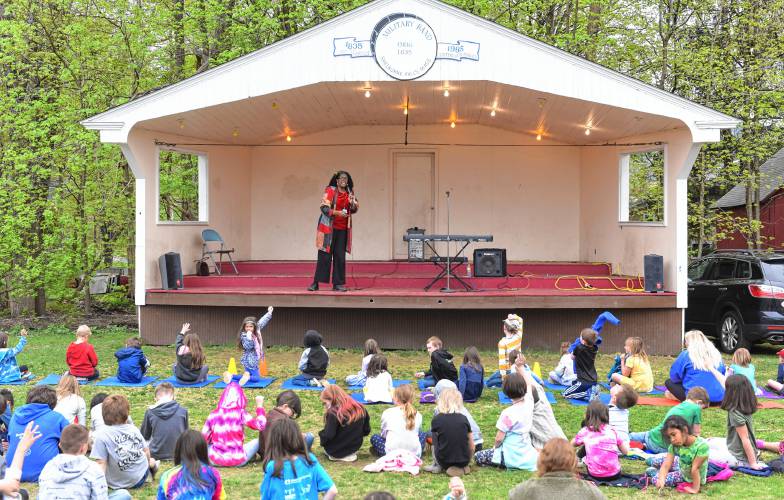
The sounds drifting from the Peskeomskut Park band shell on June 27 won’t belong to just one tradition. Audiences will hear the bright melodies of a Chinese pipa, the driving rhythms of son jarocho and cumbia and the lively improvisation of contemporary klezmer music — all sharing the same stage in a celebration of cultural exchange.
Now entering its fourth year, the Turners Falls Music Mini-Fest has grown into a gathering where different musical traditions meet not in competition, but in conversation. For organizer and performer Jesse Olsen Bay, that spirit is what makes the event special.
“We can look at these very different cultural forms, and obviously, we can see the differences,” Bay said, “Still, we also come together and just in the way of music, and even though we may not understand everything about it, we can still really just appreciate the beauty and joy of it.”
The free festival, held in the center of Turners Falls, was designed to be accessible to everyone. Bay noted that the venue’s visibility and welcoming atmosphere encourage people to stop in, even if they simply happen to be passing by.
This year’s lineup directly reflects that philosophy. First, Guachinangos brings a vibrant blend of son jarocho traditions from Veracruz, Mexico, layered with Colombian folk influences and contemporary arrangements. Next, pipa virtuoso Minqi Wang introduces audiences to one of China’s oldest string instruments through a performance spanning centuries of musical history. Finally, Bay’s own ensemble, Myrtle Street Klezmer, rounds out the afternoon program with a modern interpretation of Jewish diasporic music infused with jazz, funk and improvisation.
For Gabriella Grimaldi, a founding member of Guachinangos, the group’s musical identity developed naturally as musicians from different backgrounds shared their traditions.
“The group started in a very organic way,” she said.
While the music is rooted in son jarocho, its members gradually incorporated various Latin American rhythms, creating a sound that honors tradition while reflecting the experiences of musicians living on the East Coast. Grimaldi hopes audiences understand that the band’s performances represent both a deep respect for historical traditions and a living, evolving musical culture.
“We’ve taken some of the traditions that we love, and we’re playing with what’s at our disposal here,” she explained. “It’s done with a lot of love and respect to the maestros and traditional musicians who are keeping these things alive.”
Audience participation is also central to Guachinangos’ performances. Whether listeners dance or simply tune in attentively, Grimaldi sees that shared connection itself as meaningful.
“It’s amazing when people get up and dance,” she said. “That’s the feedback that you get.”
For Wang, the festival offers an opportunity to introduce listeners to the expressive qualities of the pipa, a plucked Chinese instrument often unfamiliar to American audiences. Her program combines centuries-old traditional works with more contemporary compositions — including one of her own — aiming to make the music approachable even for first-time listeners.
“I hope people will see some new instruments from the Eastern world,” she said. “They can enjoy it without knowing exactly what the instrument and history and everything is.”
Wang believes music communicates emotions in ways that spoken language often cannot. Small variations in phrasing, tempo and expression allow performers to convey feelings that transcend words, creating an immediate, visceral connection with audiences. That overarching idea of connection resonates deeply across the entire festival lineup.
Bay said one of his favorite aspects of the event is the spontaneous collaboration that often emerges between musicians from different traditions. Despite speaking different languages or coming from opposite sides of the globe, artists routinely find common ground through improvisation and shared performance.
“There is a way that music is really a universal language,” he said. “I’m always amazed that I can be in the same place as another musician and we might not speak the same language — we may have grown up half a world apart — but we can sit and just have a blast playing music together.”
The festival also reflects Bay’s broader belief that arts events strengthen communities at a time when isolation and polarization have become increasingly common. By offering performances free of charge in a public space, organizers hope to remove barriers that might prevent residents from participating.
“Anything we can do to come together and celebrate is most important right now in our culture and our society,” Bay said.
For Grimaldi, that communal experience extends beyond entertainment. She sees music as a way for younger generations to remain connected with their cultural roots while inviting others into those traditions with curiosity and respect. And for Wang, introducing audiences to an unfamiliar instrument or melody can open entirely new perspectives.
As the performances unfold in Turners Falls, listeners may arrive expecting three separate concerts. Instead, they’ll encounter something closer to a conversation — one where traditions meet, cultures intersect and music becomes a shared language understood by everyone gathered beneath the summer sky.
Read the Original Article
This article was originally published by Daily Hampshire Gazette. Click below to read the full article on their website.
Visit Daily Hampshire Gazette