
After averting bus route reductions, BRTA works to puzzle out a sustainable schedule
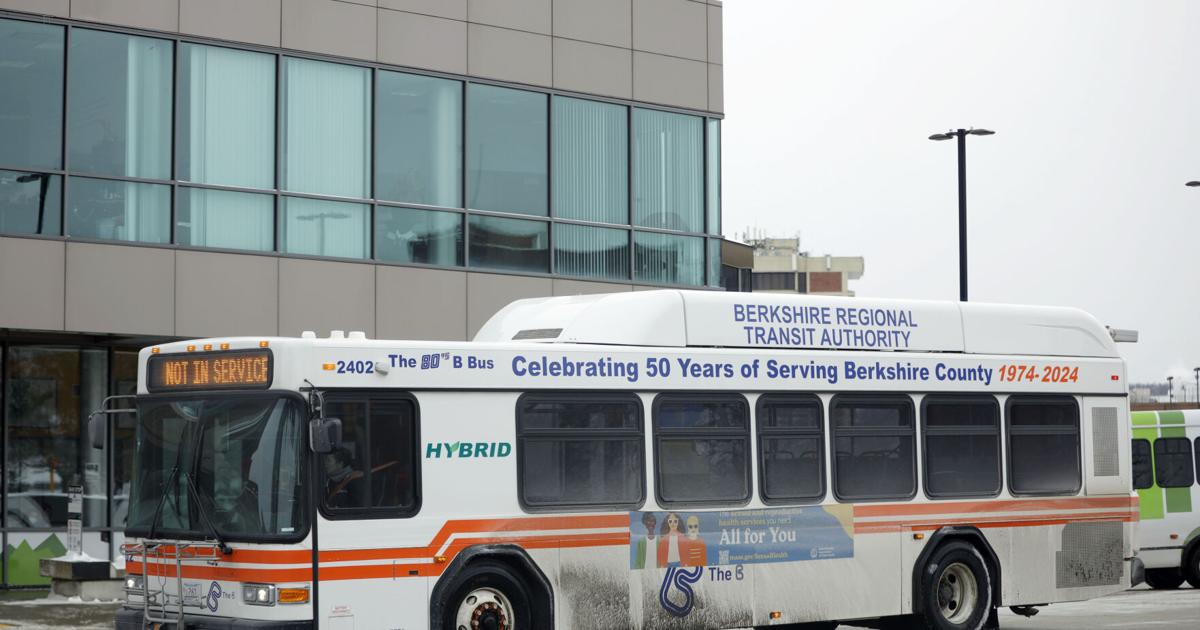
PITTSFIELD — While the Berkshire Regional Transit Authority managed to dodge reductions to its bus schedule last month, there’s still a lot of work to be done.
There’s a two-hour meeting on Friday for BRTA to negotiate run bids with the drivers union, which will be crucial to maintaining a functional bus schedule without chronic cancellations. The advisory board is still torn over the viability of Link413, the grant-funded coach bus program that some members fear is pulling drivers away from essential local routes.
And while a recent three-day recruiting event in Lenox resulted in eight job offers to potential bus drivers, only three of them have stuck around to undergo training — a troubling retention rate for a transit authority struggling with a bus driver shortage.
“It’s a little bit disappointing, but we’re going to keep working at it,” Administrator Kathleen Lambert said.
Since former Administrator Robert Malnati, who stayed on to ensure a smooth leadership transition, officially retired last month, Lambert is now fully in the spotlight as BRTA’s leader. Though she’s fresh off the triumph of averting significant bus route reductions — which would have halved the number of runs carried out on some popular lines — Lambert is now tasked with ensuring a smooth transition to BRTA’s new operating company while keeping the current staff happy.
In her first official report to the BRTA advisory board on Thursday, Lambert said that ridership this fiscal year is still higher overall than last year’s. But she also noted that there had been a recent dip, a sign of how recent cancellations have affected riders.
“Since last August, we've been having significant cancellations,” she said. “You can see how that's playing out in the ridership numbers, which are falling.”
Ridership in March was down 10 percent compared to last year, according to BRTA’s data.
Hopes for a sustainable bus route schedule are pinned on Keolis, the new operating company scheduled to take over from Transdev on July 1. Under Keolis’s guidance, Lambert hopes to work with the drivers union to make it possible for the current bus schedule to be maintained with just 25 full-time drivers and four part-time ones while the hiring search continues.
The current schedule has 36 weekday runs available for drivers. Friday’s meeting between the union, BRTA and both operating companies will seek to restructure the run system so that the existing driver staff can be used more effectively.
Lambert, with the help of Keolis and Transdev, must now rise to the challenge of chiseling out a new schedule while addressing the concerns of employees. At least two board members said they had received anonymous emails, purportedly from an employee, expressing concerns about the work environment at BRTA.
“To me, it was a set of whistleblowers,” said Stephen Bannon, an advisory board member who claimed to have received the emails and described one as bearing a letter with employees' signatures. “I'm in no position to determine if [the emails are] true or false or anywhere in between, but … there should be some kind of review, I believe, by individuals who are not sort of conflicted on particular issues that they're addressing.”
The Eagle has not seen the specific emails described by Bannon. Lambert told the board she had not received the messages. Rene Wood, the board representative from Sheffield, provided her with printed copies.
In light of the challenges ahead for BRTA, board representative Sherry Youngkin of New Ashford said that cooperation would be essential to success.
“There's just a lot of stuff in the air right now, and there are a lot of fires to put out to make this a coordinated effort,” she said. “I've been in times and places where there's been an enormous amount of change and it is very disruptive, but it requires the communication and the interaction of people that can help to make it … a great thing.”
Lambert said that growing pains are to be expected as the transition between operating companies begins.
“Transdev has been here for 20 years, and some of these drivers have never known any other operating company,” she said. “The way some of the operations have been handled has been archaic and a little quaint. So getting folks up to speed on how a modern transit system works is going to be painful for them.”
“[Friday] we're having a meeting to try to come up with a compromise, and hopefully that compromise will be able to be put into place and we will be able to serve Berkshire County,” she said.
Read the Original Article
This article was originally published by Berkshire Eagle. Click below to read the full article on their website.
Visit Berkshire Eagle