
Author, activist Chris Hedges to speak at Veterans For Peace 'Deep Dive Summit' into Housatonic River cleanup
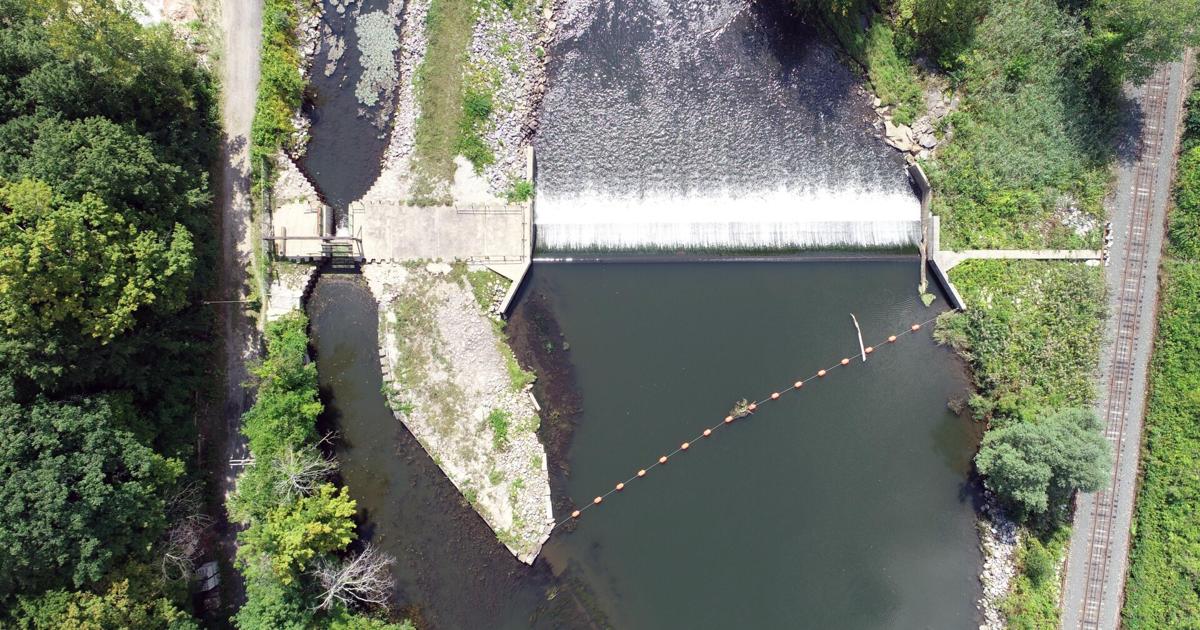
PITTSFIELD — Author and activist Chris Hedges will be the keynote speaker at an event seeking a different approach to the PCB Rest of River cleanup of the Housatonic River.
The “Deep Dive Summit,” a veteran-led, mission-focused approach to environmental activism, will be held from 1 to 4 p.m. Saturday at the United Church of Christ (formerly South Congregational Church) at 114 South St. Tickets are available on a "pay what you can" basis.
The event, described by organizers as a “community summit and public confrontation,” comes as General Electric Co. is gearing up for construction of the landfill in Lee that will receive lower-level PCB-contaminated sediments from the Housatonic River and its floodplains. The company has launched a website detailing its cleanup plans.
Hedges is the keynote speaker of a program featuring Lee Select Board member Robert Jones, Lee PCB Advisory Committee members Robert Heinzman and Dr. Robert Wespiser, and Eric Wasileski, the local Veterans for Peace chapter president.
U.S. Rep. Seth Mouton, who is running for the Democratic nomination for U.S. Senate against incumbent Sen. Edward Markey, also is expected to speak.
Hedges won a Pulitzer Prize in 2002 as part of The New York Times’ coverage of Al-Qaeda following the Sept. 11 attacks, and was a foreign correspondent for the Times until resigning in 2005. He is an ordained Presbyterian minister and writes for his own Substack page, The Chris Hedges Report.
Wespiser will address the health impacts of PCBs and the need for more comprehensive testing, while Heinzman will speak on the potential for bioremediation rather than disposal. Jones will recount the history of the current cleanup agreement and how it was reached.
Eric Wasileski, of Pittsfield, an Army and Navy veteran who was deployed to the former Yugoslavia in 1996 and Iraq in 1998, is the the head of Veterans for Peace Daniel Shays Home of the Mohican Chapter 186. He sees its mission as opposing war and the environmental damage done by military manufacturing, and that includes the Housatonic.
Wasileski said the group believes bioremediation — treating PCBs to destroy them or render them harmless, rather than disposing of them in a landfill — is how the cleanup should proceed. Other area local environmental groups have called for treatment rather than removal.
“There’s a potential here for a whole new industry,” Wasileski said. “This needs to happen all across the entire world. Pittsfield is not alone, and the Housatonic is not alone in dealing with the environmental impacts of the military industrial complex.”
Wasileski also cited the Clamshell Alliance, a movement opposing the construction of the Seabrook, N.H., nuclear power plant in the 1970s, as a potential model for a grassroots citizen response.
For several years, Clamshell Alliance members repeatedly trespassed on or occupied the Seabrook construction site, leading to thousands of arrests. In the end, only one of the station’s two reactors was built.
The U.S. Environmental Protection Agency has signed off on the overall cleanup plan, with officials saying it is “protective of human health and the environment” and removes PCBs from the river to reduce human exposure. For decades. the river has been posted with warning signs advising against consumption of river fish and waterfowl caught there.
The meeting comes as planning and review of the the Rest of River cleanup, from the confluence of the East and West branches in Pittsfield to Rising Pond in Great Barrington, is inching toward construction.
The oxbows of the Housatonic River near New Lenox Road. While the U.S. EPA has approved GE's plans to remove PCBs from the river, environmental activists have been critical of the proposal and how it was reached.
Site preparation for the landfill, known as the Upland Disposal Facility, began last fall. Final design plans for Reach 5A of the cleanup are expected to be submitted by the end of April. And EPA is reviewing a preliminary design plan for rail sidings in Pittsfield and Lenox that will be used to load and unload contaminated sediments for transport or disposal.
The removal of PCB-contaminated sediments from the Housatonic River and its floodplains was mandated by a consent decree approved by a federal judge in 2000. GE used PCBs in the manufacturing of power transformers in Pittsfield until the late 1970s and disposed of them in the East Branch.
But environmental advocates and Lee residents who did not want a landfill in their town remain dissatisfied with the overall plan.
General Electric challenged the original cleanup plan approved by EPA, which would have hauled all contaminated sediments out of the area. That led to closed-door mediation, which produced the current plan and its insistence on a landfill for more than 1 million cubic yards of sediment averaging less than 50 parts per million of PCBs. Higher-contaminated sediments will be transported out of the region by rail.
Read the Original Article
This article was originally published by Berkshire Eagle. Click below to read the full article on their website.
Visit Berkshire Eagle