
Berkshire Agricultural Ventures launches $242K effort to connect local farms with schools, hospitals
GREAT BARRINGTON — Berkshire Agricultural Ventures is launching a federally funded, two-year push to link local farms with schools, hospitals and other institutions across the Berkshire-Taconic region.
The nonprofit is one of seven organizations nationwide to receive a planning grant from U.S. Department of Agriculture’s Regional Food System Partnerships Program.
“We've been working on this farm-to-institution concept for a while at a slow simmer, and what this is really going to allow us to do is really kick it into high gear and do the planning around how to really connect all our more small and midsize farmers with institutions,” Executive Director Rebecca Busansky said.
Jake Levin, the organization’s local food systems program manager, said the $242,000 will fund a two-year effort to assess farm-to-institution needs through analysis and stakeholder input and create a roadmap offering hands-on support, including grant writing, low-interest loans and infrastructure upgrades.
The effort will focus on planning over the next two years, followed by a three-year implementation phase if additional funding is secured.
Berkshire Agricultural Ventures also received a $180,133 Patrick Leahy Farm to School grant from the U.S. Department of Agriculture to launch a two-year pilot program to bring locally produced ground beef into school cafeterias and create a new market for culled dairy cows.
The effort comes as farmers face shrinking markets.
Farmers are still able to sell directly through farm stands and farmers markets, but farm-to-table restaurant sales “really drooped off significantly” during the pandemic and haven’t returned, Busansky said. Combined with millions in federal cuts to local food purchasing programs last year, farmers need additional support connecting their products with buyers.
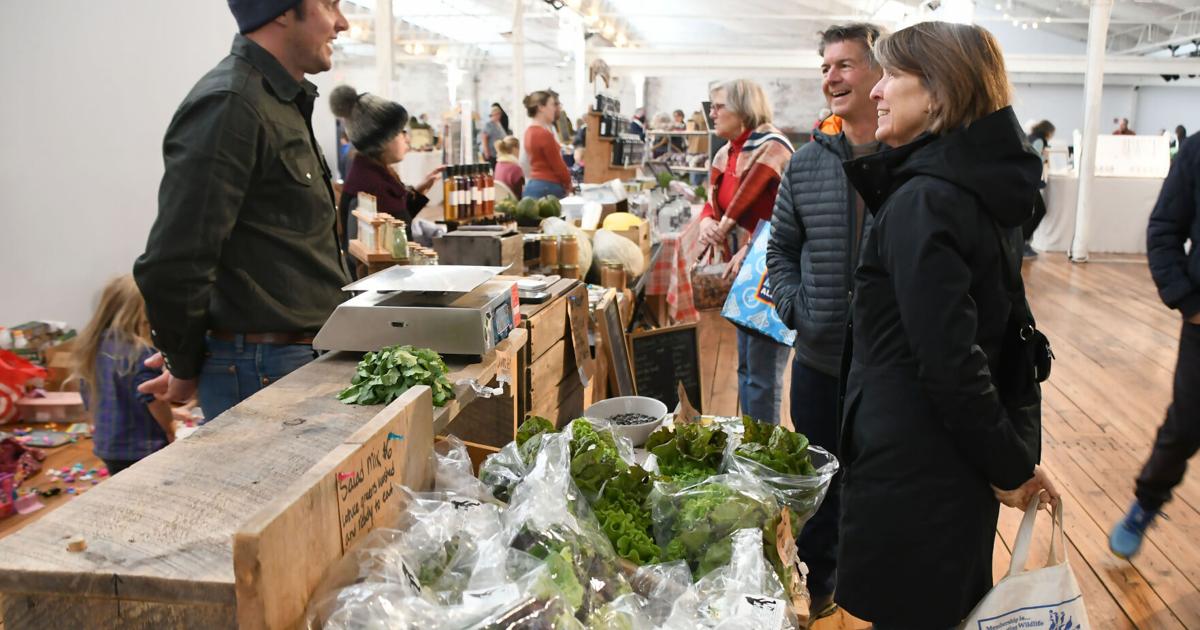
Vegetables on display at a market in North Adams in November 2022. Berkshire Agricultural Ventures is working to bridge farms and institutions with help from federal grants.
One strategy is to create a new market channel for local farmers to sell to schools, colleges, hospitals, the House of Correction and summer camps.
Berkshire Agricultural Ventures is taking a regional approach, working with the departments of agriculture in Massachusetts, Connecticut and New York, along with four other nonprofits. Many of the necessary pieces likely already exist, Levin said, but stakeholders aren’t always connected.
“In this region, there is so much cross-state exchange and so much more opportunity for that,” Levin said. “And each state tends to sort of act on its own, so we want to look at this as a regional problem.”
In terms of policy, New York offers incentives for purchasing locally, while Connecticut prioritizes in-state buying but allows incentives for neighboring states. Massachusetts does not currently offer similar incentives.
“New York's a great example of how policy can really shape and strengthen this value chain,” Levin said. “But the issue is, each state is creating its own policy without necessarily thinking about what's happening in other states. What if the three states talk together, and can shift some of that to strengthen all three?”
Busansky said the effort is about more than selling food — it’s a community investment, supporting farmers while expanding access to fresh, local products.
“We saw during the pandemic the importance of that community resilience, of when you couldn't get meat on the grocery store shelves, you could get meat from your livestock farmers,” Busansky said. “We saw the mutual aid that went on to help our neighbors who were less fortunate than others.”
Offering more locally grown foods — vegetables, fruits, meat, maple syrup and honey — encourages healthier choices, especially in schools, universities, hospitals and prisons, and research shows higher-quality, scratch-made meals can also help reduce food waste, Busansky said.
“There is a real correlation between serving kind of better quality, more scratch-made food, and that we've moved away from as a country for decades now and reducing food waste,” Busansky said.
Levin joked that he does the work so his child can be served locally sourced food, but said there’s real urgency behind it — he wants all families to have access to high-quality local options.
“I want my kid to be able to have spaghetti meatballs at school with locally sourced tomatoes and locally sourced ground beef,” he said. “I think it's possible, but there's a lot of work that has to be done to make those right connections and figure out how that can happen, and hopefully, in five years, that will be a reality.
Read the Original Article
This article was originally published by Berkshire Eagle. Click below to read the full article on their website.
Visit Berkshire Eagle