
Berkshire Food Project hit by unprecedented demand, receives record donations
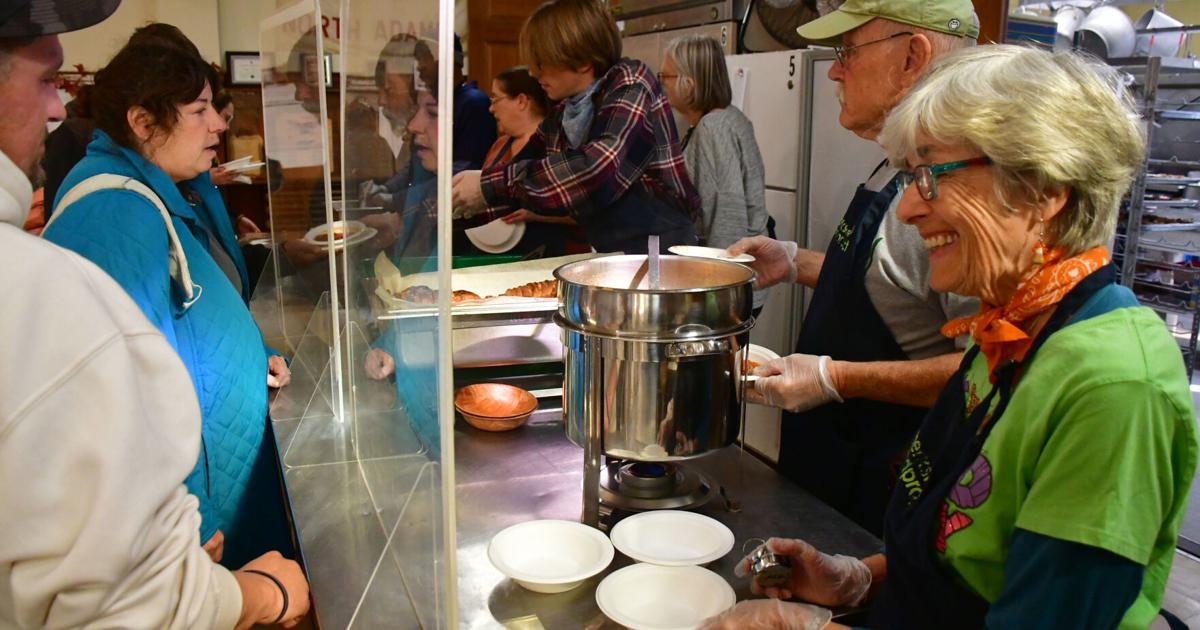
NORTH ADAMS — The Berkshire Food Project has seen unprecedented demand, with service surging 117 percent during the late-2025 SNAP crisis, a spike Executive Director Matt Alcombright called “unbelievable.”
But with the help of community volunteers, the organization continues to deliver.
In a January meeting, leaders announced that the organization — which serves a free hot nutritious meal to community members five days a week — had received a record amount of donations in 2025. They also outlined how, in an effort to meet increased food insecurity demands, they plan to expand their operations in the coming year.
According to Berkshire Food Project's newsletter, the organization overall saw a 13 percent increase from 2024 to 2025 in meals served to the community, numbering 45,000 total.
The Berkshire Food Project, which is located at the First Congregational Church in North Adams, serves free hot meals 11:30 a.m. to 1 p.m. Mondays through Fridays.
In December, the Berkshire Food Project received more than $100,000 in donations, Alcombright said.
Although the Berkshire Food Project typically sees a surge in donations around the winter holidays, these six-figure totals are unprecedented, organizers said.
“We've mostly been, from a donation point of view, sort of a grassroots receiver — $100 here and $1,000 here,” the president of the board of directors, Tim Faselt, told the group. “But what we have seen are some very sizable, and in some cases unexpected, donations that came through in the past few months.”
Part of what made January a successful donation month was an unexpected $50,000 check from an anonymous address in Virginia.
“It was a check in the mail — literally just picked up at the post office,” Alcombright said. “They found us, and somehow, somewhere, someway they chose to [support us].”
Though other donations have not been as large, they’ve followed a similar pattern.
“These contributions have just been coming out of the woodwork,” Alcombright said.
Now, Berkshire Food Project is trying to foster those relationships, Alcombright said. “But, you know, at the end of the day, the money is one thing. The service that we provide is much more important — but we need the funds to do [it].”
Founded 40 years ago by Williams College students in partnership with local residents and First Congregational Church, the Food Project began by serving two free lunches a week.
Since its founding, the Food Project has weathered surges in demand and in production capacity. According to Marianne Bailey, who began volunteering in 2017, only a handful of volunteers were active during COVID, even as meal demand grew.
This fall, the organization became busier than usual again. Due to the federal government’s shutdown throughout October and into mid-November, SNAP benefits programs faced delays.
Even as SNAP benefits were reinstated across the state by late November, community demand for free meals has still been increasing.
“Overall, in just September to now, we've seen about a 50 percent increase [in service],” Alcombright said.
But unlike during COVID, there are more than enough volunteers today at the Food Project to fill these needs, according to Alcombright.
“We have a [volunteer] waitlist right now,” he said.
The organization's nearly 60 regular volunteers put in more than 8,500 combined hours working in and out of the kitchen during 2025.
This extra help has been essential, according to Bailey.
“I think the increase in volunteers is wonderful, you know, because we were very short staffed for a while,” she said. “When you've got a lot of people around, it's easier to get things done.”
This year, supported by donations and the high number of volunteers, the organization wants to expand, specifically by finding or building a bigger kitchen space.
Alcombright said the need is not a reflection on the space they use at First Congregational Church in North Adams, but rather “it's a question of the amount of space we have in the kitchen to be able to provide for the needs that we're seeing."
Berkshire Food Project's organizational growth — and future plans — reflect a dedication to the local community, Alcombright said.
“We literally put our money where our mouth is,” Alcombright said. “We literally feed people and all of those contributions go into the mouths, into the stomachs, really into the hearts of the people that we get to serve every day.”
Read the Original Article
This article was originally published by Berkshire Eagle. Click below to read the full article on their website.
Visit Berkshire Eagle