
BRTA employees cite low morale, leadership concerns in no-confidence letter
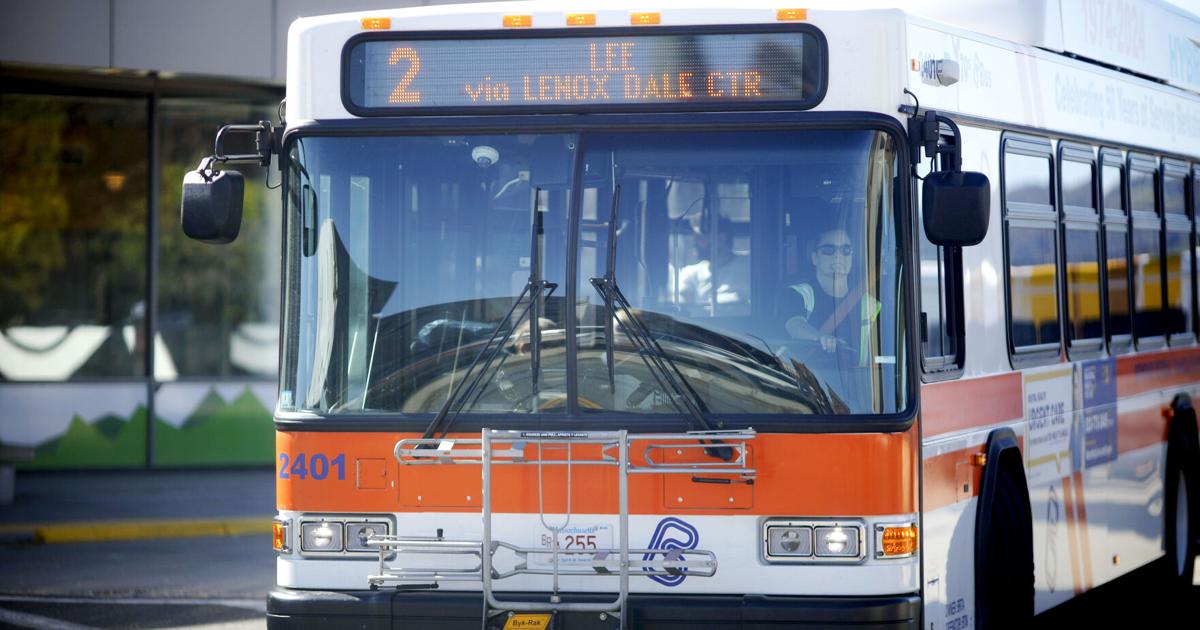
PITTSFIELD — Employees at the Berkshire Regional Transit Authority delivered a rare rebuke of the agency’s leadership last month, signing a letter that cited declining morale, poor communication and concerns about the direction of the organization.
Thirty employees, including bus drivers, signed on to a letter expressing a “vote of no confidence” in Berkshire Regional Transit Authority’s administration, just two days before both sides negotiated a new schedule for drivers — one that employees and administrators are now cautiously optimistic should result in fewer bus route cancellations.
A "vote of no confidence" letter was submitted to the BRTA advisory board on April 22, the day before a regularly scheduled meeting.
The letter was submitted to the Berkshire Regional Transit Authority Advisory Board on April 22, and it conveyed widespread dissatisfaction among employees.
An acute shortage of bus drivers in recent months meant that some BRTA bus runs went unfulfilled, leading to cancellations and disappointed riders.
The statement of no confidence does not have the power to trigger a formal review process, but its existence has been acknowledged by several BRTA advisory board members and management staff.
The letter does not call out BRTA administrators by name, but describes “ongoing and well-founded concerns regarding leadership effectiveness, operational understanding, and the overall direction of the organization.”
The letter cites a “noticeable decline in workplace morale, communication, and the sense of collaboration necessary to maintain a safe, efficient, and professional transit environment.”
Raymond Killeen, a bus driver and union steward who also represents Cheshire on the BRTA’s advisory board, said he authored the letter after becoming frustrated with the administration’s progress toward a revised driver schedule.
“Things were not getting done,” Killeen said. “We were getting to a point where things were not moving quick enough to get the [run] bid done.
As the Teamsters Local 404 steward, Killeen is the go-between for the drivers union and BRTA management.
A “vote of no confidence” letter with 30 signatures was submitted to members of the Berkshire Regional Transit Authority advisory board on April 22.
Killeen said he coordinated the signature drive.
Two days after the letter was emailed to members of the advisory board, BRTA management met with union members and negotiated a schedule that has 25 drivers bidding to drive 27 weekday bus runs, an attempt to cover the existing bus schedule with existing staff. The meeting had already been scheduled before the letter was distributed.
Previously, there were 36 runs up for bid. Through a run bid system, drivers pick available runs to build their weekly schedules and receive priority based on seniority.
Fewer runs means fewer drivers needed to fill them, which is why BRTA hopes the new system will allow for fewer unstaffed runs that result in cancellations while it struggles to hire more drivers.
Killeen said he is now more optimistic about BRTA’s future after the negotiation, and hopes that the letter played some part in reaching the agreement.
Despite his concerns about BRTA leadership, Killeen attributes some of the employee discontent to growing pains. The BRTA is adjusting to a new administrator and is about to shift from one operating company to another.
Keolis, the same operating company that oversees the MBTA in Boston, will take over from Transdev on July 1. Operating companies are the private entities hired by transit authorities to oversee day-to-day transit operations.
“The transition period is kind of tough for people,” Killeen said. “But … things always get better.”
Thirty employees, including bus drivers, signed on to a letter expressing a “vote of no confidence” in Berkshire Regional Transit Authority’s administration.
The letter of no-confidence was discussed during the regular advisory board meeting on April 23, when some members said they had received it via email, alongside several other anonymous email messages.
At that meeting, Stephen Bannon, the BRTA advisory board representative for New Marlborough, said he had received the letter of no-confidence ahead of the meeting via email, along with other emails citing employee concerns. Bannon described the signatories as “a set of whistleblowers.”
“I'm in no position to determine if [the emails are] true or false or anywhere in between, but … there should be some kind of review, I believe, by individuals who are not sort of conflicted on particular issues that they're addressing,” Bannon said.
At the meeting, BRTA Administrator Kathleen Lambert said she was not familiar with the letter of no confidence or other emails, at which point Rene Wood, the advisory board’s Sheffield representative, provided her with copies.
Reached by phone Thursday, Lambert declined comment other than to say the letter was written before the new driver schedule came into effect and that it would take a few weeks for its benefits to become visible.
“It’s a work in progress,” she said.
Douglas McNally, chairman of the advisory board, said he received the letter alongside several other anonymous emails. While he generally disregards anonymous communications out of concerns about credibility, McNally said the letter struck him as an uncharitable assessment of a transit authority undergoing an intense transition period.
“I think it's a smear job against somebody who is coming in and trying to address some really egregious problems with personnel,” McNally said, referring to Lambert.
McNally said the April 24 meeting had addressed some of the letter’s concerns, and that “a lot of the other issues [union members] were feeling unconfident about or nervous about were resolved.”
“Change is difficult,” McNally said. He added that concerns about employee morale should not be directed to the transit authority, but rather to the operating company.
“If there are issues of morale at Transdev, they should be talking to Transdev,” he said.
No action has yet been taken by the advisory board in regards to the letter.
One bus driver told The Eagle they felt the letter “has been completely disregarded.”
The driver, one of the letter’s 30 signatories, spoke to The Eagle on the condition of anonymity to avoid jeopardizing their employment. They said the new driver schedule has yet to ease the strain that drivers are experiencing due to understaffing.
“To paint a picture of what we're going through, it's pretty horrific,” the employee said. “Yes, we have developed a new run package for the drivers. We're still short drivers. There will continue to be cancellations.”
“As far as we’re concerned, we don’t even exist [to BRTA],” the employee said. “We just drive.”
Read the Original Article
This article was originally published by Berkshire Eagle. Click below to read the full article on their website.
Visit Berkshire Eagle