
EPA is out to redefine environmental protections for wetlands. It’s a narrower definition with broader consequences
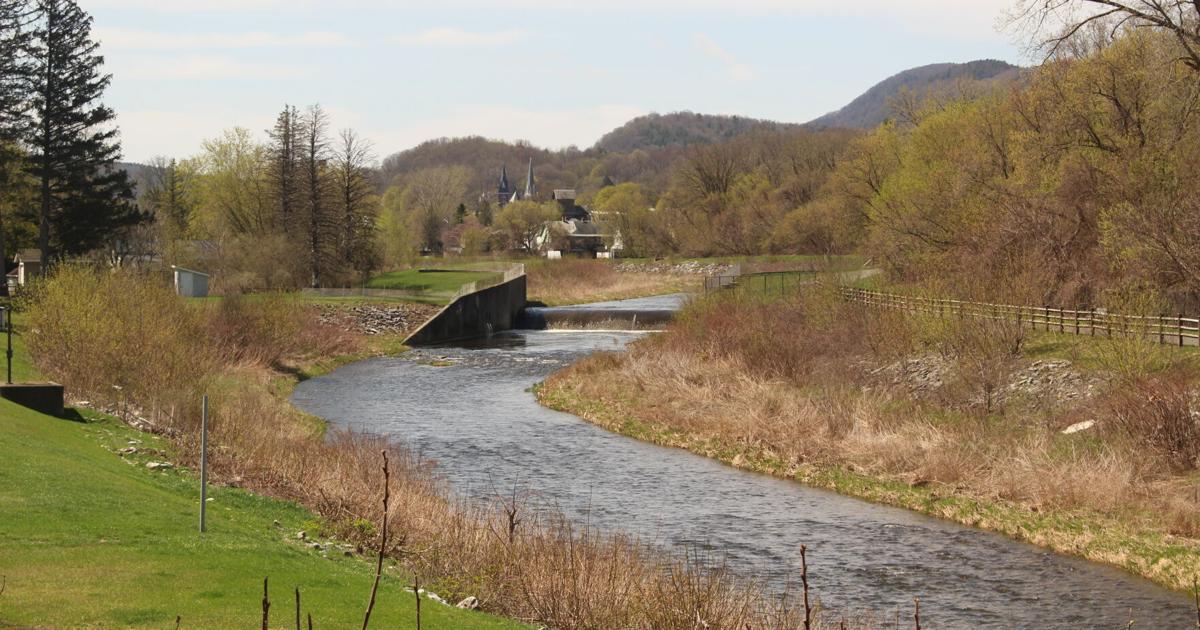
The Hoosic River flowing near North Summer Street in Adams. Under a federal rule proposed at the end of 2025, many wetlands, like those stemming from the Hoosic River, may no longer be protected.
PITTSFIELD — Starting in Cheshire, the Hoosic River watershed includes wetlands that are not always visible above ground. Some flow only during certain seasons, while others move unseen beneath the surface — filtering pollutants, storing floodwater and supporting organisms like pollution-sensitive stoneflies.
Under a federal rule proposed at the end of 2025, many of those wetlands may no longer be protected.
The Environmental Protection Agency and Army Corps of Engineers have proposed narrowing what it counts as “waters of the United States,” the legal definition that determines which waterways and wetlands are federally protected under the Clean Water Act.
When finalized, the new rule would advance the Trump administration's Powering the Great American Comeback Initiative that seeks to “cut red tape” for American industry, development, energy producers, the technology sector and agriculture.
“No longer should America’s landowners be forced to spend precious money hiring an attorney or consultant just to tell them whether a Water of the United States is on their property,” said EPA Administrator Lee Zeldin.
The new rule would build on the 2023 Supreme Court decision in Sackett v. EPA that removed federal protections for large areas, and it proposes decreasing federal oversight of waters by changing the definition to include waters only visible during a wet season.
It is difficult to measure exactly how many wetlands will fall out of protection in the new rules in Massachusetts or nationwide.
But before and after the Clean Water Act was passed, local water quality issues from pollution left environmental threats to Berkshire County’s four major watersheds. PCB pollution in the Housatonic River starting from the mid-1900s remains a costly legacy, with cleanup efforts ongoing.
In the two decades before the Clean Water Act was enacted in 1972, 7.6 million acres of wetlands, an area roughly 12 ½ times the size of Berkshire County, was destroyed in the lower 48 states.
Today, the EPA aims to redefine federally protected waters by the amount of time a wetland is above ground each year, but it is unclear how that wet season will be determined, said Heather Clish, policy director of the Massachusetts Rivers Alliance.
"It is going to make what counts as a wetland far more confusing, far more difficult to actually determine,” Clish said.
Intermittent streams, a prevalent type of wetland throughout Berkshire County watersheds, often aren't wet above ground but play a key role in year-round flood control.
An intermittent stream flowing near Lime Street in Adams. When it is not flowing into the Hoosic River, it dries up on the surface during some months but still provides flood control year-round, experts said.
Now, even if intermittent streams are near navigable waters, they still “may fall out of [federal] protection as a result of this proposal,” said Christophe Courchesne, director of the Environmental Law Center at Vermont Law School.
Why is it so important that these "unnavigable" wetlands be protected from risk of development?
Wetlands act like sponges, said Clish, and if they are filled, it not only removes that area's ability to collect flood water and filter pollutants but it also threatens the natural habitat of many organisms.
An intermittent stream flows west into the Hoosic River in Adams.
Courchesne said the Supreme Court’s Sackett decision implemented under the Biden Administration was a start at rolling back these protections, but some "industry players” thought it didn’t go far enough to reduce federal jurisdiction.
“Those developers and energy companies all got their wish with the Trump administration proposing this new set of rules, which I think goes beyond that Supreme Court decision in various ways," said Courchesne.
The new EPA definition will knock more wetlands out of federal protection that aren’t covered by states’ laws, Courchesne said.
“This current proposal, it's really about the convenience of industry to build where it wants to build, especially the energy industry in the West,” said Courchesne. “I think there's going to be a gold rush of developers seeking to develop areas that had previously been off-limits … and we could see a lot more filling of important wetlands around the country.”
The Massachusetts Department of Environmental Protection said the Wetlands Protection Act “will continue to be able to protect most wetlands under that statute,” but that it would continue to monitor federal developments.
The Hoosic was always a part of Nancy Bullett’s life, growing up in North Adams’ west end on the river’s north bank.
Growing up before the Clean Water Act passed, she remembered sludge being dumped out the third-floor window of a tannery in the Blackinton section of North Adams.
“I remember the days when you’d go to the river and see all the river rats,” said Bullett. Today, she is the president of Hoosic River Revival, a nonprofit focused on revitalizing the river in North Adams.
New England states besides New Hampshire have their own regulations and Courchesne thought it possible that legislators would attempt to fill those gaps if projects like this did slip through the cracks.
“That all depends on public policy makers,” said Courchesne.
Many small projects nationwide require federal review but not state review. On their own, Courchesne said, they are small, but “add up those projects and they will have a significant impact.”
Kate Abbott samples organisms from the Hoosic River for Hoosic River Watershed Association's annual river health report that examines tiny organisms that live in it. Abbott is a consultant from Cole Ecological.
It was around the same time that the Hoosic River Watershed Association released its annual 2025 health report of the river that the Trump administration released its proposed changes, said the association’s president, Arianna Collins.
Each year, the Hoosic River Watershed Association learns about the health of the river by examining the health of tiny organisms that live in it. Collins said they used a 2024 payout of $50,000 from Specialty Minerals Inc. for violating the Clean Water Act to test more sites along the river than they normally can.
The money also allowed the organization’s report to yield more accurate results, said Collins. And what the results have consistently found each year is that the Hoosic, while not perfect, is healing from years of industrial pollution — at least, since the organization began testing the water in the late 1990s.
Besides a few sites that were predictably slightly impacted, overall, “the Hoosic looks to be in good shape,” said principal investigator Kate Abbott from consultants Cole Ecological.
Interns from Hoosic River Watershed Association, Olivia and Mo, test samples from an intermittent stream in Adams in June 2025. Intermittent streams, which are often dry throughout the year, are a type of wetland that could lose protection under the EPA's newly proposed Clean Water Act regulations.
But Collins worried that these changes proposed for EPA rules would be a step in the wrong direction of what their organization and others have been working towards for decades.
She, Clish and other wetlands advocates sent in messages of concern to the EPA about the changes, which were due on Jan. 5. Courchesne estimated it would take four to six months after the comment period ends for the rule to be published in the Federal Register and finalized. That would be between now and June.
“We can’t go back,” said Collins.
Read the Original Article
This article was originally published by Berkshire Eagle. Click below to read the full article on their website.
Visit Berkshire Eagle