
Financial stress cited as BSO Trustees go public on music director’s non-renewal
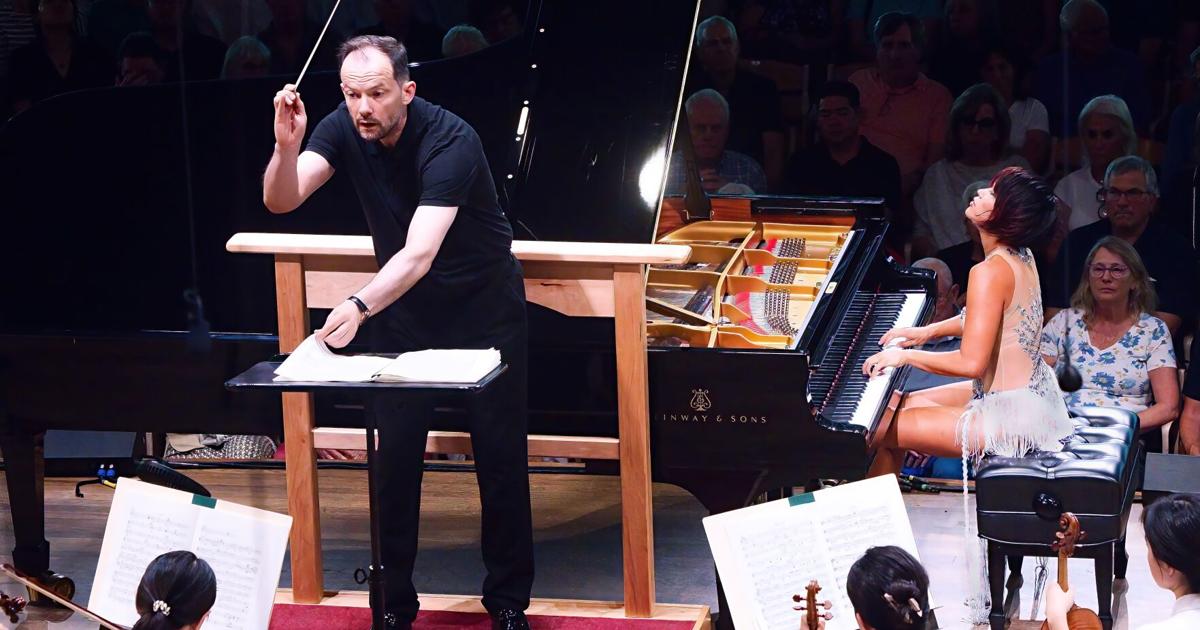
BOSTON — Following intense pushback from Boston Symphony musicians and concern from the community, the BSO trustees have issued a statement explaining their decision not to renew Music Director Andris Nelsons’ contract beyond August 2027.
The letter paints a picture of dire financial straits for the nonprofit, despite having a $536 million endowment, likely the largest in its field.
In an open letter to the community distributed to “Friends” of the orchestra, the Board of Trustees acknowledged that Nelsons’ departure after next year’s Tanglewood season “has been surprising and challenging for many in our community. We are grateful for Maestro Nelsons' 13 years of distinguished service and we look forward to celebrating his tenure across the 2026-27 season.”
Nelsons returned to the Symphony Hall stage in Boston on Thursday night to a hero's welcome, the Boston Globe reported.
The trustees acknowledged the intense pushback over its decision not to renew Nelsons' contract.
“We recognize that change is hard,” they wrote. “We understand that many in our community have different perspectives on how to meet this moment, and we respect that. We’re grateful to have so many people who care so deeply for this institution.”
Citing challenges facing the BSO and cultural institutions nationwide, the trustees listed some specifics affecting the orchestra:
• “Attendance at our orchestra concerts has declined drastically over the past 20 years.” The decline has been reported as 40 percent over two decades; since the pandemic, the BSO has lost 20 percent of its audience attending orchestra performances.
• “Operating costs have risen sharply while traditional revenue sources have struggled to keep pace." The trustees added that the BSO has consistently operated with deficits and has drawn more than $100 million from its reserves, "over and above the regular annual endowment draw, to cover operating needs.”
• “Years of deferred maintenance have forced beloved spaces — including venues at Tanglewood — to close temporarily, and our marquee facilities require tens of millions of dollars in upgrades.”
According to the letter, the board is unified in its decision-making and "collective vision for the long-term growth and health of the BSO."
"We are eager to engage with you openly in the upcoming weeks, months and years as we chart the path ahead for this organization that has touched us all.”
According to tax documents filed by the nonprofit BSO, the orchestra lost $6.6 million during the fiscal year ending in August 2024, based on nearly $124 million of expenses and $117 million of revenue. Losses totaled $17.4 million the previous year while, prior to the pandemic, losses and surpluses varied year by year going back to 2011.
For the 2023-24 fiscal year. Nelsons was paid $1.7 million while three management executives in a transitional year earned $2.6 million.
“Addressing these existential issues requires clear alignment and shared responsibility among all institutional leaders on a collective path forward, building a stronger BSO together for generations to come,” the letter from the trustees stated. “We take our responsibility as stewards of this storied institution seriously. For its 145 years, the BSO has innovated while staying firmly committed to what matters most: our world-class orchestra, artistic excellence, the enduring canonical works and serving our communities.”
The trustees declared that the commitment has not changed, but “what must change is how we bring classical music to life for 21st-century audiences, and our strategic framework is already setting us up to succeed in that goal.”
Alluding to previous challenges faced by the BSO, the trustees asserted that “for nearly a century and a half, this institution has found ways to navigate both transcendent and difficult moments together. We are confident we can do that again, guided by our shared commitment to the mission we serve."
For the first time, the trustees went public about a strategic plan that emerged over the past year through “hundreds of conversations about our future with the BSO community, including our musicians, staff, civic leaders and community partners.”
The strategic plan is described as built on three pillars involving programming, partnerships and place.
“We are reimagining how orchestral music reaches broader audiences, deepening our roots as a civic institution across Boston and the Berkshires, and investing in Symphony Hall and Tanglewood so these extraordinary venues can serve artists and audiences for generations to come,” the letter stated.
In a bid for reconciliation, the organization’s leaders acknowledged that “the strength of the BSO has always come from the people who love it: our musicians, our audiences, our staff and volunteers and the constituents we’re proud to serve. We need all of you with us as we move forward — as advocates and audience members who believe in the power of music.”
The letter was signed by the trustees “with deep appreciation and commitment.” It was not signed by BSO President and CEO Chad Smith, though an orchestra spokesperson told The Eagle that the omission was not significant.
There was no immediate reaction to the letter from the Players Committee.
Read the Original Article
This article was originally published by Berkshire Eagle. Click below to read the full article on their website.
Visit Berkshire Eagle