Great Barrington voters overwhelmingly reject Proposition 2 1/2 override
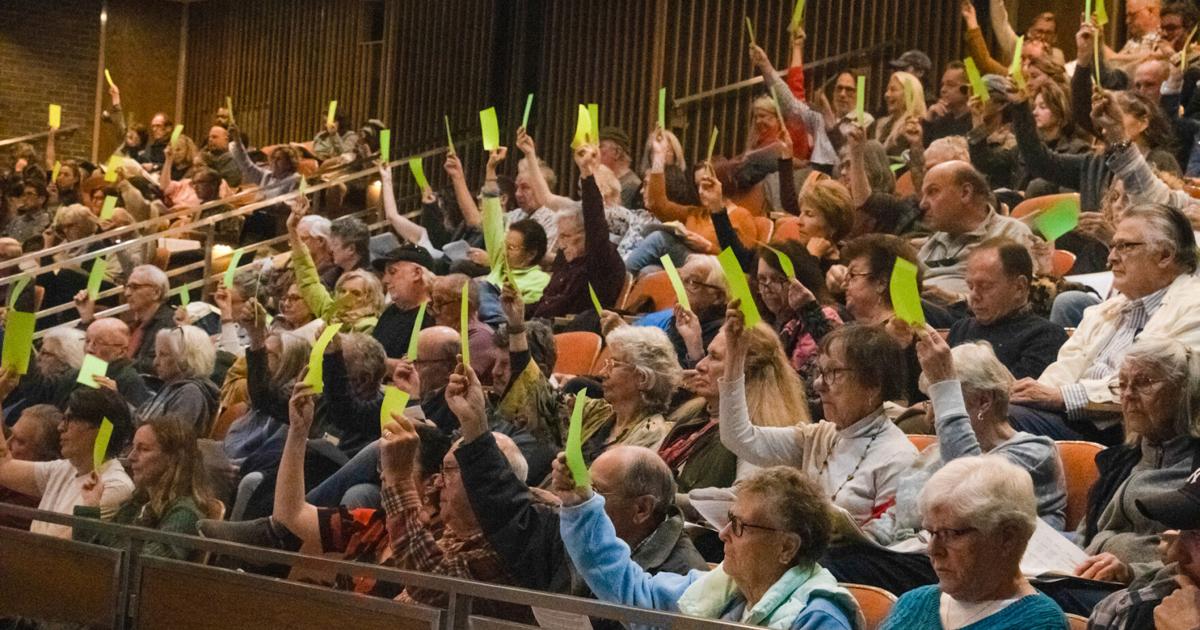
GREAT BARRINGTON — The town will have to drain its free cash reserves after voters overwhelmingly rejected a $2 million tax override during Tuesday's election.
The Proposition 2 1/2 override was meant to make up the $2 million gap in the $42 million budget that was approved at town meeting last week. Free cash will now be used to fill the gap after the override question failed 397 to 631.
This brings the total amount of free cash used to offset the operating budget to $4 million, which town manager Liz Hartsgrove said will leave the town's reserves at a number far below state guidelines for a financially healthy community.
The rejection also means there is no funding for $600,000 worth of discretionary items that were approved at town meeting — contingent on the passage of the override — including lifeguards, skate park monitoring, and the co-responder program, as well as capital spending like software upgrades and police vehicle replacements. There is not enough free cash to fund those items.
The override would have raised the average single-family tax bill by around $550, according to the state’s tax impact calculator. Great Barrington residents already faced high taxes.
Also during Tuesday's election, incumbent Michelle Loubert and Reo Matsuzaki won the four-way race for two seats on the Finance Committee for three-year terms. Five people were reelected in uncontested races for various positions, including Ben Elliott to the Select Board.
Three newcomers were elected, including Jeffery Rothenberg for a one-year term on the Finance Committee, Donna Jacobs for the library trustees and Jacqueline Kain for the Planning Board.
Hartsgrove said the budget process was specifically designed to maintain long-term budget stability by not using one-time revenues, free cash, for ongoing core operations.
She was hoping to break a five-year pattern in which the town used anywhere from $3.5 million to $4.17 million in free cash annually to ease the burden on taxpayers by only using $2 million for the operating budget. Since 2012, voters have approved nearly $39 million in free cash for this purpose.
Read the Original Article
This article was originally published by Berkshire Eagle. Click below to read the full article on their website.
Visit Berkshire Eagle