
High-speed internet is finally reaching the last homes in Florida, Savoy, Hawley and Monroe
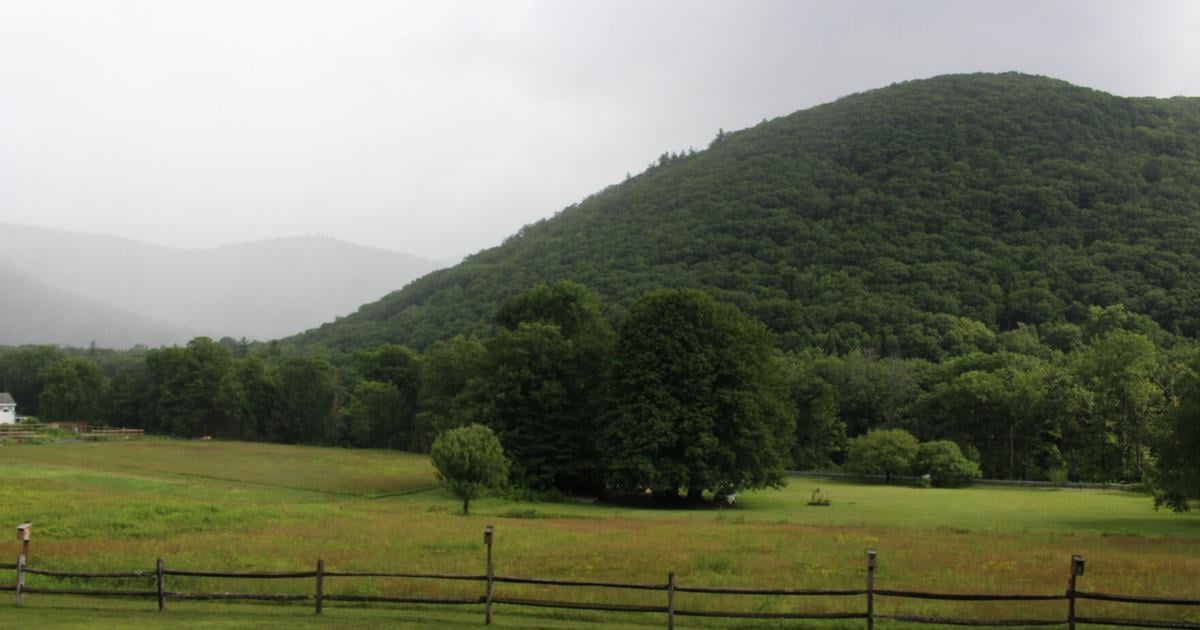
FLORIDA — For more than two decades, efforts to bring broadband internet to the most rural parts of Massachusetts like the town of Florida — where the people are few, the terrain is steep and nine out of every 10 acres are forested — lagged behind more densely populated communities.
For Cindy Bosley, her home, nestled at the bottom of Florida Mountain just down the road from the eastern portal of the Hoosac Tunnel, is one of the last awaiting connection to high-speed internet.
“When did I start complaining? Probably about 2002,” Bosley said.
As other communities got high-speed internet, Bosley saw Florida’s lack of broadband as an existential threat to the town of roughly 700 residents.
As internet access became increasingly essential, not everyone in town was convinced it was necessary, Bosley said.
"The town's going to die because nobody young is going to want to move into town,” Bosley recalled saying to them.
“We had the slowest stuff," she said. "You couldn't game. You really couldn't do much other than maybe check emails.”
Bosley and other residents in the most rural stretches of Florida, Savoy (population: 650), Monroe (about 120 people) and Hawley (about 350) lived with spotty and at times nonexistent internet service for more than two decades.
But the end of the long wait is near.
While much of the four towns gained broadband in recent years, the last unserved homes, like Bosley's, are expected to be connected to high-speed fiber internet by year’s end. The connections follow years of work by state officials, legislators and local leaders, aided by pandemic-era federal funding.
Crews laid the high-speed internet cable in front of Bosley's house. Other residents are already online.
Fiber internet was brought to towns Florida, Monroe, Savoy and Hawley multiple years ago for most residents, but some in the most remote areas still didn't get it. Now, with pandemic-era funding, MassBroadband is filling the gaps and connecting houses in trick terrain like Florida Mountain.
Charter Communications, which operates under the Spectrum brand, announced in 2021 that it was awarded funding through the Rural Digital Opportunity Fund to connect a portion of the homes in Florida and Savoy.
In 2023, the Massachusetts Broadband Institute launched the Gap Networks Program with funding allocated through the American Rescue Plan Act to expand broadband access statewide. The institute has awarded $45 million in grants through the program, including $5.7 million in funding to Charter to build broadband infrastructure that will serve homes in Florida, Savoy, Hawley and Monroe. Charter will use $2.4 million to reach the roughly one-third of homes in Florida and Savoy that weren't reached through the RDOF funding.
The program is paying providers including Charter to complete so-called last-mile fiber connections to homes in difficult terrain and low-density populations. Spectrum must reach nearly every home in Florida, Monroe, Hawley and Savoy by the end of 2026 to meet the ARPA funding deadline.
Kevin Poirot moved back to Florida, his hometown, in 2017, and he has advocated for full broadband access in difficult-to-reach areas.
During the pandemic, Poirot juggled his IT job at General Dynamics while his three children attended school via Zoom without reliable internet.
“Remote learning was absolutely awful with terrible internet,” Poirot said. “It basically was not possible.”
Poirot has had fiber internet for about three weeks, and it is the most reliable service he has had.
“I actually had to upgrade my home networking equipment because everything was a gigabit,” Poirot said, referring to service capable of transmitting up to 1 gigabit of data per second. “I never thought that I’d reach that speed. And then my internet became 2 gigabit.”
Joyce Van Tilborg, left, and Suzan Oleson, assistant director and director of the Florida Senior Center and Community Center, experience shoddy internet multiple times a month that interrupts reports, calendars and online work. They hope, but are skeptical, Spectrum's new fiber connection will fix that.
For senior center directors Suzan Oleson and Joyce Van Tilborg, better internet would make daily administrative work smoother. The Route 2 building, and next-door Town Offices, lose service multiple times a month, interrupting reports, calendars and online work.
"We can type, but we can't get any information on the internet," Oleson said.
Though willing to try Spectrum's new service, Oleson remained skeptical it would reach everyone promised after years of failed broadband efforts.
Michael Baldino, director of the Massachusetts Broadband Institute, said Massachusetts was already one of the most connected states in the country, but ARPA funding helped move toward universal access in every home and business.
“We pushed very hard for this money,” said state Rep. John Barrett III. “Because now, you can work from home and live in Florida or Hancock. We’re more or less on a level playing field.”
Barrett, a longtime advocate for rural broadband and former House ARPA Committee vice chair, called broadband access the area’s most important economic development need.
About eight years ago, the four towns worked with the Massachusetts Broadband Institute to obtain state funding for a wireless network. The towns selected Wi-Valley, now GoNetSpeed, to build a fixed wireless network. Residents say the service has never lived up to its promise because wireless signals were hampered by the area's terrain and dense tree cover.
“It wasn’t as good as they said, let's put it that way,” said Select Board member and Oleson's husband, Neil. “People weren't real happy with it.”
Only residents living near Wi-Valley's towers could reliably get broadband.
“They had this guy, an expert in, and he guaranteed us that the terrain was not going to be a problem,” Bosley said. “I mean, to give them their due, they wanted to shut me up so they came down and put a tower down here. … And obviously, it didn’t work.”
Baldino said Spectrum’s fiber service would offer greater speed and capacity than a fixed wireless network for residents who do not already have it.
While waiting for fiber, many local residents turned to SpaceX's Starlink satellite internet. Starlink uses satellites in low-Earth orbit to beam broadband directly to users' terminals on the ground.
Starlink was a "lifesaver," Poirot said, but he prefers fiber because it's faster, cheaper and more reliable.
Baldino said $18 million more from the bipartisan infrastructure law is in the pipeline to continue the push to achieve statewide universal access.
“We're going to be one of the first states to reach 100 percent in the country,” he said.
Barrett said some areas with poor service remain and that broadband technology can always improve, but he called the ARPA broadband effort “one of the best bipartisan initiatives” during his tenure.
It was a struggle to reach this point, Poirot said. He credited Baldino and the Massachusetts Broadband Institute with pushing for universal access in the region and prodding installers to meet the deadlines they had set.
“I don't know if Spectrum would have ever [filled in the gaps] on their own in our town without the gap funding," he said.
Read the Original Article
This article was originally published by Berkshire Eagle. Click below to read the full article on their website.
Visit Berkshire Eagle