
How permanent supportive housing is helping Berkshire residents break the cycle of homelessness
NORTH ADAMS — Steve was a young adult when he started "bouncing from couch to couch."
"I had been in and out of jail," said Steve, who declined to use his last name for this story. "I put myself in some bad positions because I was homeless, you know?"
Eight years. That was how long he spent looking for a permanent home.
"I had the means to survive," he said. "I just hadn't been able to put a roof over my head."
But eventually, Steve ended his endless loop of sleeping on couches through a permanent supportive housing program.
"It really got my life back on track," he said.
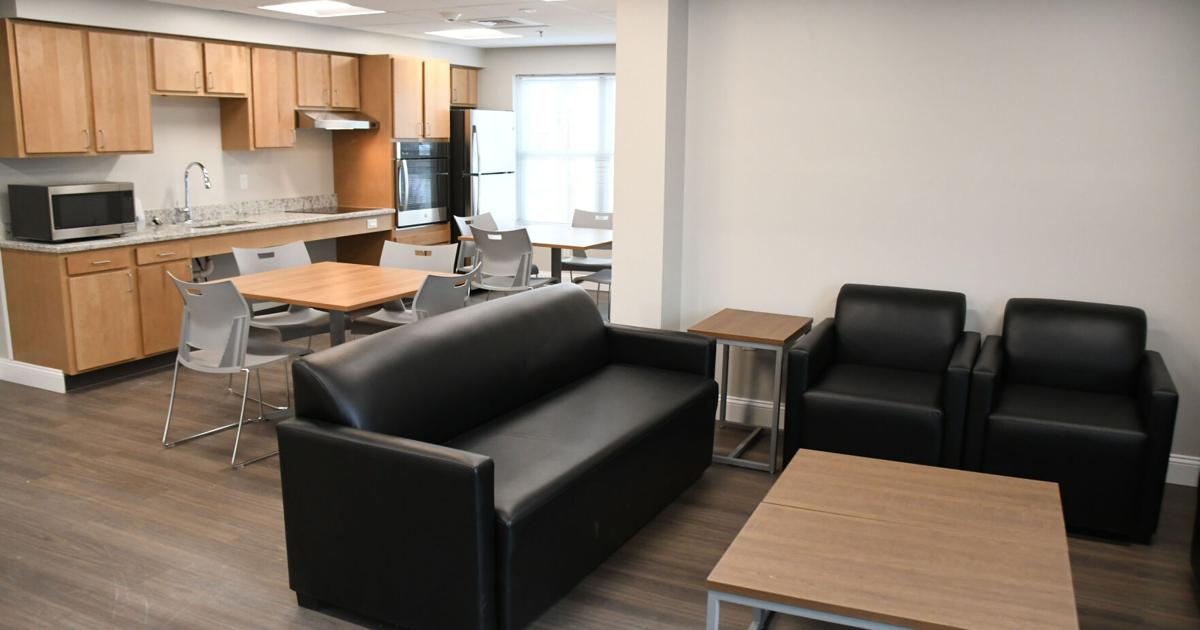
The Bracewell House was completed in September 2025 and houses five one-bedroom units and one two-bedroom unit meant for a family. All apartments are part of Louison House's permanent supportive housing program. The project cost $2 million and received state American Rescue Plan Act funding.
The model — which provides long-term housing alongside services like counseling and benefits assistance — has worked for others like Steve and has been around for decades. But as the homelessness crisis continues to grow, housing officials say the programming and the long-term stability it offers are crucial to ending the cycle of housing instability.
In 2022, Massachusetts earmarked $108 million in American Rescue Plan Act funding to support the construction and operation of more than 1,300 permanent supportive homes statewide, which includes three in Berkshire County.
That one-time pool of funding has run out, but the units still stand — along with the support and opportunity for a better life they represent, according to Ethan Handleman, the executive director for Community Economic Development Assistance Corporation.
"There is definitely a lot of need for this," Handleman said. "We know this is the primary tool that Massachusetts, like anywhere else, has to help respond to the challenge of homelessness."
Emergency shelters typically impose stay limits of six months, requiring people to leave after their time is up, even if they aren't ready or don't have another place to stay.
A year after a person leaves an emergency shelter, they have a 17 percent chance of returning to homelessness, according to data from the Department of Housing and Urban Development. That chance increases to 22 percent after two years.
But the permanent supportive housing program model is different, which makes it successful, advocates say.
The modern form of the program largely draws from the success that the Pathways for Housing First Institute found in New York City with its "housing-first" approach.
Previous housing programs used a "treatment-first" approach. This meant people had to meet strict sobriety and mental health requirements before entering the program, which made it difficult for many to access help.
The housing-first approach allows people to move into the supportive housing before turning to the underlying issues that often accompany homelessness, such as addiction and mental health. Under former President George W. Bush in the early 2000s, the housing-first ideology grew with federal support.
Louison House in North Adams got funding for its first batch of permanent supportive units in 2008, becoming one of the early adopters of the program, according to Kathy Keeser, executive director for the nonprofit.
"Louison House was very helpful, and I'm very grateful that they helped with what they could for me," said Jenalynne, a mother who experienced homelessness. "I hope people see how important it is to keep building and funding programs like this."
Over the 10 years of Keeser's tenure, the Louison House has expanded by securing more federal support and building units of its own, she said.
Of those who get into a program, 95 percent still have housing a year later.
Hearthway, a local nonprofit housing developer, received city and state ARPA funding to bring units to Pittsfield. The two developments were the apartments at The First and the apartments at 111 W. Housatonic St., bringing 37 units online.
Advocates say the services provided by the program are just as important, if not more important than, the physical unit.
"There's a long list of stuff that create barriers to folks functioning in today's economy," Handleman said. "If you don't have a home to go to, it's really hard to do any of those things."
Each permanent supportive housing unit is meant to give people the space and support needed to exit homelessness. Rent for a unit is 30 percent of a person's income, meaning if a tenant has no income they pay no rent.
When Steve moved into his permanent supportive unit, there was a laundry list of things he needed to get done, such as accessing public documents needed to apply for aid.
"They've helped me fill out every application I've ever needed to fill out," he said. "They helped me get my birth certificate and my Social Security card and all that."
Services are brought directly to tenants, Handleman said, which can help people feel more comfortable accepting help.
This connection extends to the landlord, who knows what the person is going through, allowing tenants to work with them in case of a financial or personal crisis, Keeser said.
To qualify, tenants must make no more than 30 percent of the area median income. Tenants pay 30 percent of their income toward rent, meaning the most a tenant would pay per month is about $650. For tenants with no income, they pay nothing.
The apartments at 111 W. Housatonic St. house 28 of the 37 permanent supportive housing units that were brought online in the last few months by local nonprofit housing developer Hearthway. The projects came alongside a larger push to build the supportive housing units.
Handleman said having a safe place to live is the foundation that allows people to succeed at work, school and in their communities.
"If you're living without that, you're living every day, knowing you're at risk, your small number of belongings are at risk, the people you love, if they are with you, are at risk," he said. "It's all precarious."
After completing the permanent supportive housing program, Steve moved into his own apartment, where he has lived for four years.
He secured a housing voucher after a Louison House staff member alerted him that the North Adams Housing Authority was conducting its periodic Section 8 voucher review that same day — an opportunity that only comes around every few months.
“Because they were on track with what they needed to do, they were able to get me into a permanent housing solution,” he said.
While Louison House has helped many tenants transition to permanent homes, Keeser said some become so stable that they are invited to remain.
The Bracewell House was completed in September 2025 and houses five one-bedroom units and one two-bedroom unit meant for a family. All apartments are part of Louison House's permanent supportive housing program. The project cost $2 million and received state American Rescue Plan Act funding.
Jenalynne, who declined to use her last name for this story, became homeless after no longer being able to stay with a family member.
"I was able to actually say that I have an apartment," she said. "My child was comfortable in the apartment ... This changed my life."
So much so, that she was asked to stay in her unit because of her positive relationship with the landlords and community.
The impact, Handleman said, extends beyond individual tenants. The units also provide a foundation for people to contribute to their communities — whether by entering the workforce, sending children to school or simply being present as neighbors.
Steve is now one of those examples. In addition to maintaining his own apartment, he has been in a five-year relationship and works periodically at Mass MoCA — another opportunity that grew out of the support he received through Louison House.
"I wouldn't have a roof over my head today if it wasn't for them," Steve said. "I'd still be around on the streets. And that's not a life to live. Nobody should have to go without a place to live."
Read the Original Article
This article was originally published by Berkshire Eagle. Click below to read the full article on their website.
Visit Berkshire Eagle