
‘I just have a feeling of peace’: Dottie's manager leaves U.S. amid ICE fears
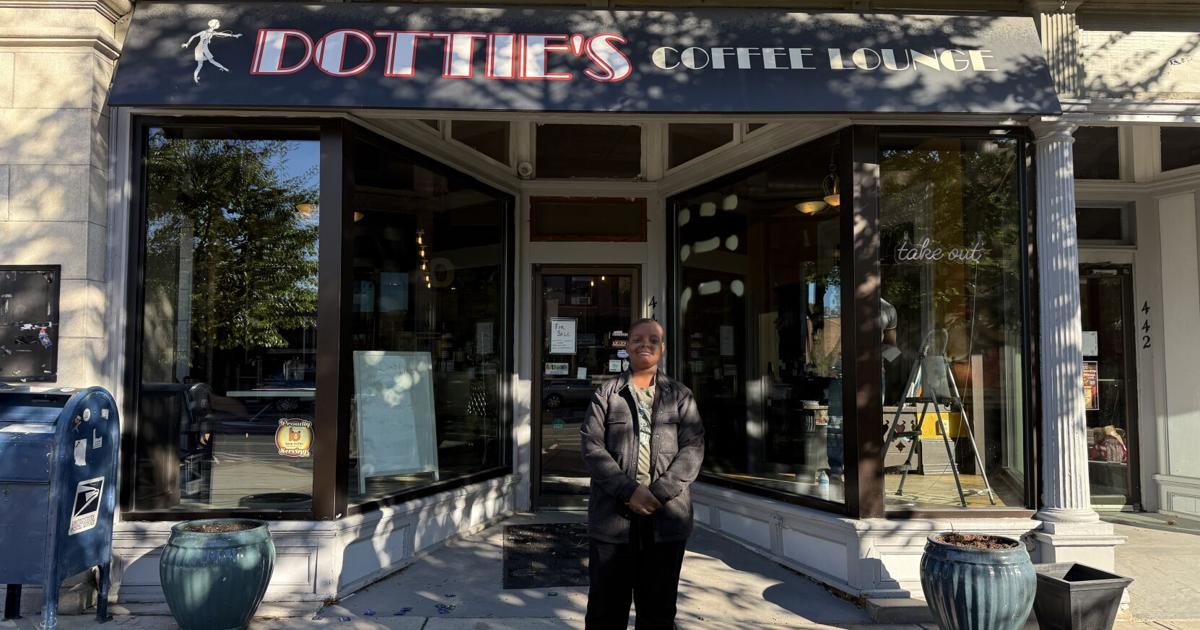
Loic Adandedjan, former manager of Dottie's Coffee Lounge on North Street, had planned to eventually take over the shop before deciding to self-deport to Benin.
PITTSFIELD — At 26, Loic Adandedjan had spent a decade building a life in the United States.
After relocating from Benin to New Jersey as a teenager, he lived in a variety of cities on the East Coast: Newark, Philadelphia, New York City. By the time he started working at Dottie’s Coffee Lounge in 2024, he had come to appreciate the slower pace of life in Pittsfield — people were willing to stop and chat over coffee instead of dashing off with a to-go cup.
Adandedjan soon became the face of the popular downtown coffee shop. A passionate videographer and content creator, he frequently appeared in lighthearted videos promoting drink specials at Dottie’s. As manager, he had done such a good job running the shop that the owner, Jessica Rufo, hoped he might eventually purchase it.
But the constant anxiety of living in the United States without permanent legal status — fears that intensified after a coworker was detained by ICE in Pittsfield last month — had become too stressful. After months of preparing, Adandedjan said he made the difficult decision to self-deport in late April: a decision that has left the tight-knit community of customers and employees at Dottie’s bereft and upended the company’s succession plan.
Under the second Trump administration’s aggressive campaign to deport immigrants, both undocumented residents and some lawful immigrants have been swept up in enforcement actions nationwide. Immigration and Customs Enforcement has touted self-deportation as an opportunity for immigrants living in the country illegally to leave on their own terms, avoiding unexpected detainment or lengthy imprisonment in detention facilities.
In a recent video interview with The Eagle, Adandedjan recounted what brought him to America — and now, back to the West African country where he was born. He is now staying with family in Abomey-Calavi, on the outskirts of Benin’s largest city.
“My decision to leave the United States was not about giving up,” Adandedjan said. Instead, the possibility of being detained by ICE had become too destabilizing to continue his life in Pittsfield.
“It puts a certain kind of fear into you and really stops you from really enjoying everything that you're doing,” he said. “And it puts you in a place of surviving every day on a day-to-day basis.”
Loic Adandedjan oversaw the reopening of Dottie's Coffee Lounge as manager last October. "You're making people's lives better, even just by the cup of coffee or just by a simple conversation," he said of his work.
If detainment ever comes, “everything you started building will just crumble,” he said. “And the people who are depending on you, they won’t know what to do next.”
That fear became more tangible just a week before boarding his flight to Benin, when ICE detained one of his Dottie’s coworkers.
ICE detained Temirlan "Tim" Aldiyarov, a cashier and barista-in-training, on April 22 “as part of a targeted enforcement operation in Pittsfield,” the Department of Homeland Security confirmed to The Eagle in an email. On April 23, Aldiyarov “accepted a voluntary departure and returned home,” according to the statement.
DHS said that Aldiyarov had overstayed a B2 visitor visa originally valid for six months, though both Rufo, the owner of Dottie’s Coffee Lounge, and Adandedjan said they believed he was legally allowed to work in the United States at the time of his detainment.
Aldiyarov could not be reached for comment.
The day Aldiyarov was detained, Dottie’s team members say they had been making plans in a group chat for Adandedjan's send-off dinner when they first noticed Aldiyarov was uncharacteristically silent. When he didn’t show up for work the next day without an explanation, they knew something was wrong.
“You always think the worst when someone is missing,” Rufo said.
Based on her conversations with Aldiyarov, Rufo said leaving the United States seemed less like a choice and more like Aldiyarov had been “coerced” into self-deportation.
“The ICE officers had sort of intimidated him into signing voluntary deportation documents,” she said.
"He also was very involved with his friends and community here, always trying to lift people up and make connections," she recalled. "He was great."
Two employees at Dottie's Coffee Lounge at 444 North St. in Pittsfield have left the country amid recent ICE activity in the city. “[Pittsfield police] has not received any notification from ICE about being in Pittsfield in that timeframe,” said Catherine VanBramer, the city’s director of administrative services and public information officer.
Describing how recent immigration policy had affected her employees, Rufo began to cry.
“The enormity of the world situation and the way our country is sort of involved in it became very heavy,” she said.
“These guys made great sacrifices to be here,” she added. “Really sad to not see that pan out for them.”
Local officials contacted for this story said ICE did not provide notice that they had recently been active in Pittsfield.
“[Pittsfield police] has not received any notification from ICE about being in Pittsfield in that time frame,” said Catherine VanBramer, the city’s director of administrative services and public information officer. “As we have previously talked about to The Eagle, we don't always receive notification, so we can’t confirm information that we don't have knowledge of.”
Pete White, vice president of the City Council, said he had no knowledge of recent ICE activity in the area but that he had heard about Adandedjan’s decision to self-deport.
“It’s sad that people are leaving based on what they are fearing in the community,” White said.
Now back in West Africa, Adandedjan said he feels like he can breathe a little easier.
“I just have a feeling of peace,” he said. “Peace of mind around the environment and knowing that I'm fully at a place where I was born. There’s no restriction applied to me here.”
But that solace has come at the price of everything he worked to build during his time in America. He loved working at Dottie’s, and looked forward to one day running the shop. He hoped to follow in the footsteps of his late father, who he said had also worked in the coffee business.
“At the end of the day, you just feel happy [about] the work that you're doing because you're making people's lives better, even just by the cup of coffee or just by a simple conversation,” Adandedjan said. He became friendly with customers, and recalled how loyal regulars could be: one woman insisted on coming to Dottie’s straight after a stay at Berkshire Medical Center for her morning fix.
Rufo recalled Adandedjan as a top-notch employee.
“Loic was very steady, very kind, very positive, very likeable and, you know, gentle,” she said. “I was actually mentoring him to learn the entire business, in hopes that I’d be able to sell it to him in some fashion."
Adandedjan had been subleasing the shop, and oversaw its reopening in the fall of 2025.
As a leader, Adandedjan also made an impact on the employees he oversaw. Dottie’s barista Becky Derouin, a mother of two, initially had trouble finding a job that worked with her schedule. But Adandedjan was willing to employ her last October, she said, and she’s been at Dottie’s ever since.
Between preparing drink orders on a recent morning at the shop, Derouin described Adandedjan as a mentor.
“He was all about business and working hard,” she said. “But he was also a fun boss.”
Adandedjan initially came to the United States on a six-month tourist visa to receive medical treatment for a growth disorder, he said, and intended to return to Benin. But regularly traveling between two continents for care was too disruptive and expensive to maintain, he said.
“I realized that if I did not stay here, I would not have been able to have the treatment that I was supposed to get,” he said.
Adandedjan said he had been working toward a green card to remain lawfully in the United States. But amid the uncertainty of ICE’s immigration crackdown, he said even pursuing legal status had begun to feel risky.
“With all the laws in immigration that are in place, you’re even scared to even apply for a green card,” he said. “Because if they call you for an interview, you don't know what might happen.”
Adandedjan said he hopes to one day return to the United States, and plans to apply for another visa someday. In the meantime, his advice to other people in his situation is to look deeply at “what they are really fighting for and what it is costing them,” and whether they can find “safety, a purpose, a peace of mind, where they are.”
“I know that many people like me are still fighting, as undocumented immigrants, their own immigration battle,” he said. “One thing I want them to know is that they are not alone.”
Talia Lissauer contributed reporting.
Read the Original Article
This article was originally published by Berkshire Eagle. Click below to read the full article on their website.
Visit Berkshire Eagle