
New federal housing law could help Berkshire County build more affordable homes
PITTSFIELD — A sweeping bipartisan federal housing law is giving Berkshire County developers hope that building affordable homes could become faster, cheaper and easier.
The 21st Century ROAD to Housing Act is a bipartisan behemoth of federal legislation that adds and expands housing development funding opportunities, removes redundant regulations that slow down projects and creates new programs towns and homeowners can leverage to increase and keep the housing stock. It officially became law early Saturday after President Donald Trump refused to sign it for 10 days.
"Here we are at the starting line, so the race for affordable housing is on," said Jim Harwood, president of the board for the Community Development Corporation of South Berkshire. "And I'm excited for it."
Although there is reason for celebration, the bill is not a catch-all solution to a housing crisis decades in the making, local housing officials said.
"The thing that excites me about this bill overall is that it's bipartisan," said Carolyn Valli, CEO of Central Berkshire Habitat for Humanity. "It seems like this is the first thing they've all been able to work on together, which gives me hope for the future."
Local developers are cautiously optimistic about this new bill, saying the lowering of regulatory barriers and increasing the funding opportunities are good, but the work of building still needs to be done.
The bill is a combination of two earlier housing acts, and it represents one of the few bipartisan federal laws passed recently, reflecting the nation's growing concern about housing affordability.
"What's really interesting about this [bill] is they're attacking the problem at all levels and across regulatory and funding," Harwood said.
The bill outlines new ways affordable housing can be financed, including allowing municipalities to use Community Development Block Grants, which typically fund projects such as road improvements and assistance for small businesses. Now, the grants can be used to develop affordable housing.
Being able to use those grants for new construction is a plus, Valli said, but there are still some concerns about the amount of money available.
"[The federal government] oftentimes doesn't give enough money to CDBG to begin with," Valli said, referring to the block grants. "They would have to be increasing the money that would go to the CDBG communities so that they can actually increase housing supplies."
Another program in the legislation that could help Berkshire County residents is the whole home repair pilot initiative. Organizations like Berkshire Regional Planning Commission have similar programs that leverage federal funding to complete home repair projects, leaving the homeowner with a forgivable loan. Since more than two-thirds of the county's housing stock was built before 1970, the maintenance needs of these homes can be too expensive for some homeowners. This pilot initiative could help those homeowners get funding.
Developers also pointed to the bill's cleaning up of longstanding, complex regulations and program requirements that make project timelines longer and more expensive because of the manpower needed to navigate the web of requirements around housing.
"It's great they have these different programs, but if you have to bring on five staff in order to be able to navigate one source, that's not going to work," Valli said.
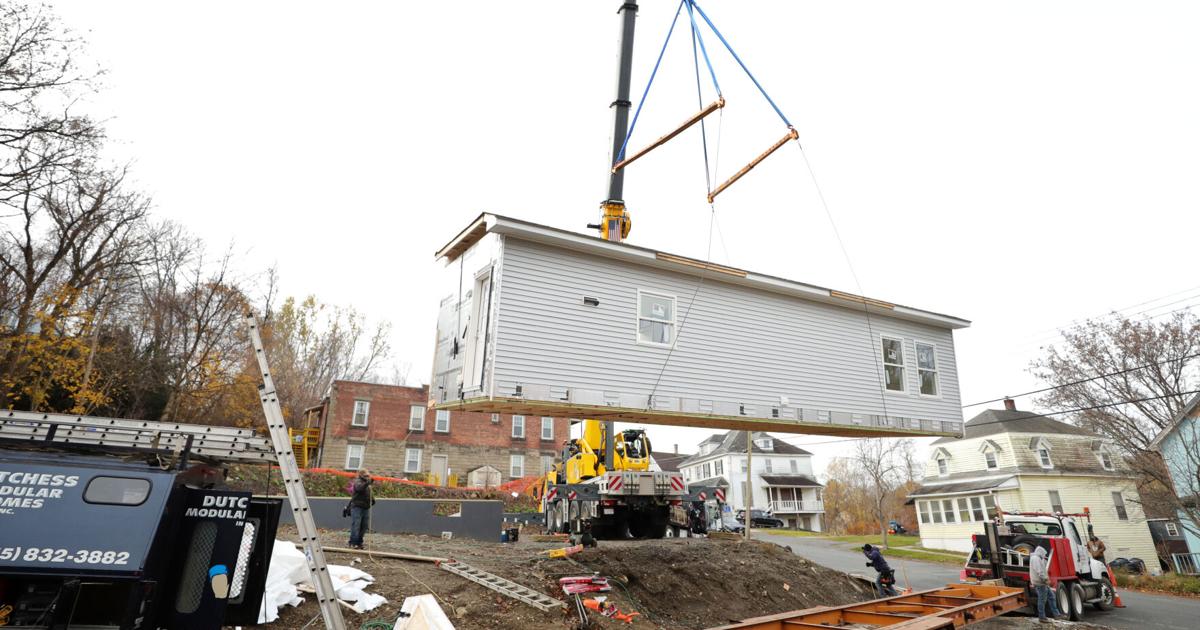
The bill also directs the Department of Housing and Urban Development to look at the rules and funding opportunities around modular homes — which are built off site and then assembled and completed on site — and to reduce the barriers hindering production of these homes. This type of construction has been increasingly used in Berkshire County.
It's harder for developers to finance modular construction through banks because banks often view modular construction as carrying greater risk, Harwood said. This is something the bill would change, meaning modular homes could become even cheaper.
The upside in the bill is clear: lowering barriers and increasing funding makes building housing faster and cheaper. However, it's not a silver bullet, Harwood said.
"The thing about regulations is they don't actually do anything," he said. "They just either incentivize or disincentivize the public to do things."
"It's one step and we're going to have to keep taking more," Harwood added.
Read the Original Article
This article was originally published by Berkshire Eagle. Click below to read the full article on their website.
Visit Berkshire Eagle