
New state rules aim to help seasonal towns house teachers and municipal workers
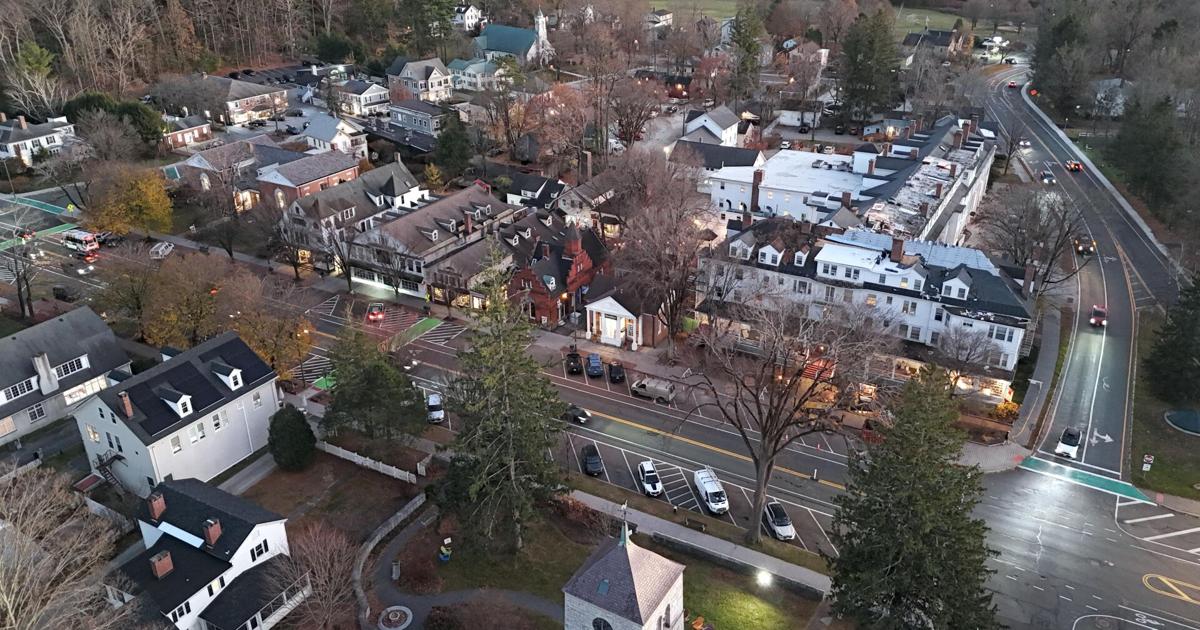
A view of Main Street in Stockbridge. The town is one of 18 that are eligible to accept the seasonal community designation. The regulations for the designation were just unveiled by the Healey administration.
PITTSFIELD — In towns with high rates of second-home owners, it's hard for teachers, police officers and municipal workers to find and afford housing, but newly released seasonal community regulations aim to combat that.
The state's seasonal community designation was established to help areas with high rates of seasonal vacancy sustain full-time residents. Although the designation was intended for Cape Cod and the islands, 18 Berkshire County towns were deemed eligible because of high rates of seasonal vacancy and short-term rentals.
In order to become a seasonal community, towns need to vote to accept the designation as their respective special town meetings. No Berkshire County towns have accepted the designation yet, as many have been waiting for what exactly it entails.
The new regulations, released on Wednesday by Gov. Maura Healey's office, will give seasonal communities tools to sustain and attract year-round residents, including the ability to set housing preferences for teachers, municipal workers and artists. Officials say the measures are designed to help towns retain essential workers and sustain local economies despite high rates of seasonal vacancy.
"These communities are essential to Massachusetts’ economy, and the people who keep them running deserve access to year-round housing," Healey said in a press release.
In the new regulations, towns are now able to establish year-round housing trusts. These trusts are meant to create and provide attainable housing for full-time residents using tools like requiring units to be occupied year-round and having preferences for certain occupations to fill units.
These trusts can also be regional, allowing multiple municipalities to band together and form a cohesive response to seasonal vacancies.
"Housing is a regional issue," said Peter Most, chair of Great Barrington's Zoning Board of Appeals. "When the towns band together to attack an issue, they're much more successful working together."
Under these regulations, seasonal communities would be able to restrict units for year-round use. These units would need to be occupied 10 months out of the year, but there is a carveout for reasonable absences. Municipalities must set the length of time that these restrictions are in place, with the default length being 30 years.
If a housing unit is already affordable — either with vouchers or another restriction on the unit — those restrictions take precedence.
The regulations also outline attainable housing units, which are units that have a year-round housing restriction and an already established use restriction, such as a minimum age or maximum income.
Communities that establish attainable units can also increase the maximum allowable income to 250 percent of the area median income. Previously, the highest bracket of income limited housing topped off at 120 percent.
"The town will be able to assist those folks that earn too much to currently [qualify for affordable] housing here, but don't earn enough to be able to afford market-rate housing," Most said.
Towns can also set occupational preferences on units. This is designed to give essential workers the chance to live in the community they work in.
To set up the preference for a specific job, the town must show that the job is essential to the towns health and safety and how the tenant selection process will work.
This workplace designation cannot be used to discriminate in any way that violates fair housing law during the process, with the regulations setting up guardrails like complaint supervision and the state requiring towns to keep and turnover records.
Artists can also receive a similar preference. Much of the process is the same, but the state requires fewer records to be kept and turned over.
Municipalities that have already implemented the residential tax exemption can now increase that exemption up to 50 percent. Previously, the limit was 35 percent of the average assessed value of residential properties.
However, the seasonal communities will be required to update their zoning bylaws to be in compliance with the laws outlined in the regulations. Towns have 60 days to comply after accepting their designation.
Tiny homes must be allowed by right in the regulations. The regulations define tiny homes as a detached unit no more than 400 square feet in floor area. These homes will also be automatically designated as year-round housing.
While there are stipulations, Most said the designation is still worth it.
"Great Barrington should adopt the seasonal community designation," Most said. "It will allow the town to recapture local control over the housing market to support the people who keep the community running."
Read the Original Article
This article was originally published by Berkshire Eagle. Click below to read the full article on their website.
Visit Berkshire Eagle