
North Adams school budget rises 3.5 percent as district warns state aid lagging behind costs
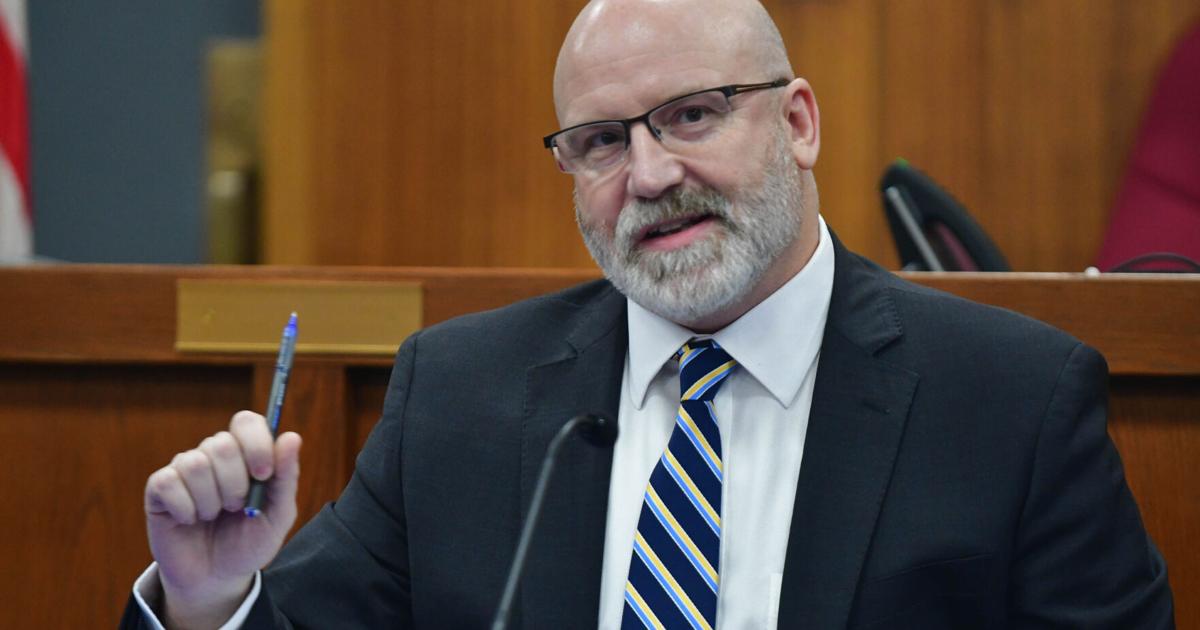
North Adams Public Schools Superintendent Timothy Callahan presented the district’s proposed fiscal 2027 budget Tuesday, highlighting a widening gap between Chapter 70 state aid and the rising cost of operating the schools.
NORTH ADAMS — The city school district’s proposed fiscal 2027 budget reflects a difficult balancing act: rising costs, declining enrollment and increasing demand for special education.
That was the assessment of Superintendent Tim Callahan, who presented the $22.3 million draft budget to the School Commitee on Tuesday. The budget represents a roughly 3.5 percent increase, or $760,000, over last year's plan. It will maintain a level service budget by rearranging staff and drawing on school choice reserves.
The budget, which largely pays for teacher salaries, student support services and operational costs, is funded through Chapter 70 state aid, which rose about half a percent, school choice and local funding.
After an upcoming public hearing, which has yet to be scheduled, the School Committee will vote on the budget. Once approved, it will head to the the City Council.
After laying off 20 teachers following the closure of Greylock Elementary School in 2024, Callahan said it was notable that the district is still facing “increasingly rising costs.”
He continued to sound the alarm about the Chapter 70 funding formula and its ability to keep up with the district’s needs, particularly for students with disabilities. Under the current formula, Callahan said, districts statewide “get proportionally less state funding," leaving more of the burden for communities to shoulder.
“We need more advocacy from everyone on the inequities of state funding for schools,” he said. “Our district is in the position to weather these funding storms with stability due to our reserves, while some other districts are facing significant layoffs as early as this budget cycle.”
Callahan said that through reallocation of full-time staff, the district was able to maintain the budget while addressing “priority” improvement areas like special education, leadership around curriculum instruction and assessment.
At Drury High School, for example, science teachers are picking up health classes, freeing up a position that will become the board certified behavioral analyst, which will lead training for teacher assistants.
The budget is also restoring a director of curriculum at Brayton Elementary School, with a salary of $94,592, funded by repurposing another full-time role.
Director of School Finance and Operation Nancy Rauscher said the district had to dip deeper into school choice reserves — more than $500,000 — to maintain a level service budget. Callahan said the district has been conservative with reserve funding without having to make any cuts but warned that continued stagnation of state aid would lead to layoffs.
Local funding rose 4 percent, or about $161,000, a larger bump than in recent years, Rauscher said, because of Chapter 70 “leveling off.” The district was previously receiving Elementary and Secondary School Relief funds in response to the COVID-19 pandemic that also recently ended.
Those funds helped recover from the pandemic, Callahan said, but “also shielded the public from awareness that Chapter 70 wasn’t working.”
Transportation costs increased, including more than $45,000 in additional vocational technical transportation to serve two students instead of one.
And special education remains a significant cost pressure. About 20 students are currently in out-of-district-placements, costing roughly $3 million. Rauscher said $1.6 million of state circuit breaker funds offset this cost and the district saved about $800,000 serving 47 special education students in-district.
Enrollment is down to less than 1,100, but special education needs are climbing.
Chapter 70 calculations assume 16 percent of a district's population are students that require special education services. At a March City Council meeting, Callahan said the district actually has closer to 40 percent of students receiving services such as individualized education plans, or IEPs.
Callahan said that 40 percent of Brayton students kindergarten through second grade are on IEPs. He said that 62 percent of district preschoolers aged 3 to 5 are on IEPs — and Chapter 70 does not provide preschool funding.
“That may be a bubble, and may not stay that high, but it's still an area of concern,” he said.
Recently, Callahan said the committee has been advocating for Chapter 70 changes at state “listening sessions” and meetings with state representatives. It’s not just a matter of Chapter 70 “not keeping pace,” he said, but also that the calculation has “flaws” that disproportionately “penalize districts like ours with a high students with disabilities percentage and a low-income population.”
“The state knows the formula has to change,” he said. “Almost every district across the state is facing funding issues … and something has to give.”
Read the Original Article
This article was originally published by Berkshire Eagle. Click below to read the full article on their website.
Visit Berkshire Eagle