Northern Berkshire school districts are seeking a consultant to study possible regionalization
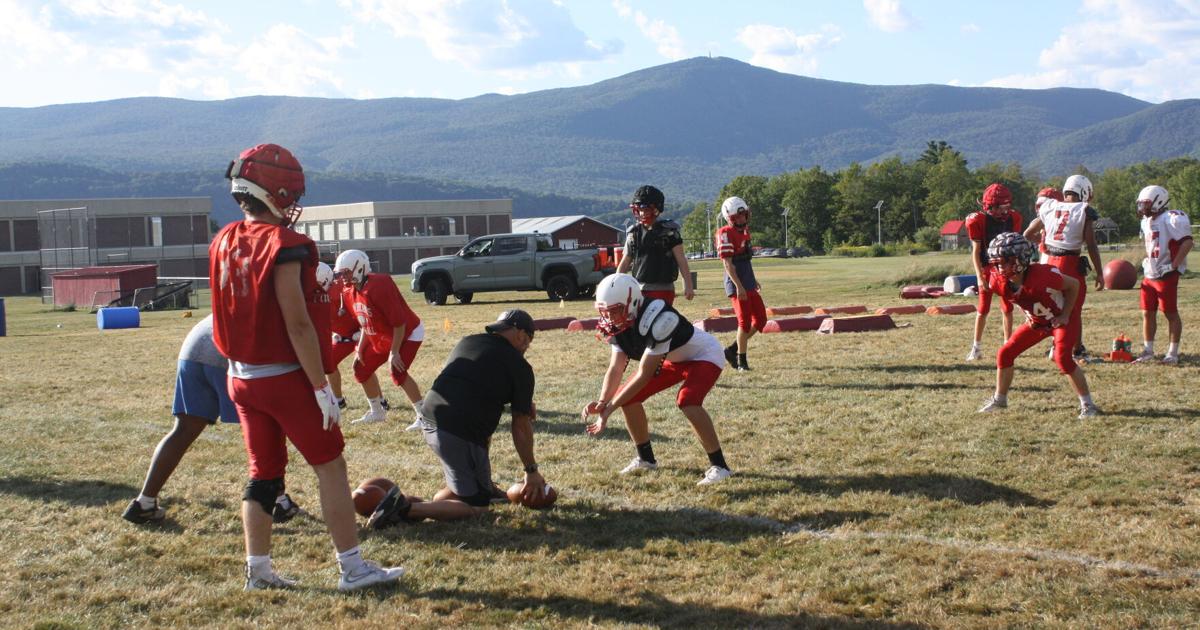
Four northern Berkshire public school districts have taken the next step toward possible collaboration and regionalization.
The coalition of districts, representing nine towns, have submitted a request for proposals seeking a consultant to study the possibility of regionalization to achieve sustainability in educational programming.
The request, which was posted Dec. 18, seeks a consultant to “evaluate long-term sustainability options that maintain or enhance educational quality, diverse programming, and fiscal efficiency through shared services, program consolidation, and/or regional collaboration.” Proposals are due at noon Jan. 20.
The study will focus on grades six to 12 across the North Berkshire School Union, North Adams Public Schools, Hoosac Valley Regional School District and Mount Greylock Regional School District.
The group that formed this proposal over the past few months will expand to review it, approximately doubling in size. Communities and school districts have been working to add representatives to the steering committee. The four superintendents serve ex officio.
Driving this process is decllining population and decreasing enrollment across the region, along with a narrowing of programming options in academic, athletic and extracurricular activities at the schools.
Northern Berkshire School Union Superintendent John Franzoni, who said there had been inquiries from six consultants as of late last week, explained the reason for studying grades six to 12.
“That's the grade levels where enrollments in the towns are dropping,” he said. “There’s more choices in those grade levels charter schools and vocational schools. And it seems to be really one of the driving factors with lower numbers in these combined junior high school-high schools that we have now.”
Franzoni hopes the study will offer options for a variety of programming including academics, athletics — where the schools are already collaborating — and special education, which was tried for a brief period of time.
“t's a chance for us to consolidate our resources to provide better educational opportunities, you to our students and all these nine towns,” he said. “We have to work together in the future if we’re going to be successful.
The work is expected to take six to 12 months.
“I think most of the committee believes it'll take the 12 months,” he said. “I think there are a couple who would like it to move quicker than that. I think that's the reason for the range.”
The communities and school districts have a total of $125,000 to devote to this study: $100,000 secured by state Rep. John Barrett III, D-North Adams, through Fair Share Funding, and $25,000 from Berkshire Educational Resources K12.
“The thought was it’s probably going to take more than that to complete this study,” Franzoni said, adding he believes state there may be more funding available through the state Legislature,
Objectives of the study include:
• Assessing current and projected enrollment, programs, staffing, facilities and finances for secondary education across the four districts, identifying strengths, opportunities, challenges and inefficiencies.
• Facilitating transparent, inclusive stakeholder engagement, prioritizing and incorporating community identity in collaboration with the Steering Committee.
• Identifying at least four realistic sustainability models with a focus on the secondary level. These models may follow past practice of regionalization efforts or employ creative, innovative solutions. Models may include shared services, grade reconfiguration, and/or regionalization.
• Forecasting legal, fiscal, operational, programmatic and governance implications of each proposed model for discussion with the Steering Committee.
• Synthesizing findings into a comprehensive report.
The consultant will be expected to hold a kickoff meeting with the joint steering committee, analyze current enrollment trends, per pupil costs, facilities utilization, staffing ratios, program offerings, and deliver a baseline report.
The consultant also will be expected to do extensive community engagement, including holding public forums, focus groups, surveys and deliver presentations of feedback.
In addition, the consultant will be expected deliver at least four sustainability scenarios “such as shared services, grade reconfiguration, collaborative programming, and/or partial/full regionalization,” to model them and to offer a final recommendation and roadmap.
Read the Original Article
This article was originally published by Berkshire Eagle. Click below to read the full article on their website.
Visit Berkshire Eagle