
Pittsfield City Council scraps camping ban in favor of homelessness outreach program
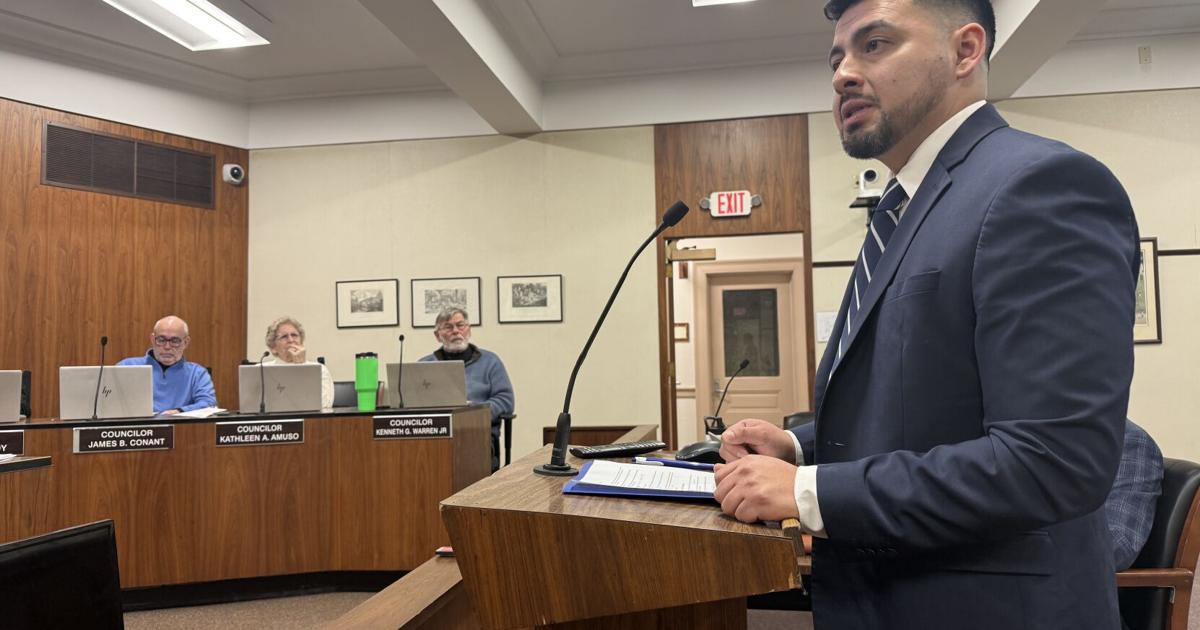
PITTSFIELD – The City Council on Tuesday voted unanimously to scrap a proposed camping ban and instead move forward with a public health-based outreach program to address homelessness.
The decision follows a monthslong review by the Pittsfield Board of Health, which urged councilors to abandon the enforcement-focused ordinance in favor of an alternative community response program centered on relationship-based outreach, service coordination and public health.
The camping ordinance, introduced last spring by Mayor Peter Marchetti, was intended to address complaints from downtown business owners about trash, public defecation, panhandling and people sleeping in doorways. The proposal would have prohibited camping and the construction of shelters on city-owned property.
Instead, health officials argued that homelessness should be treated as a public health issue rather than a criminal one. In its report, the Board of Health said homelessness is a complex issue driven by housing instability, health challenges and economic factors — and that visible street homelessness is a symptom of deeper systemic problems, not the root cause.
Director of Public Health Andy Cambi told councilors that the city’s current approach is largely reactive.
“We have police and co-responders responding to crisis calls, but there is no consistent municipal public health approach,” Cambi said. “Once we identified that gap, it helped shape our recommendation.”
Under the proposal, the Health Department would add two homelessness service coordinator positions to conduct daily outreach, build long-term relationships with unhoused individuals and coordinate care with existing providers. The outreach team would focus particular attention on downtown areas, where the impacts of homelessness are most visible.
Cambi said the pilot is structured to avoid adding to the city’s operating budget. He said that the department plans to draw on opioid settlement funds, grants and an already vacant social worker position that Cambi held open pending these discussions.
The outreach-based approach would emphasize problem-solving rather than enforcement, helping those in need access public restrooms, understand public health expectations and connect with services. Outreach workers would also link people to The First, the city’s new community resource center offering restrooms, storage and space to rest.
The program is modeled in part after the Northampton Division of Community Care, a nonclinical, person-centered response team focused on crisis intervention and long-term support rather than punitive measures.
As part of its review, the Board of Health conducted interviews with key stakeholders, met directly with unhoused individuals during a downtown walkabout, assessed local resources, reviewed homelessness programs across Massachusetts and other states and evaluated evidence-based public health research.
Councilors largely praised the process and its focus on lived experience.
“I was really heartened to see that this was a deliberate and intentional process where you looked at different options, and really, I could tell you centered on the people who are living the experience of homelessness,” Councilor Alisa Costa said. “That's really important when you're looking at public health.”
Marchetti, who wrote a letter to the council in support of the new proposal, used the meeting to publicly acknowledge a shift in his own position.
“I was looking for a solution to a problem, and the problem that I was trying to solve was criminal activities or activities that are not necessarily those that we want to see in the downtown. It wasn't thinking of the other approach,” he said. “It took the Board of Health help to get there.”
The mayor also said that responsibilities related to homelessness have historically been siloed among police, the Health Department and the library, and called for a more coordinated, citywide approach.
Still, some councilors raised concerns about enforcement and downtown business impacts. Councilor Cam Cunningham said business owners have expressed frustration and concerns about safety and perception, and suggested additional law enforcement presence downtown in the form of a “beat” cop.
While Councilor Kathy Amuso echoed Cunningham’s concerns, others disagreed.
Councilor Patrick Kavey pointed out that behaviors like public drinking and defecation are already illegal under existing law, while Councilor Dina Lampiasi said the proposed outreach model is meant to break harmful cycles before situations escalate to punitive responses, like police enforcement.
Still, Marchetti added that while the camping ban is being dropped, the administration may still return to the council with proposed ordinance changes — on issues such as drinking in public or loitering — to help police address specific behaviors, while the primary response to homelessness shifts toward services and public health.
Cambi said the program would launch as a pilot with defined metrics, be monitored on an ongoing basis and undergo a formal review after six months.
The council voted unanimously to file the camping ordinance and refer the new outreach proposal to the Public Health and Safety Subcommittee for further development. Cambi said he expects to present a formal proposal at the committee’s March 17 meeting, with the goal of launching the program this spring or summer.
“I don’t think I could say it any louder,” Marchetti said about the ordinance. “It was a bad idea. Please file.”
Read the Original Article
This article was originally published by Berkshire Eagle. Click below to read the full article on their website.
Visit Berkshire Eagle