
Pittsfield pushes to convert county’s last peaker plant into clean battery storage
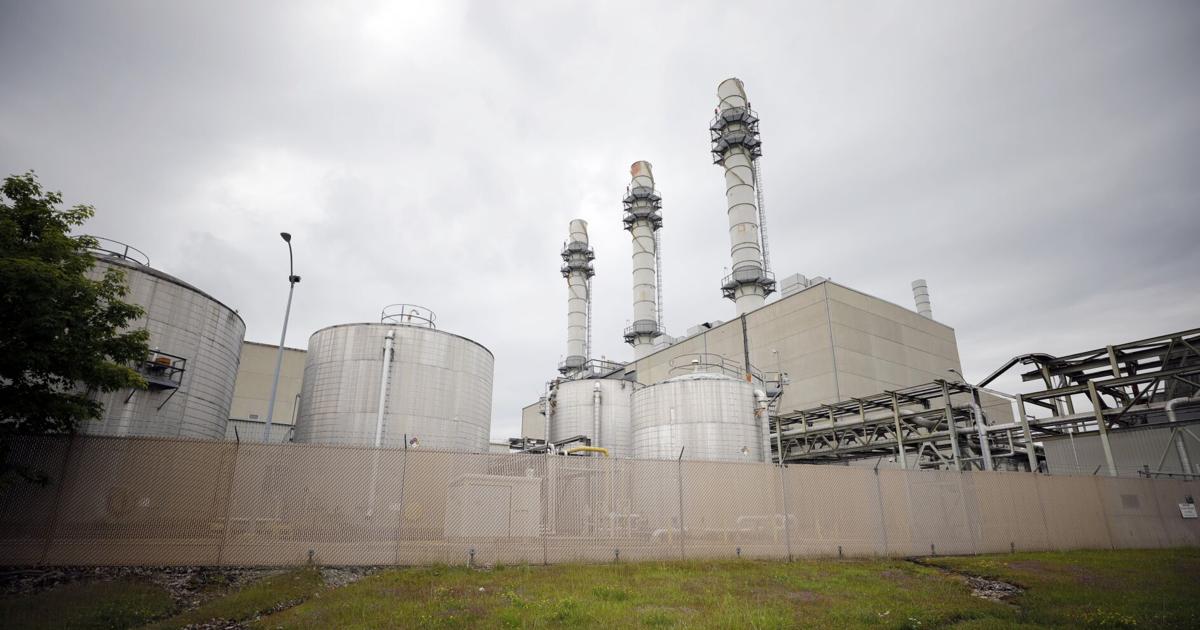
PITTSFIELD — The city is looking to transition the last peaker plant in the county to a modern battery energy storage facility.
The City Council last week voted to send a letter to the Office of Energy Transformation seeking support for converting the fossil-fuel-fired Pittsfield Generating Co. plant, owned by Hull Street Energy, into a battery energy storage facility capable of storing clean, renewable power.
Gov. Maura Healey formed the Energy Transformation Advisory Board to help shape the work of the new Office of Energy Transformation, which is focused on moving Massachusetts from gas to electric in an affordable and equitable way while readying the grid for the state’s climate goals. A working group under that effort is specifically examining peaker plants.
Peaker plants are backup power stations that switch on only when electricity demand spikes. They act as a safety valve for the grid — kicking in during heat waves, cold snaps or other moments when overall usage surges.
The push to transition the facility comes amid growing concerns about the plant’s pollution and its impact on nearby neighborhoods such as Morningside and Allendale — areas with some of Pittsfield’s most vulnerable residents.
Environmental advocates say the plant has long contributed to health disparities in the city.
The facility, located at 235 Merrill Road — less than 950 feet from Allendale Elementary School — is Pittsfield’s largest greenhouse gas emitter and the second-highest emitter in Berkshire County after Specialty Minerals in Adams, according to Rosemary Wessel, program director of No Fracked Gas in Mass at the Berkshire Environmental Action Team.
Residents report feeling the impacts directly.
“In the past 10 years, I have had to close my windows at night. In a heat wave, this is not a good thing,” an Imperial Avenue resident said in a statement read by Wessel during last month’s Public Health and Safety Committee meeting. “My breathing is affected much more in the summertime. I have mild asthma, and I never experienced this to this extent in the past.”
Doctors also have raised alarms.
“There is no safe level of air pollution,” said Dr. Steve Averbuch. “Given the fact that the Morningside community is already vulnerable, whatever amount is coming out of this plant is just going to contribute to their health burden from all the other underlying causes that they're subject to.”
Life expectancy in Morningside is more than 12 years shorter than in Pittsfield’s outlying neighborhoods according to a study done by the Berkshire Regional Planning Commission. While multiple factors play into this disparity, including income inequality and access to medical care, Wessel noted that air quality is one of the few variables the city can directly address.
By burning fossil fuels, the plant releases pollutants such as fine particulate matter (PM2.5), sulfur dioxide and nitrogen oxides, which are linked to asthma, cardiovascular disease, reduced lung function, preterm birth and premature death.
“It really affects children and the elderly the most,” Wessel said. “There's also cellular damage and inflammation that can be caused, which contributes to higher rates of cancer, heart disease, stroke, diabetes, asthma and a higher incidence of severe COVID.”
A February health study by the Applied Economics Clinic reinforced those concerns. The report found that as long as Pittsfield Generating remains operational, it “has the potential to produce much higher greenhouse gas emissions and CO pollutants in any given year,” and that nearby environmental justice communities face heightened risks of adverse health outcomes because of existing socioeconomic and health inequities.
But the study also pointed to a clear path forward.
The third key finding, Wessel said, is that “replacing fossil fuel power plants with clean energy can reduce emissions in this area.”
Pittsfield Generating, which is about 35 years old and runs on fracked natural gas and oil, is the last of its kind in the Berkshires. Two others, located on Woodland Road in Lee and Doreen Street in Pittsfield, closed in 2022 and have since been dismantled.
And the plant’s contribution to the city is shrinking. Wessel noted that Pittsfield Generating successfully appealed to the state tax board to cut its annual tax bill in half due to depreciation — dropping from roughly $674,000 to about $350,000 a year.
The plant also employs very few people. For most of the year, only two staff members are on site, with a crew of six brought in only when the plant fires up, according to company figures.
And it doesn’t run often. The Massachusetts Department of Environmental Protection estimates that peaker plants like Pittsfield Generating operate less than 10 to 15 percent of the time.
Wessel said a modern battery energy storage system could provide the same backup power — without the emissions.
Battery energy storage systems store energy from traditional and renewable sources locally until needed. Typically, such systems can harness power from sustainable sources, such as solar arrays or wind turbines, and store it for use when needed.
Wessel said that a battery storage facility could also simply be added to the plant’s operations to replace fossil fuel generation and decarbonize the plant.
Although concerns were raised about battery storage fires at both Tuesday’s City Council meeting and last month’s Public Health and Safety Committee meeting, Wessel emphasized that modern systems use Lithium Iron Phosphate, or LFP batteries, which she described as “much safer.”
And he noted that significant safety improvements have been made since high-profile California incidents, including a fire last January that burned for three days at a battery energy storage facility that involved lithium-ion battery modules.
“There's also increased protection from fire and thermal runaway because of the chemical makeup [of LFP batteries], but also because of increasing safety measures that go into these systems,” she said, referring to the sort of chain-reaction event that can lead to battery fires. “They tend to have thermal sensors in them so they can catch a thermal runaway before it turns into a problem … fire suppression systems … [and] better regulations on spacing out the different containers so that if one does catch fire, it can't spread to the other containers.”
Battery storage would not only cut pollution and improve community health, but could also help lower electricity costs during peak demand periods — times when prices spike because the peaker plant comes online.
“When these peaks happen, prices can jump to 10 times a normal day,” Wessel said, explaining that ISO New England buys the cheapest power first and moves up the cost ladder as demand rises.
Replacing old fossil-fuel equipment with new battery technology could expand property tax revenue, reduce long-term costs and help insulate Pittsfield from energy rate shocks related to fossil fuel imports.
The city and the Berkshire Environmental Action Team say they’re trying to partner with Hull Street on making the conversion happen. Pittsfield showed its support for this direction back in 2021, when the Board of Health signed a letter urging a shift away from fossil fuels and opening discussions with the plant’s owners.
“We need green energy,” said Councilor Parick Kavey. “We want our kids to have clean water and clean and air.”
Read the Original Article
This article was originally published by Berkshire Eagle. Click below to read the full article on their website.
Visit Berkshire Eagle