
Pittsfield School Committee upholds freeze on intradistrict choice for elementary schools
PITTSFIELD — Intradistrict school choice for Pittsfield Public Schools is staying frozen for now.
A proposal to undo a policy shift pausing a program allowing elementary students to attend schools outside their enrollment district was voted down 6-1 by the School Committee on Wednesday.
Committee member Ciara Batory had proposed ending the moratorium, announced by interim Superintendent Latifah Phillips at the body’s March 10 meeting. Batory raised concerns about halting the program at that meeting, stating that families were “voting with their feet.”
“If we have something that is working we need to preserve it. Families are choosing these classrooms,” she said Wednesday. “People want to go from other districts to these classrooms. … Some of these schools only exist because kids choice in,” she added, citing Capeless Elementary School as an example.
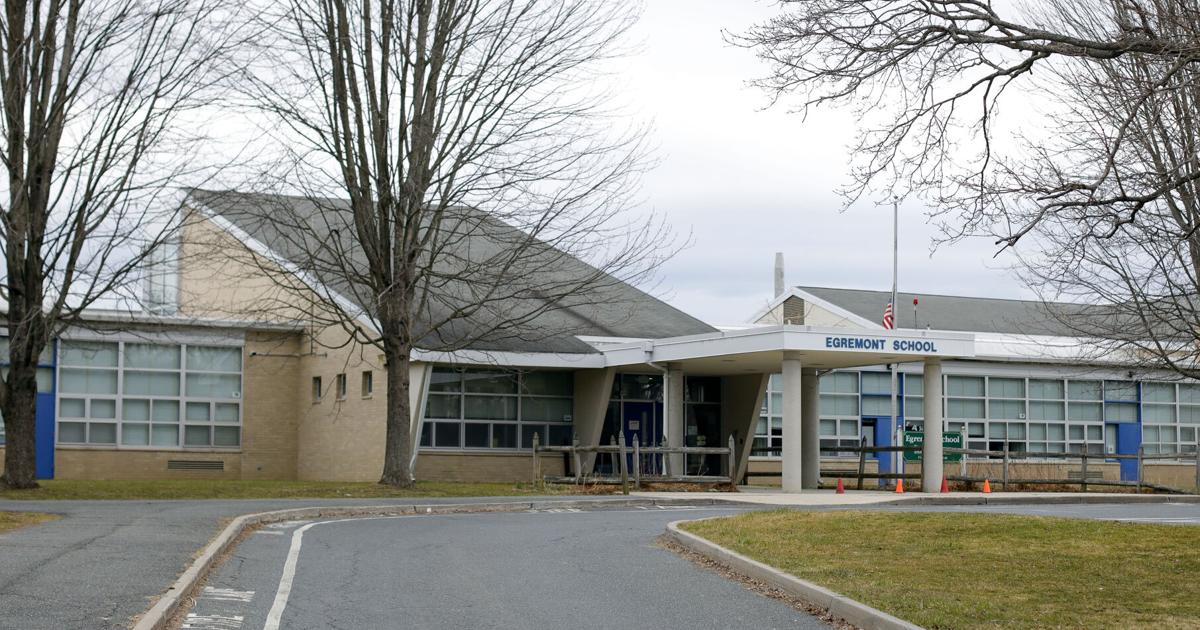
At the March 10 meeting, Phillips explained that continuing intradistrict choice would hinder the process of right-sizing class sizes as the district works to overcome a $4.3 million budget deficit. She said efficiencies can’t be obtained by maintaining smaller class sizes at smaller schools such as Williams, Egremont and Capeless, while continuing larger class sizes at Morningside, Conte and Crosby.
“If we add something in we have to take something out, so I need to know what the trade off is,” member Daniel Elias said. He warned the result could be “something else coming out that may be equally as important to you. … Without the full picture of what that is, it’s hard to say yes.”
Committee member Heather McNeice asked if the freeze was in place so that the district, with so many moving parts to implement for the 2026-27 school year, doesn’t add more. For example, she said if Morningside Community School closes, as is being considered, the district has to assess where that school’s students will be going.
“We had a discussion about reductions at many schools,” including Pittsfield High School, Phillips said. “Everything we chose is making a decision for something that’s either been allocated or not allocated.
“If we were to, at this moment, expand classrooms that have been right-sized, that would mean everybody else with a [budget] reduction would be off the table. We’d have to stop talking,” she said. “We can’t restore all the right-sized classrooms across the district. “
According to data provided by the administration, 8 percent of the district — 388 students — use intradistrict choice.
Of students leaving their enrollment districts, 199 — 51.2 percent — come from three elementary schools that have struggled in the state’s accountability ratings over the past several years: Crosby Elementary School, Conte Community School and Morningside Community School.
Meanwhile, Capeless Elementary School (63), Egremont Elementary School (55) and Williams Elementary School (39) together received 40.4 percent of all city students opting out of their geographic district.
During the meeting’s public comment period, Emily Day, a former district employee, said transfers have had the effect of pulling resources away from schools with greater needs by artificially growing enrollment at the smaller schools.
“It's about ensuring that students with the greatest needs receive the resources necessary for their advancement,” Day said. “Achieving this goal becomes increasingly difficult if parents can transfer their children freely between schools, thereby reallocating vital resources.”
Another speaker, Sidney Hamilton, cautioned the School Committee against using labels to characterize the city schools or distinguish them from each other — namely, referring to the “Tier I” schools of Capeless, Egremont and Williams as “good schools.”
That, she said, is a disservice to teachers and students at the rest of the city’s schools.
“While this sounds harmless, it sends a message, whether intentional or not, that the others must be bad,” Hamilton said. “By doing so, we have placed a label on every student, family and educators from most schools. When these labels are repeated over and over again, especially by people in positions of power, they shape the way our community views our schools, our families and most importantly, our children. As we should have learned by now, labels have real impact.”
Hamilton, a social worker, is a graduate of Conte Community School, Reid Middle School and Taconic High School — all of which, she said, have been handed negative labels over the years.
“Our students do not need or deserve to be defined by labels, but to be supported with the resources, opportunities and belief that every school community deserves,” Hamilton said. “If we truly want every student in the Pittsfield Public Schools to receive an equitable education, then it's time to stop leaving some schools as better than others, and start investing in all of them.”
Read the Original Article
This article was originally published by Berkshire Eagle. Click below to read the full article on their website.
Visit Berkshire Eagle