
Schools need to meet a surge in student mental health needs. Money, trained psychologists in short supply
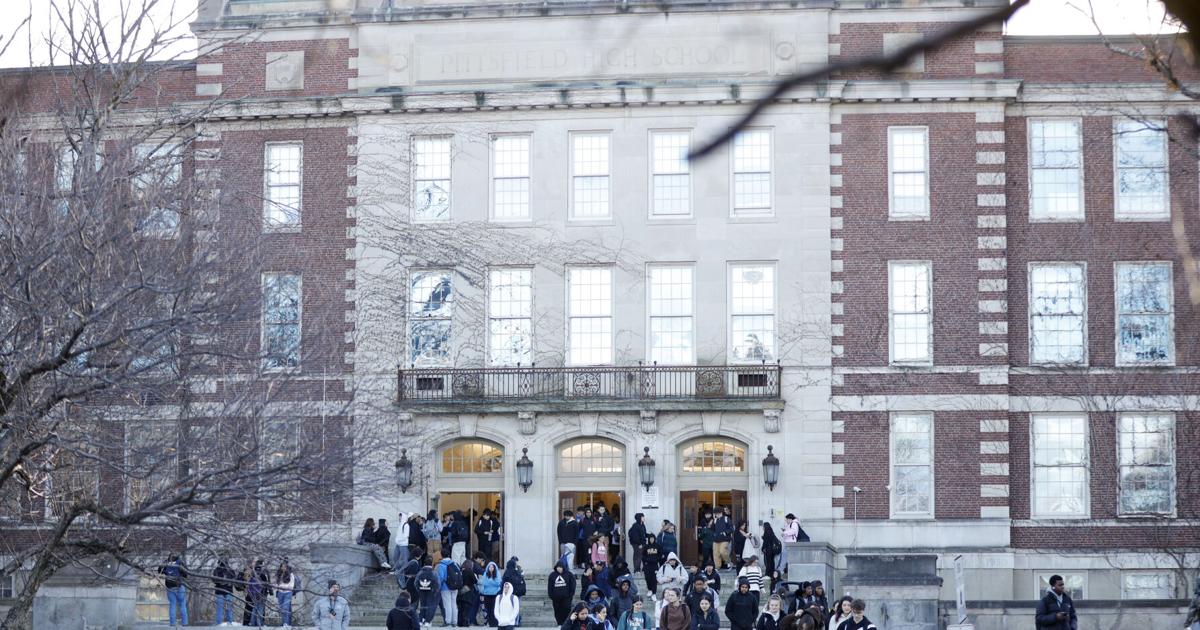
Schools nationwide are still struggling to meet students’ mental health needs after the pandemic, and a shortage of qualified professionals isn’t helping — even in states like Massachusetts, which are faring better than most.
In Pittsfield, just four full-time school psychologists serve 4,680 students across 14 schools, far short of the national recommendation of one for every 500 students. The shortage reflects a broader statewide and national trend, leaving districts scrambling for hires and patching together outside services to fill the gap.
But it’s not a problem unique to the district or even to Berkshire County. Across Massachusetts, the National Association of School Psychologists reported an average of one school psychologist per 663 students for the 2024-25 academic year.
“This is not a Pittsfield issue. It's a nationwide issue,” said Christine Macros-Guerrero, interim director of social emotional learning and student support at Pittsfield Public Schools. But Pittsfield, she noted, is an especially difficult district to hire for because it carries a large caseload.
Pittsfield Public Schools has been trying to increase its school psychologist staff, but finding candidates has been a struggle. Four additional school psychologist positions remain vacant, despite Macros-Guerrero estimating they’ve been open for over a year.
While the district has a comparatively robust staff of school adjustment counselors — 22 across the entire district — who assist students during moments of crisis and provide short-term counseling, school psychologists are still needed to provide assessments for individual education programs, or IEPs, and special education eligibility. Those assessments can play a key role in addressing mental health issues by connecting a student with the proper channels of support, setting them up for long-term success.
The pandemic shutdown in 2020, which brought distance learning with it, deprived many students of valuable socialization during key developmental years and exacerbated an existing rise in mental health issues.
That increase in need, paired with a nationwide shortage of qualified school psychologists, social workers and mental health professionals, has placed more pressure on existing staff members and made care more difficult for students and families to access.
Over the past few years, districts across Berkshire County have found creative ways to fill in the gaps. Pittsfield Public Schools receives additional support from a patchwork of outside agencies, including telehealth services from Cartwheel Care and mental health assessments from contracted psychologists and practices located throughout the state and beyond.
Some districts are also using grant funding to bolster their offerings, though amounts aren’t always reliable. In January, North Adams Public Schools received $44,910 in state grant funding to support school partnerships with local mental health agencies and providers — less than half the amount they received for the same purpose in early 2025.
Despite those workarounds, hiring full-time staff is still a vital way to support students experiencing an unprecedented level of need. But it remains a challenge as Berkshire County school districts struggle to attract candidates with the necessary qualifications.
By working to close gaps in care, administrators hope schools can more effectively educate their students while simultaneously destigmatizing mental health care.
“When we’re talking about students, it’s around how can we situate them for learning,” said Latifah Phillips, interim superintendent for Pittsfield Public Schools. “If there are mental health barriers, behavioral barriers, whatever they are, to learning, that’s where we have the vested interest in removing those barriers.”
Those barriers have become more prevalent in recent years as mental health struggles among youth, already steadily on the rise, continue to increase in the wake of the pandemic. The Massachusetts Youth Health Survey, released every two years, reported in 2023 that about 34 percent of high schoolers said they felt so “sad or hopeless” that they stopped doing usual activities, compared with 27 percent in 2017.
Last spring, the National Alliance on Mental Illness reported that 93,000 adolescents in Massachusetts experience a major depressive episode each year. About 59,000 adolescents in the state experience serious thoughts of suicide each year.
“There’s definitely a high demand for care,” said Morgan Langlois, division director for child and adolescent services at the Brien Center.
Langlois cited anxiety, depression and school avoidance as issues that have become increasingly prevalent among student populations following the pandemic.
“Some of these kids were in their prime development years when the world shut down,” Langlois said. “They didn’t get the opportunity to be in social situations in the schools.”
But in the face of that need, hiring psychologists trained to work in educational settings is more challenging than ever.
The starting salary for a school psychologist at Pittsfield Public Schools is $85,659, according to Phillips. That’s below the annual median wage for a school psychologist — $90,940 as of 2023, according to the U.S. Bureau of Labor Statistics — though there is the potential for a salary increase to $94,575 later, which exceeds that average.
Yet attracting candidates remains a challenge for districts in Berkshire County, which are impeded by their geographic distance from schools that provide the advanced degrees aspiring school psychologists need. The closure of the College of St. Rose in Albany, New York, in 2024 meant the loss of its educational psychology graduate program, cutting off a key source of new psychologists looking to begin their careers in the surrounding region.
Ashley Benson, a psychotherapist, is the owner of Optimal Healing, a mental health practice based in North Adams that partners with local school districts to provide care. She said certain aspects of the job itself can also serve as a deterrent for would-be candidates.
“I think a lot of people tend to veer away from mental health fields because of insurance complexities,” she said, noting that work with children is often not covered. “It can get very complex in terms of billing and reimbursement.”
Those who do pursue the field, Benson said, can find themselves overwhelmed, especially in districts with large student caseloads and less staff.
“That person is required to do so much,” she said. “They are required to be there for the staff and the teachers. There's a tremendous amount of pressure on that individual that occasionally goes unrecognized.”
Courtney Bopp, a school psychologist for Hoosac Valley Regional School District, knows her district is lucky. She’s one of two school psychologists serving 992 students across the district, placing them within the recommended ratio.
“I think having that ratio helps our counselors and psychologists build our relationships not only with our kids, so productive work can be done in our schools, but also with our families,” she said.
Still, she said, external support from programs like Optimal Healing can be valuable even for districts with enough school psychologists. “Because of the number of levels we’re completing, we don’t always have the time to meet with students to build mental health skills,” she said.
In overextended districts without that support, the damage is twofold: School psychologists facing high caseloads are unable to fulfill their roles effectively, and students struggle to receive adequate care.
“The ability to provide nuanced and attentive support becomes difficult,” said John Crocker, director of the Massachusetts School Mental Health Consortium. “The reality is that it has an impact on staff. It has an impact on the quality and breadth of services you can provide to a population.”
“What results,” he said, “is a lack of services, a lack of care, a lack of student-facing things.”
Read the Original Article
This article was originally published by Berkshire Eagle. Click below to read the full article on their website.
Visit Berkshire Eagle