
Small town, big history: New Marlborough preserves the past one gravestone at a time
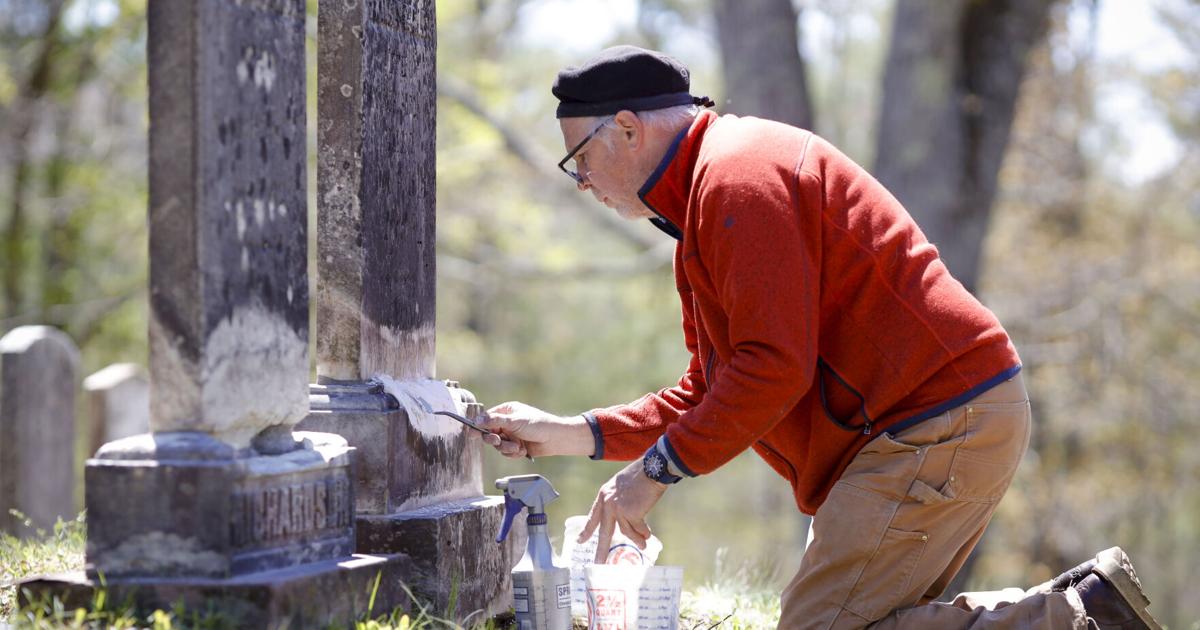
NEW MARLBOROUGH — For a town of just 1,500 people, New Marlborough has an outsized connection to its past, with 11 cemeteries scattered across the community and gravestones dating back before the Revolutionary War.
Now, residents have raised $20,000 to secure a state matching grant to restore the town’s oldest cemetery and dozens of gravestones tied to the community’s earliest settlers
The New Marlborough Historical Society has received a $20,000 state-matching grant to restore the New Marlborough Village Cemetery, oldest cemetery in the town, with graves dating back to before the Revolutionary War.
Restorations are underway at the New Marlborough Village Cemetery, with its earliest gravestone dating back to 1755. The cemetery is located on Hillingdon Road on land donated to the town by the first reverend of the New Marlborough Meeting Congregational Church in 1776.
A total of $40,000 will be used to help restore roughly 46 stones, according to John Schreiber, president of the New Marlborough Historical Society. The cost will cover about 60 to 70 percent of the damaged stones.
The Massachusetts Historical Commission’s Preservation Projects Fund is a 50 percent reimbursable matching grant program established in 1984 to support the preservation of properties, landscapes and sites listed in the State Register of Historic Places. Schreiber said this grant is the first of its kind that the town has received.
The New Marlborough Historical Society has received a $20,000 state-matching grant to restore the New Marlborough Village Cemetery. “It’s generated some interest for us to sort of look broader than this cemetery and figure out how do we restore the history of some of the other cemeteries?” John Schreiber, president of the New Marlborough Historical Society, said.
“It’s not going to cover every stone that’s crooked or broken, but most of them,” he said, adding that roughly 20 stones have already been restored.
Schreiber said that the restoration has to be done by June 30, when the grant ends. The project is being conducted by Martin and Dylan Johnson from the Monument Conservation Collaborative in Connecticut.
The contractors are working on the restoration “every day it's not raining,” Schreiber said, adding that they typically work roughly six hours a day removing decades of dirt, digging up crumbling bases and repairing cracked headstones.
A partially cleaned headstone is clamped together at the New Marlborough Village Cemetery, for which the New Marlborough Historical Society has received a $20,000 state matching grant for restoration. The funds will be used to help restore roughly 46 stones.
Martin Johnson of Monument Conservation Collaborative said each stone is “totally unique," adding that the restoration process can be complex. The stones that have been eroded take longer to restore, he said, while stones that may be leaning or mostly intact are simpler.
Dylan Johnson of Monument Conservation Collaborative out of Connecticut, digs out the base of a broken headstone from 1835 so it can be reconnected with the top of the stone at New Marlborough Village Cemetery.
On Tuesday, Schreiber, who has been on the town’s historical society since the 1980s and president for roughly three years, gave a tour of the historic cemetery. He pointed out veterans from several wars buried throughout the sloping cemetery, where weathered headstones show varying signs of age
There are 16 Revolutionary War soldiers buried there and others from the Civil War and Vietnam War, he said.
Benjamin Wheeler, one of the original settlers in town who died in 1759, is also buried there.
The 1759 headstone of Benjamin Wheeler, a founder of the town of New Marlborough, is among the oldest in the New Marlborough Village Cemetery.
Removing pine trees that had been damaging gravestones two years ago marked a major step in the cemetery’s restoration effort. Schreiber said the town and the historical society raised the money for the tree removal before applying for the state matching grant last year.
He acknowledged that the tree cutting was “a little controversial,” but said that the town and the cemetery commissioners made the decision in order to save the stones, an important part of the town's history.
Schreiber said the restoration project has been nearly 20 years in the making.
New Marlborough Historical Society President John Schreiber at the New Marlborough Village Cemetery, for which the historical society has secured a $20,000 state matching grant to restore the oldest cemetery in the town. “I think the public response of all those donations showed you the town bought into it,” Schreiber said. “It hits you like what this history was, what these people lived through to bring us to the modern era.”
The historical society hopes to continue restoring gravestones in the town’s other cemeteries as interest in local and national history grows ahead of the country’s 250th anniversary next year.
“I think the public response of all those donations showed you the town bought into it,” said Schreiber. “It hits you like what this history was, what these people lived through to bring us to the modern era.”
The historical society is also spearheading the restoration of the Campbell Falls Bridge, which is roughly 200 years old. Working with the town’s highway department, the volunteer-run historical society is hoping to bolster what it considers one of the most pristine examples of stone-arch bridges in the nation.
Matt Vita, former sports editor for The Washington Post, moved fulltime to New Marlborough three years ago and said he joined the historical society’s board as a way to learn more about the community.
The New Marlborough Historical Society’s President John Schreiber, center, stands with the society’s former president Joe Poindexter, left, and board member Matt Vita in the New Marlborough Village Cemetery — the oldest cemetery in the town, which has graves dating back to before the revolutionary war.
Vita said that when he first saw the cemetery, it had a kind of poignancy, and it was as if you could “just see the past and it was kind of scary a little bit.”
Schreiber acknowledged that all of the town's 11 cemeteries need restoration and that the most frequent question he’s been getting from residents is when they are doing other cemeteries.
“It’s generated some interest for us to sort of look broader than this cemetery and figure out how do we restore the history of some of the other cemeteries?” he said.
The New Marlborough Historical Society has received a $20,000 state matching grant to restore the New Marlborough Village Cemetery, the oldest cemetery in the town, with graves dating back to before the Revolutionary War. “I think the public response of all those donations showed you the town bought into it,” said John Schreiber, president of the New Marlborough Historical Society.
Read the Original Article
This article was originally published by Berkshire Eagle. Click below to read the full article on their website.
Visit Berkshire Eagle