
Southern Berkshire Ambulance wants more funding as costs outpace reimbursements. It's a problem across the Berkshires
GREAT BARRINGTON — The Southern Berkshire Ambulance Squad will ask voters at Saturday's annual town meeting to approve an additional $86,899 after the Select Board reduced its requested funding amid a tight budget year.
The dispute reflects a broader challenge across Berkshire County, where rising costs and shrinking reimbursements are putting emergency medical services under increasing financial strain.
“Every ambulance service is hurting,” said Southern Berkshire Ambulance Board President Jim Santos. “The numbers are just going up and up and up.”
Ambulance officials say the increases are being driven by a basic mismatch: the cost of providing emergency care is rising, while insurance reimbursements often fail to cover it. As a result, services say they lose money on most calls and are increasingly turning to municipalities to make up the difference.
On average, the Southern Berkshire Ambulance loses about $300 per call. It costs roughly $900 to respond, while reimbursement averages closer to $600 — and when patients are treated but not transported to a hospital, providers receive no payment at all, even for medications, treatment and staff time.
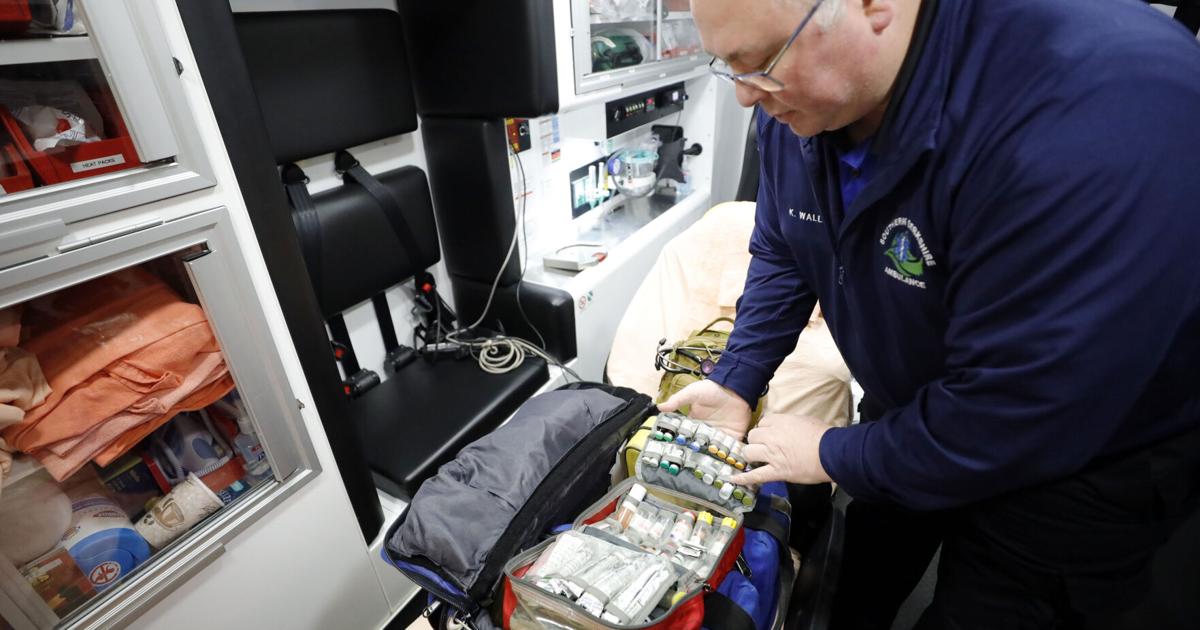
“Whether we’re with a patient for five minutes or two hours, the paramedic is administering care and using medications that we have to pay for,” Chief Kevin Wall said.
Ambulance services across the county say that gap, combined with rising costs for staffing, fuel, oxygen and medical supplies, is forcing them to seek larger contributions from municipalities already facing tight budgets.
The Great Barrington Select Board rejected the ambulance service’s initial request for a 36 percent increase, instead approving a 7 percent rise. Board members have warned for years that steep annual increases — including 36 percent in 2024 and 48.5 percent in 2025 — are unsustainable, but ambulance leaders said they were “shocked” by the decision.
“I personally was quite disappointed with it,” Santos said. “We don't do this just because we want extra money; every penny that we have asked for we need.”
In Lanesborough, the ambulance budget is rising 67 percent to $475,000 as the town shifts to 24/7 staffing after moving into a new facility, officials said, citing insufficient revenue from insurance reimbursements.
“We work continuously through committees and legislative actions to try to increase what we're able to bring in," said Jen Weber, EMS director for Lanesborough Ambulance. "It's not that we want to charge more."
Lanesborough Ambulance EMS Director Jen Weber, shown in January, said ambulance services are facing the same increases that everyone else sees. “Everybody would love for things to be cheaper," Weber said. "I think that it's just invaluable to have EMS available 24/7.”
Since Lansborough has an older population, statistically, they will need more emergency services, she said.
“We’re an insurance policy, one that we hope you don't ever have to use, but you pay for it,” Weber said. “We're all working as hard as we can to keep the cost as low as possible.”
Ambulance services see the same increases that everyone sees — rising costs of fuel, electrical and other supply chain effects.
Thank you notes from patients and kids are hung up in the lounge at Southern Berkshire Ambulance Squad in Great Barrington.
“Everybody would love for things to be cheaper," Weber said. "I think that it's just invaluable to have EMS available 24/7.”
The Southern Berkshire Ambulance service plans to bring a motion to restore the funding to its original request, along with a separate proposal to reduce and spread out the cost of its first capital request — the town’s share of two new ambulances — over three years.
“We get tremendous support from the public,” Santos said. “They appreciate what we do. The select boards and finance committees do too, but they're the ones that have to give out the money, and they've got to justify who they give it to.”
If voters reject the increase, officials said they have not mapped out a formal backup plan, but cuts likely would focus on staffing, because that is one of the few areas they can control. Those reductions, however, could drive up overtime costs and limit the service’s ability to respond efficiently.
“This is counterintuitive, but that will cost more rather than less,” said Southern Berkshire Ambulance board member Peter Most. “Also, having staff allows us to do more interfacility transports, and that helps us because that's more income.”
Southern Berkshire Ambulance Squad board members John Halbreich, left, Jim Santos, center, and Peter Most talk about the company’s financial needs heading into the 2027 fiscal year.
During a recent search for an arson suspect in Monterey, for example, one ambulance was tied up on the scene for 14 hours. Because the service was fully staffed, two other ambulances remained available for 911 calls without requiring overtime. During a fire in Great Barrington that drew a response from more than 10 towns, an ambulance was on site the whole time as well.
For 45 years, the six towns paid nothing. Now they are contributing a growing share as costs rise year after year.
“We've always had two issues: staffing and funding,” Santos said. “Funding is still an issue. It is not going to get any cheaper to provide EMS service. It is expensive, but it's something that is needed.”
Medicare and Medicaid reimbursement rates have declined, a trend affecting health providers nationwide. At the same time, the share of ambulance calls involving Medicaid patients has increased, from 50.9 percent in early 2025 to 56.2 percent in early 2026, according to the service.
“No ambulance service is fully reimbursed by insurance. Every service loses money strictly on the insurance reimbursement,” Wall said. “That's why SBA has been turned to towns. SBA has been increasingly seeking donations, has had greater fundraising efforts and is also going to the towns to make up the difference that the government and private insurance don't.”
Inside an ambulance at Southern Berkshire Ambulance Squad in Great Barrington.
The equipment and qualifications from paramedics allow the ambulance to operate like “a mini emergency room on wheels,” Santos said. The paramedic is in contact with an ER doctor if they need help, but they are able to provide lifesaving service at the scene.
Paramedics are able to deliver advanced, lifesaving care on scene — sometimes eliminating the need for a hospital visit — but without a transport, there is no billing, contributing even more to the shortfall.
“People need to understand that there are people in South County walking around today because of the treatment and care that they got on the scene,” Santos said.
Even so, officials say there remains a structural shortfall. Running a single ambulance costs more than $1 million annually, and each call results in a loss unless fully reimbursed — something providers say rarely happens.
Read the Original Article
This article was originally published by Berkshire Eagle. Click below to read the full article on their website.
Visit Berkshire Eagle