
Stockbridge reexamines $80 million luxury resort plan for Elm Court
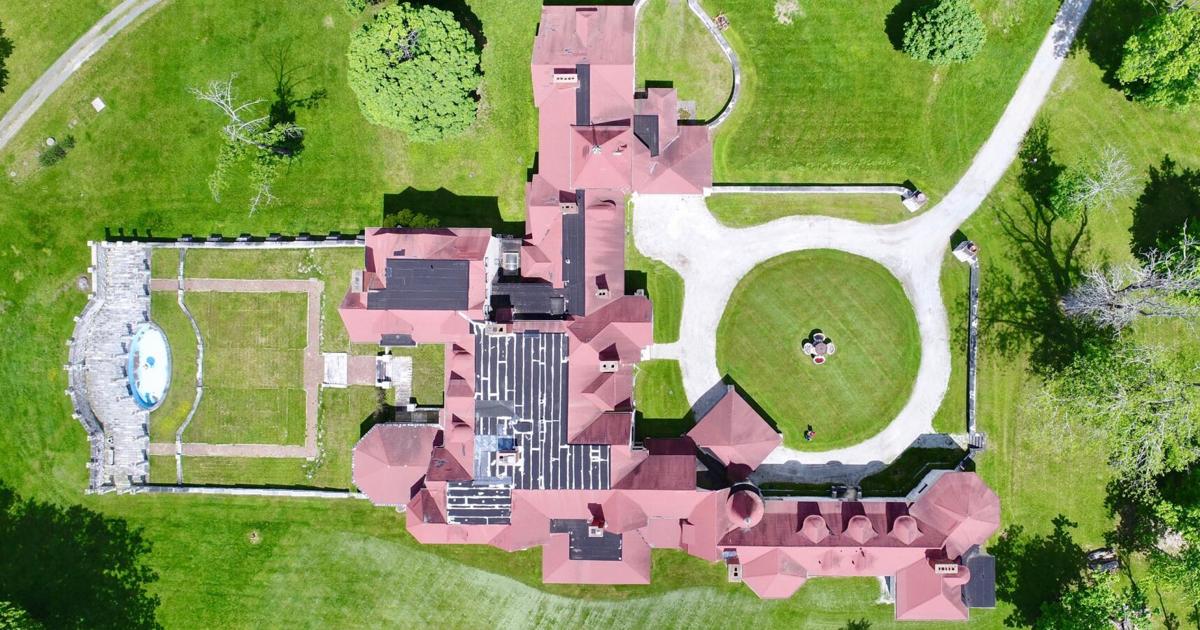
STOCKBRIDGE — The nearly $80 million proposal to redevelop the 1886 Elm Court estate into a luxury resort and residential complex remains under review at year’s end.
A 758-page application to amend an existing special permit for a previous incarnation of the project — including a 500-page traffic study — is undergoing a peer review by Beals Associates Inc., a land-planning design and engineering firm based in Boston.
The Stockbridge Select Board voted 3-0 on Dec. 4 to request the review. The public hearing will resume on Jan, 22 at 6:30 p.m. in the Town Offices, at 50 Main St.
Elm Court was built in 1885 by Emily Vanderbilt Sloane and her husband, William Sloane. A descendant of the Vanderbilt family, John Cecil, has endorsed the proposed renovation project now undergoing an independent outside review following preliminary discussions by the Stockbridge Select Board and the Planning Boax.
Among the key issues for the peer review: Should Vanderbilt Berkshires Estate LLC, led by developer Linda S. Law, have presented a new special permit given the changes in the proposal from the permit approved by Stockbridge and Lenox boards in 2014?
That mega-resort remained unbuilt after the developer, Amstar/Travaasa, bailed on the project following six years of legal challenges and the impact of the COVID-19 pandemic in 2020.
Any plan must be approved by both towns since 86 acres of the Gilded Age property at 310 Old Stockbridge Road are in Stockbridge, but 3 acres of road frontage and a portion of the main entrance are in Lenox.
In an advisory vote, the Stockbridge Planning Board recommended earlier this month that the project should be resubmitted as a new special permit application. Some neighborhood residents have voiced the same opinion.
Law, the former owner of Blantyre in Lenox who, along with her partners and investors, bought Elm Court for a discounted $8 million in December 2022, proposes to complete restoration of the Manor House with 26 guest rooms and suites and to build 12 new detached, low-profile lodges with a total of 48 guest rooms, four per building.
The proposed site plan for the Elm Court Estate, prepared by Practice Landscape of Boston. One-third of the property, shown at left, will be conserved. Another one-third will be preserved, including the Manor House, its landscape design and its viewscapes. The rest will be developed as part of a 112-room high-end resort and residential project.
Also, the plan by Foresight Land Services in Pittsfield calls for 38 condominium resort residences, whose owners could access all amenities.
Total guest room count: 112. That’s the same total as the plan approved in 2014, but it no longer includes a massive, multistory, 96-room annex added to the estate's Manor House. It does include six dispersed parking areas for up to 218 vehicles.
Both proposals included a 60-seat fine dining restaurant and a high-end spa, now pegged to be 15,000 square feet, a slight reduction.
“We take complex projects that others will not touch and the result is always the same,” Law told the Select Board on Dec. 4. “Stronger public resources, a healthier local economy and long-term stability. Our responsibility is to deliver the lowest-impact, highest-benefit version of what is already permitted.”
Law declared that “Elm Court will be a restored, historic landmark that contributes significantly to the town’s fiscal base and preserves the open space and character of Stockbridge.”
Her CEO Stephen Benson acknowledged that “the risks are significant, the costs are astronomical and the margins are small and will likely decrease as this project progresses.”
The partnership team at the Vanderbilt Berkshires Estate LLC includes, from left, general contractor Ray Ranta, owner Linda Law and Richard Peiser, professor of real estate development at Harvard University Graduate School of Design. They have proposed a 112-room luxury resort complex at the 1885 Elm Court site in Stockbridge.
But he justified the commitment because “we believe after 70 years of failed attempts to restore Elm Court, it’s time to bring back this grand estate’s relevance and prominence.”
The goals include conservation, preservation and feasibility, said Benson.
“No plan is or will be perfect," he said. "We ask that you thoughtfully consider our proposal as we believe it aligns with our shared interest — to secure an everlasting future for Elm Court.”
At the Stockbridge Planning Board meeting, available on demand from ctsb.com, six of the seven members, with one abstention, voted to recommend to the Select Board that a new special permit is needed.
Long-time neighborhood resident William Korby advocated for a new permit, calling the changes in the new plan “decent” but “fundamentally different” from the 2014 proposal. His wife Carolyn voiced deep concern over the project’s impact on wildlife, including bears, coyotes and deer, in the area’s woodlands.
But Vanderbilt Berkshires Estates attorney Jonathan Silverstein noted the developer’s intent to focus on the current plan’s differences from the previously approved project.
“We’re not in any way suggesting that there haven’t been changes to the plans,” he said. “What we’re suggesting is to focus on the changes rather than starting from scratch. What shouldn’t be reviewed is what is not changing.”
Sarah Downie, an attorney and immediate neighbor, cited the larger footprint, environmental impact, lighting, parking, noise and traffic as fundamental changes requiring a new special permit.
Steven Greene, who lives a mile from Elm Court, called it “a substantially different development,” adding “it’s a little disingenuous to say it’s just a modification.” He pointed to 25 acres of clear-cutting for the proposed 50 new structures, including outbuildings. Greene also claimed that the original 2014 special permit had been abandoned because of a lack of substantial activity at the site.
But Silverstein, appearing before the Select Board, declared that the prior approval is still in effect and that there’s no legal distinction between a modification and a “new” special permit — it’s simply an approach to review the project and a way to frame the discussion and analysis, not a “shortcut.”
He also pointed out that the core elements of the project have not changed — renovation and reuse of the mansion, a luxury hotel resort, a restaurant with the same number of seats and a spa. There’s also a commitment to honor the conditions of the original approval.
What has changed is eliminating the massive original addition to the mansion, a reduction in the number of hotel rooms, the addition of home sites and a commitment to preserve most accessory structures, Silverstein said.
As for traffic impact, Ken Cramm of Fuss & O’Neill traffic engineers stated that because of fewer hotel rooms, the current version of the project would generate only three additional vehicle trips during weekday morning peak hours and fewer trips during weekday afternoons and Saturday peak hours. The firm’s study was conducted last July.
The project’s economic benefits to Stockbridge, as described by Richard Peiser, professor of real estate development at the Harvard Graduate School of Design since 1998, include $2.6 million to $3.7 million annually to the town’s tax base, 85 to 105 new permanent jobs, $2.2 million in annual local spending increases, and a $1.7 million contribution to affordable housing.
Read the Original Article
This article was originally published by Berkshire Eagle. Click below to read the full article on their website.
Visit Berkshire Eagle