
Teachers union vote looms as Pittsfield middle school plan faces a tight timeline
PITTSFIELD — The United Educators of Pittsfield will hold a membership vote later this month with significant implications for the city schools’ planned middle school restructuring.
The teachers union will ask members on April 27 if they consent to allowing leadership to reach a memorandum of understanding with the Pittsfield School Committee on a proposed change in working hours. Such a change is needed to make the restructuring work.
A "yes" vote would preclude a second member vote on the contract-specific proposal.
That matters because time is short. The vote is scheduled for just two days before the School Committee will be asked to commit to a line item budget for fiscal 2027. A public budget hearing will be held as part of the committee’s regularly scheduled April 29 meeting, and a School Committee vote on the $87.3 million spending plan is expected to follow.
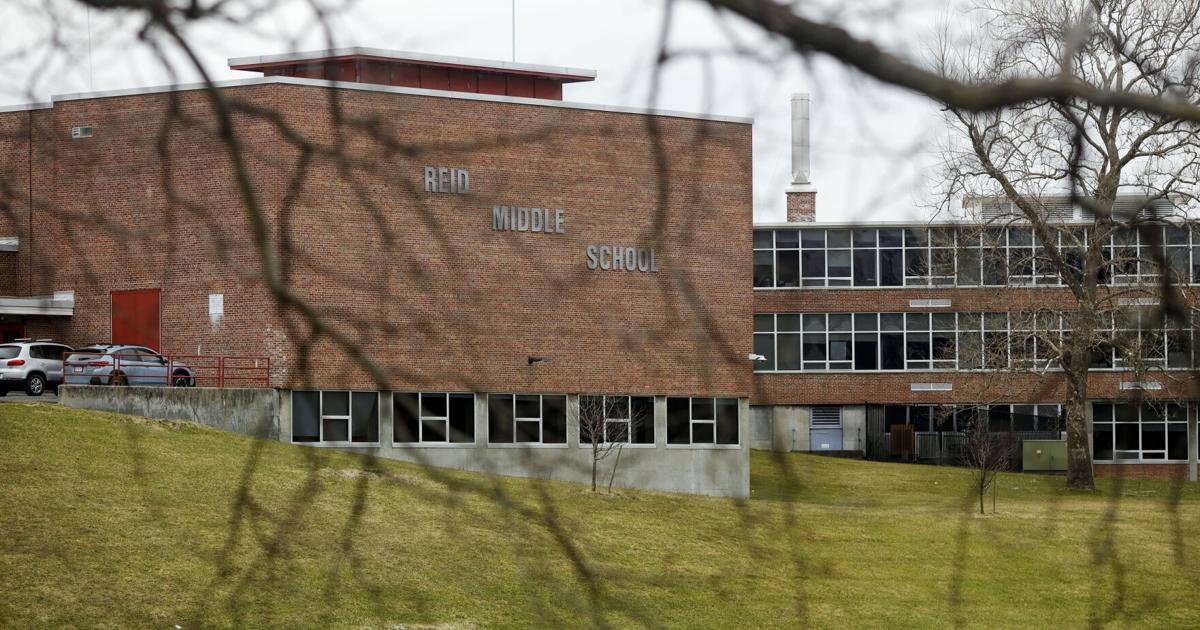
The middle school reorganization, which will send all city fifth and sixth graders to Herberg Middle School and all seventh and eighth grade students to Reid Middle School, requires changing the bell schedule to accommodate a new bus schedule. The teachers’ work schedule is governed by the contract, meaning their schedule can’t change unless the contract changes.
The work schedule change is required by the need to add a third tier of school bus service to deliver students to a pair of citywide middle schools.
An earlier vote on just such a proposal lost by nine votes on April 6. Only 203 of the union's roughly 520 members — about 39 percent — voted on the proposed change in work hours.
Following that vote, the union and the administration, led by interim Superintendent Latifah Phillips, issued a joint statement emphasizing their long-term commitment to the middle school plan.
Both sides have since told The Eagle they are continuing to work toward a solution, despite the tight timeline, that will allow for the restructuring to take effect for the 2026-27 school year.
"Throughout this process, we remain committed to supporting classroom teachers — the most critical factor in student success — and collaborating closely with our union partners to implement the initiative thoughtfully and effectively," Phillips said in the April 7 statement. "We recognize that staff and families are eager for a timeline and want to assure everyone that we are taking every step to move as efficiently as possible.”
On Wednesday, Phillips told The Eagle that the April 29 budget vote is her office’s working go/no-go decision date for the project. But she also left open the possibility that the restructuring could still happen if an agreement with the union comes after that date.
Much of the work on the ambitious project has been completed, she said Wednesday.
The restructuring, which started under former Superintendent Joseph Curtis, was created by a committee of educators, parents and administrators to improve the middle school experience. It has moved forward under Phillips, the district administration and a new School Committee.
Its goals include improving academic performance at the two schools by providing more timely intervention for students needing help, more challenges for accelerated students, and greater access to enrichment opportunities such as music and art.
Those opportunities are also seen as a key to reversing a long-standing trend of students exercising school choice around the middle school years. Making the schools citywide, rather than enrolled by geography as currently structured, is seen as a key to providing equitable opportunity to every student.
While concerns have been raised about the district's readiness for such an ambitious change, proponents and School Committee members have said that change shouldn't be delayed. Reid and Herberg both rate poorly on the state's accountability ratings, and families that have opted for out-of-district choice have cited a lack of academic challenges and problem student behaviors as their reasoning.
Read the Original Article
This article was originally published by Berkshire Eagle. Click below to read the full article on their website.
Visit Berkshire Eagle