
The cleanup plan for Reach 5A outlines five years of work to remove PCBs from the Housatonic River beginning in Pittsfield
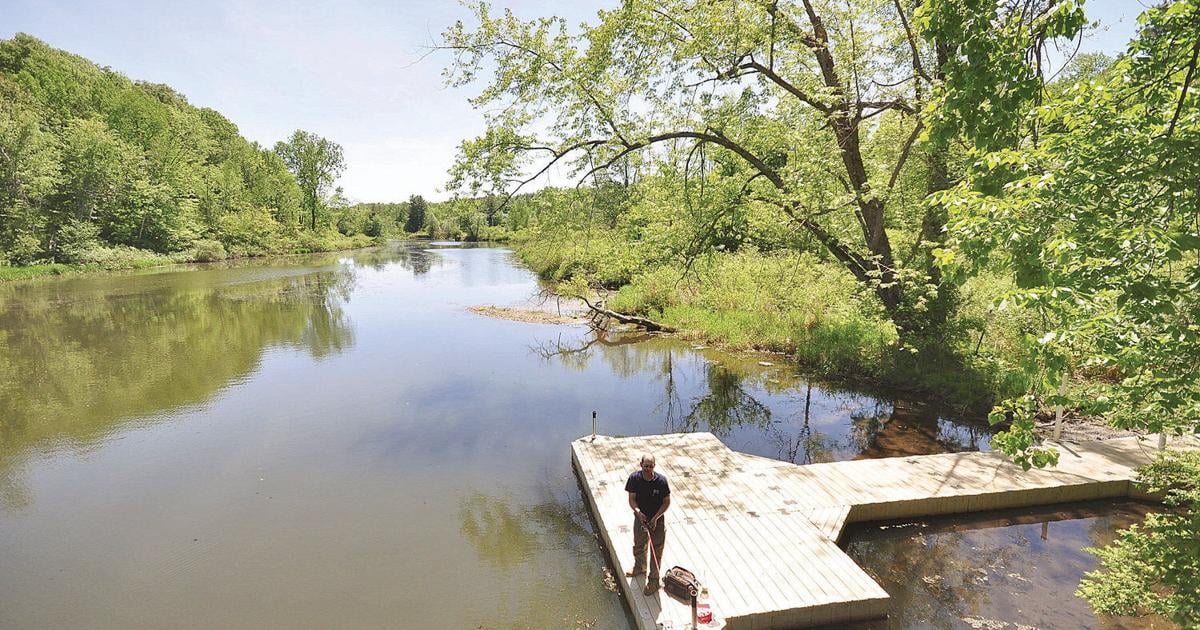
PITTSFIELD — Plans for the Rest of River cleanup of the Housatonic, a project decades in the making, have finally reached a final proposal, to be formally introduced to the county this week.
General Electric Co. has submitted plans to remove 200,000 cubic yards of PCB-contaminated sediments from Reach 5A — a five-mile stretch of the Housatonic River from Pomeroy Avenue to the city line, near Pittsfield's water treatment plant. Those plans include removing and hauling those sediments by rail, for out-of-area disposal or to a landfill being built in Lee.
That’s just the start of the Rest of River project, which removes PCBs, the chemical legacy of power transformer manufacturing in Pittsfield, from the Housatonic River between the confluence of the West and East Branches of the Housatonic and Rising Pond in Great Barrington.
On May 12, GE submitted its final plan for Reach 5A to the U.S. Environmental Protection Agency for review, as well as plans for restoring the river once the work is done. Comments are being accepted through Aug. 10.
A pair of meetings on the proposal will take place this week in Pittsfield. It's 1,594 pages of environmental science, regulatory compliance and exacting detail on how the cleanup will proceed. A companion plan outlines how restoration of the river will be undertaken. (Note: Downloads of both files are large.)
The Citizens Coordinating Council will meet at 6 p.m. today at the Berkshire Athenaeum, and on Zoom, to discuss the proposals. And an EPA meeting will be held at 6:30 p.m. Wednesday at Herberg Middle School, at which GE will present its plan. Both meetings will be shown and recorded by public access cable providers.
While excavation and shipping wouldn't start for two more years, a great deal of work is proposed — all of it in Ward 4, in the city’s southeast quadrant. With that in mind, the city councilor representing that section of Pittsfield hopes residents will come out Wednesday night to hear GE’s plans, ask questions and get answers from project managers.
“It will impact peoples' lives,” Councilor James Conant said. “There will be a lot of construction going on, a lot of trucks [on our roads] ... . There’s a lot of work that has to be done to get ready for the remediation project.”
Within the proposal, GE lists properties in relatively close proximity and "have the potential to be affected by those activities." They include, but are not limited to, residential properties on or near Pomeroy Avenue and Holmes Road; the Canoe Meadows property owned by Mass Audubon; residential properties on the eastern side of the river between the river and East New Lenox Road; and the Pittsfield Wastewater Treatment Plant on Utility Drive.
For those properties GE said it will perform air quality monitoring and noise monitoring "to demonstrate compliance" with the project's quality of life plan. Proposed monitoring locations are listed in Appendix A of the proposal.
The company is also proposing seven staging areas along the cleanup route, on property it owns or has reached an agreement to use. Truck entrances to those areas will be located on Pomeroy Avenue just north of the river, Holmes Road at Canoe Meadows, the existing entrance to Noble Farm on East New Lenox Road, and on East New Lenox Road between Butler Farm and the Electric Power Research Institute.
To lessen the truck impact on city streets, GE intends to build a rail siding off Utility Drive to handle shipping of dewatered contaminated sediments north or south along the Housatonic Railroad.
In an introductory executive summary, GE laid out its intentions:
• Remove PCB‑contaminated sediments above EPA-established limits from the river and its backwaters, its banks and residential floodplains, and West Pond and Lower Sykes Brook;
• Install engineered sediment caps designed to withstand high‑flow and flood conditions and keep remaining PCBs out of the ecosystem;
• Restore the river channel, riverbanks and flood plains and their animal habitats, also reducing the potential for future erosion;
• Monitor for airborne PCBs, decontaminating vehicles leaving work sites and meeting quality of life standards for dust, odor and noise and light pollution.
This photo showing the Upland Disposal Facility site in Lee as seen from Woods Pond was taken in 2023. Work on clearing the site for construction has begun.
In 2000, General Electric, which used PCBs in manufacturing power transformers in Pittsfield, agreed to a federal consent decree requiring that it remove the chemical, a suspected cause of cancer, from the Housatonic and its floodplains.
To date, Silver Lake has been capped, PCBs have been removed or capped on the former GE campus, and 2 miles of the East Branch from the transformer campus to Fred Garner River Park have been remediated.
For decades, the Housatonic in Massachusetts has been posted with advisories recommending against consuming fish and waterfowl caught along the river. Environmental regulators have said the cleanup is intended to remove PCBs from the river so that the main sources of human and animal exposure are greatly reduced. The remedy, they have said, is "protective of human health and the environment."
But there's not universal acclaim for the plan. Critics and environmental advocates question whether enough PCBs will be removed from the river and its floodplains to make the work worthwhile. They contend the chemical should be treated or burned at its source rather than removed and disposed.
Advocates and Lee residents remain opposed to disposing 1.1 million cubic yards of lower-level contaminated sediments, averaging 50 parts per million or less, in a landfill sited off Woodland Road, over a groundwater aquifer. Assurances that the landfill's seven-layer liner will successfully contain the PCBs within have been met with questions about what happens if that system fails.
An earlier version of the cleanup plan would have shipped all contaminated sediments out of the region. But GE challenged that plan, and closed-door mediation subsequently produced a proposal with a local landfill, and at least 100,000 cubic yards of more heavily contaminated sediments being hauled out of the area.
According to the proposal, site work would start in late 2027 with removal to begin in 2028, after the Upland Disposal Facility is completed. Clearance at the landfill site began late last fall, and according to Lee Town Administrator Christopher Brittain, that work is still underway.
Reach 5A, a 5-mile stretch of the Housatonic within the city limits, has been divided into five 1-mile sections, each of which are expected to take about a year to complete. A map shows the Year 1 segment in 2028 extending from the confluence, near Fred Garner River Park, to the Pomeroy Avenue bridge over the river. In Year 2 (2029), the cleanup would proceed south to the vicinity of Sykes Brook.
Restoration of the river ecosystem once work is completed is “an integral component” of the Reach 5A plan, according to the proposal. The restoration plan, it says, is designed to return the river and its floodplains to conditions “comparable to pre-remediation baseline conditions.”
A section of the plan deals with how containers would move from a second rail siding, near the Berkshire Scenic Railway Museum at Woods Pond in Lenox Dale, to the UDF, on Woodland Road.
A "northern route" using Willow Creek Road, Crystal Street, Valley Street and Woodland Road was originally seen as a primary truck route. But GE is now backing away from that plan except for holidays, weekends and evenings, citing existing truck traffic for local businesses and limited parking.
Instead, a "southern route" proposes truck travel over local public roads, including Willow Creek Road, Crystal Street, the Mill Street Bridge and Willow Hill Road, then entering the UDF property from a new western access road being constructed through private property.
When it comes to truck traffic, Charles Cianfarini of Citizens for PCB Removal has another question he'd like addressed at upcoming meetings: What about inbound clean fill needed to build the rail siding and restore the riverbanks?
"Pittsfield's going to have a lot of trucks going through it based on where the clean fill is coming from," he said.
Read the Original Article
This article was originally published by Berkshire Eagle. Click below to read the full article on their website.
Visit Berkshire Eagle