
Two people died of Legionnaires' at Berkshire Medical Center. Now their families are suing
This story was updated at 6:30 p.m. Wednesday to add comments from the Sulock family.
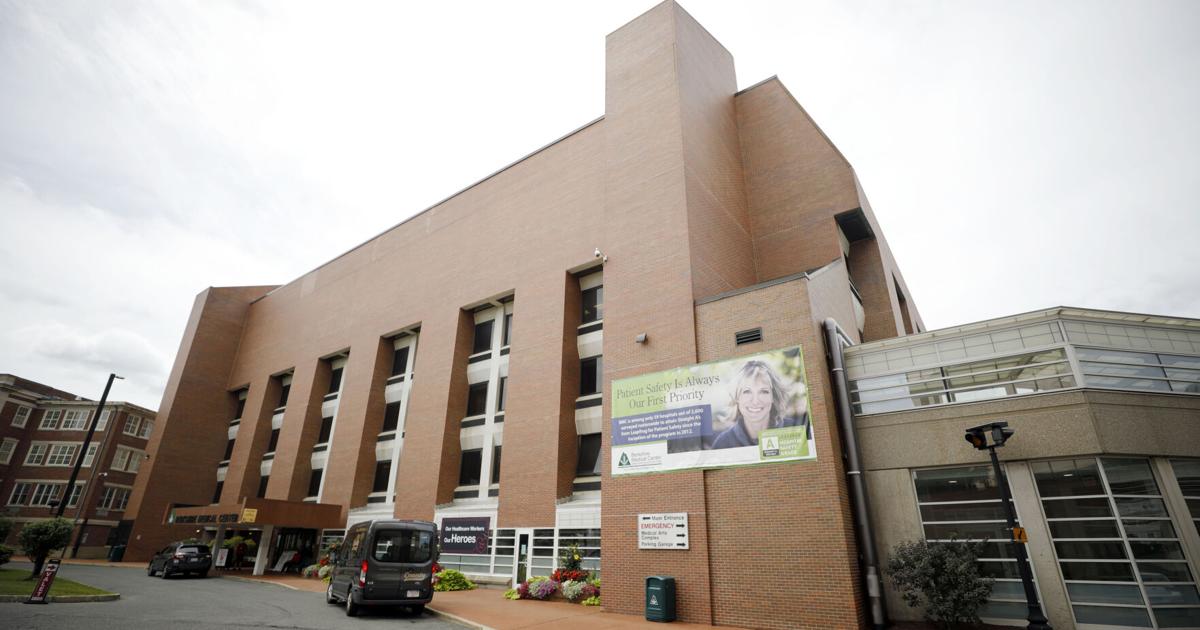
PITTSFIELD — The families of two city residents who died of complications from Legionnaires' disease last summer have filed a wrongful death lawsuit against the owner of Berkshire Medical Center.
The lawsuit, filed Wednesday in Berkshire Superior Court by the estates of Peter M. Sulock and Judy A. Houle, alleges the hospital and its water contractors failed to properly protect their loved ones from the aggressive form of pneumonia spread by waterborne bacteria.
Berkshire Health Systems, as well as water contractors Nalco Co. LLC and Clarity Water Technologies LLC, are named as defendants.
The suit accuses the defendants of negligence, claiming that the hospital failed to prevent the growth of Legionella; exposed Sulock and Houle to the bacteria, leading to their deaths; and failed to warn Sulock, Houle and their families that Legionella was present in the hospital’s water systems.
The families are seeking unspecified damages for pain and suffering, medical and hospital bills, funeral and burial expenses, loss of companionship, and court costs.
Michael Leary, a spokesman for BHS, said the healthcare system does not comment on pending litigation, but said the hospital is "committed to taking all necessary precautions to maintain a safe healthcare environment for our patients, families, visitors, and staff."
Messages left at Nalco and at Clarity Water Technologies were not immediately returned Wednesday.
Environmental testing confirmed the presence of Legionella in the cooling towers and the water system “by at least January 2023,” and in positive findings in August 2023, February and June 2024 and June, July and August 2025, the lawsuit alleges.
Sulock’s widow, Kathleen Sulock, and Houle’s oldest surviving child, Tina Sanginetti, are the named plaintiffs in the suit as representatives of their respective estates. They’re represented by Eric Hageman, of Pritzker Hageman of Minneapolis, a law firm specializing in Legionnaires' disease cases; and Julie Lamkin of Jeffrey Glassman Injury Lawyers of Boston.
"My father was a devoted husband, father and grandfather," Sulock's daughter, Ashley Persip, said Wednesday. "Every day we live with the pain of losing him."
Both Sulock and Houle were treated at BMC days before they became critically ill.
Sulock, 74, died on July 14, 2025. According to his city-issued death certificate, his cause of death was sepsis, with pneumonia and fluid on the lungs as underlying causes. Medical information provided by his family to The Eagle showed he was diagnosed with Legionnaires' disease at BMC before his death.
Houle, 67, died on July 29. Her death certificate cites acute respiratory failure due to Legionnaires' disease as the cause of death, with acute respiratory distress syndrome, septic shock and chronic pulmonary disease as underlying causes.
An Eagle review of testing data showed the presence of Legionella bacteria in BMC's cooling towers far in excess of the U.S. Centers for Disease Control and Prevention’s guideline for “uncontrolled growth," as well as the presence of the bacteria at action levels at multiple locations throughout the hospital campus.
Public records obtained by The Eagle showed the state Department of Public Health asked BMC on three different occasions — Sept. 4, Sept. 16 and Sept. 17 — to inform the public that Legionella had been found in the hospital water supply, and that the hospital was working with DPH to fix the problem.
The hospital issued that public statement on Sept. 18, acknowledging that there had been seven positive Legionella tests and one patient death, and that it was taking aggressive steps to correct the problem.
Those steps included intensive scrubbing of BMC’s cooling towers, increasing chlorine treatments, limiting the use of showers and replacing shower heads and sink nozzles.
In a text message, Persip said the public records reported by The Eagle "should concern every member of this community, especially when considered alongside BMC's public statements. It is deeply troubling and something my family simply cannot reconcile."
"Hospitals are entrusted with caring for our families, and that trust depends on honesty and transparency. Our community deserves nothing less," she said.
The hospital also worked with the state Department of Public Health in addressing the root causes of Legionella growth.
Under DPH guidelines, the hospital was required to achieve three consecutive months of negative Legionella tests before stepping down from its elevated water management practices. Leary said the hospital has since met that requirement, and the Department of Public Health confirmed that tests taken between January and April were negative.
"All of our cooling towers are showing no detectable Legionella," he said. "We continue to closely monitor our water systems and to take appropriate follow-up steps when needed."
Cooling towers are a known source of Legionella growth, as the presence of warm temperatures and water can lead to the formation of biofilm — a slick surface where Legionella can thrive. Other outbreaks have been traced to hot tubs, shower heads and other sources of fine mist.
Hot water systems are another known source of exposure, as stagnant water and system temperatures not hot enough to kill the bacteria can promote growth.
A DPH spokesperson said BMC's weekly water samples "indicated conditions are not favorable for Legionella," and that the hospital's water management program has been updated to better assure Legionella growth is controlled.
According to the lawsuit, Sulock, a retired truck driver and Pittsfield High School graduate, was hospitalized at BMC between June 30 and July 3 of last year. On or around July 9, he began experiencing symptoms consistent with Legionnaires' disease. He was admitted and diagnosed via a urine antigen test on July 12, and died two days later at BMC.
Houle, also a PHS graduate and retired certified nursing assistant, visited the BMC emergency department with a cough and cold symptoms on July 17, according to the lawsuit. On or about July 23, she began to experience abdominal pain, a cough, a runny nose and a fever.
She returned to the BMC emergency department on July 25, where a chest CT scan showed evidence of pneumonia. She died four days later at BMC.
Despite awareness of legionellosis as a threat to patients and established guidance for healthcare water system management, the defendants “failed to implement and maintain reasonable measures” to minimize Legionella growth within the water system, the lawsuit alleges.
Furthermore, the defendants “did not warn area patients and visitors of the risk of contracting Legionnaires' disease by exposure to the building’s internal water supply, plumbing and water systems at the building,” the complaint states.
The negligence claim asserts that the hospital and its contractors “created a dangerous condition” by allowing Legionella to proliferate in its water system, failing to adequately treat the water system, permitting Sulock and Houle to be exposed to Legionella bacteria, failing to keep water at the minimum temperature required to control Legionella growth, failing to perform regular water quality analysis for bacterial contamination, among other accusations.
The wrongful death claim asserts, as the negligence claim asserts, that Sulock and Houle’s Legionnaires' cases “were not the result of their own negligence.”
As a result of the alleged negligence, Sulock and Houle “were caused to suffer consciously and until the time of their deaths,” suffering pain and emotional distress, the lawsuit alleges.
Read the Original Article
This article was originally published by Berkshire Eagle. Click below to read the full article on their website.
Visit Berkshire Eagle