
Want to build an ADU? The state may give you a $250,000 low-interest loan
LEXINGTON — Homeowners looking to build accessory dwelling units might be eligible for a $250,000 low-interest loan thanks to a new state program.
In a press conference on Wednesday afternoon, Gov. Maura Healey announced a batch of initiatives and programs supporting the production of ADUs, also known as in-law suites.
The Healey administration has lauded ADUs as a quick way to build up the housing stock, but that ambition hasn't materialized into actual buildings in the Berkshires, as the county only saw six ADU build applications during the first few months of the ADU-by-right law coming into effect.
Local officials cite high building costs and the lack of existing water and sewer infrastructure as barriers to building.
In an effort to further spur ADU production, Healey has announced an incentive program to help homeowners start the ADU process and a low-interest loan program to make financing the units more accessible. On top of the institutional support, the state will be hosting an ADU design competition, handing out $60,000 in prizes.
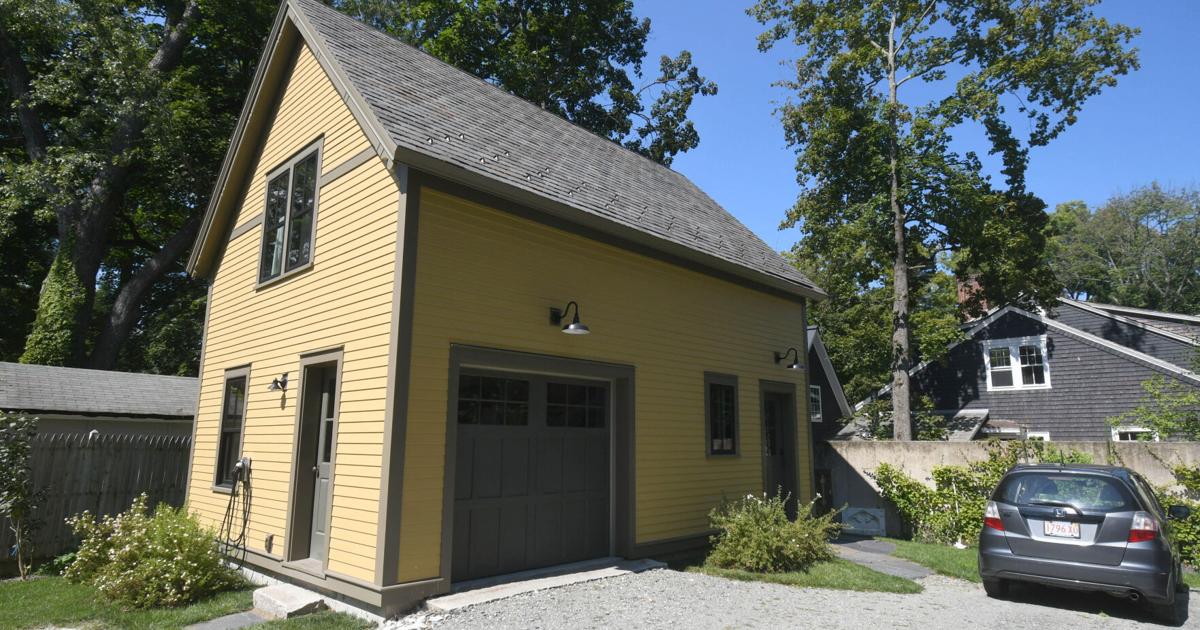
The exterior of an ADU built by Averill Cook of Wendling Farm in Williamstown. ADUs, often referred to as in-law suites or granny flats, are secondary housing units located on the same lot as a primary residence. They can be attached to the main home, such as a converted basement or garage, or exist as separate structures within the property’s boundaries.
The Construction Loan Program will be run by MassHousing with support from the state, said Ed Augustus, the secretary of the Executive Office of Housing and Livable Communities, which was founded to combat the housing crisis.
MassHousing — which provides financing to low- and moderate-income homebuyers in the commonwealth — will use $20 million that was previously awarded for "mission-oriented homeownership activities" to run the program.
The program will work with lenders to give loans that are "more advantageous" than a home equity loan, a common way homeowners finance ADUs, Augustus said.
Homeowners can receive a loan of up to $250,000 for detached units and $150,000 for attached ones, Augustus said.
The program will be made available to "moderate income, low-income homeowners," Healey said.
MassHousing will announce more details in January and applications for the program will be open in March, according to Augustus.
Before construction on an ADU can begin, there are a number of steps and approvals needed, like getting zoning approval and building permits.
The ADU Incentive Program aims to "demystify that process," Augustus said.
The program will be run by the Massachusetts Housing Partnership, which is a quasi-public agency that supports housing production.
The incentive program will help educate homeowners, provide support in the predevelopment and construction process, according to a press release from the governor's office. Additionally, the program will focus on future efforts for ADU development.
The Massachusetts Housing Partnership already has $10 million earmarked for the ADU Incentive Program in the 2026-30 Capital Investment Plan, said Healey.
An accessory dwelling unit in Williamstown. In a press conference on Wednesday, Gov. Maura Healey announced a batch of initiatives and programs supporting the production of ADUs.
The ADU design challenge opens to submission Monday, Augustus said.
Designers, architects and other design professionals are invited to submit "replicable, high-quality prototypes that can be adapted by homeowners and local builders," he said.
Applications for the design challenge will close at the end of February and submissions will be judged by a panel of design experts.
The first-place award winner will receive $20,000, second will receive $15,000 and third will receive $10,000.
Exceptional submissions will win $3,000 for each of the design categories: compact, standard, sustainable, accessible and innovative construction. There will also be a people's choice design, where voting will happen online.
Winners will be announced in April 2026, after which all designs will be released for public use.
"We hope these designs will make it easier for homeowners to imagine how an ADU might work for them and their families," Augustus said.
To learn more about the ADU design competition, go to mass.gov/aduchallenge.
Although its website has not been updated to reflect these new programs as of press time, visit MassHousing at www.masshousing.com.
For more information about Massachusetts Housing Partnership, which will be running the ADU Incentive Program, visit www.mhp.net.
Read the Original Article
This article was originally published by Berkshire Eagle. Click below to read the full article on their website.
Visit Berkshire Eagle