
Western Mass. universities struggle with international student shortage
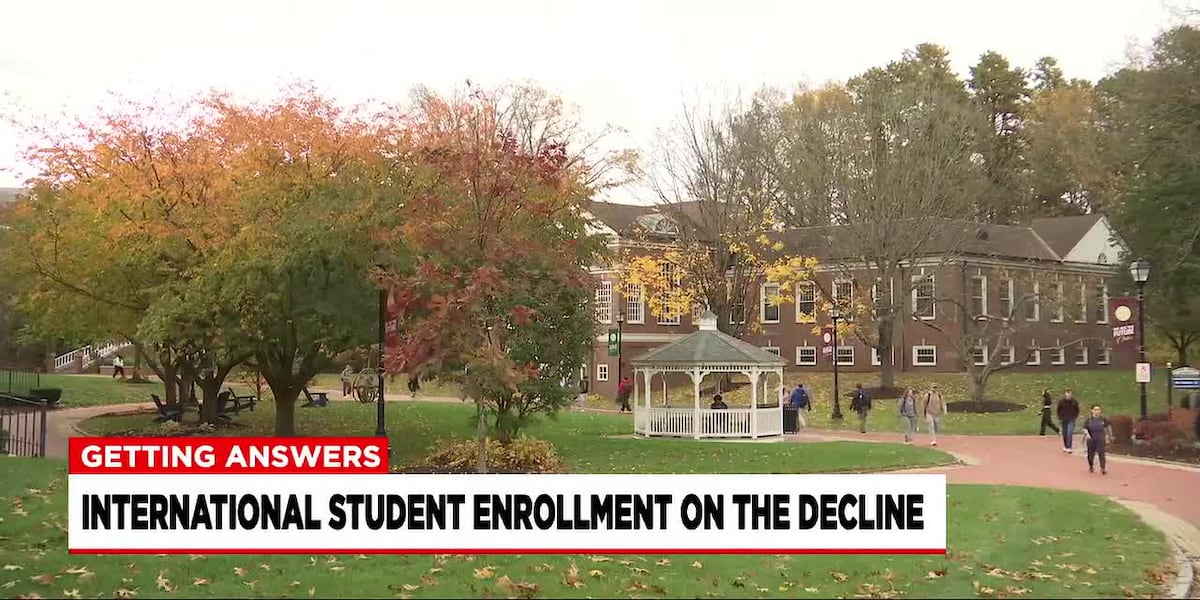
SPRINGFIELD, MA (WGGB/WSHM) -- When you think of a university campus, you probably envision a diverse mix of students from all sorts of backgrounds, but in western Massachusetts, higher education institutions are facing significant headwinds when it comes to international enrollment.
For nearly two decades, Western New England University has watched its international student population flourish. “It really enriches the experience for all students, whether they’re the domestic students or the international students. It gives students an opportunity to engage with other people that may be different from them without having to get on a plane and physically go to their country, so it really has become an important part of our overall community here at the university,” said Michelle Kowalsky Goodfellow, associate vice president of enrollment management at Western New England University.
Kowalsky Goodfellow has spent twenty years in enrollment management, watching the campus transform as international students became a vital part of the university community, but this year, those vital community members have left empty seats as international enrollment plummets. “This year, we definitely saw a decline in our international population, both the undergraduate and the graduate level, which I think is a commonality amongst many universities in the United States and there are a number of reasons for that,” she added.
This fall, Western New England welcomed 222 international students, which is a dip of 60 students from last year. The university charges $46,260 in tuition a semester. To put that in perspective, if all of these missing international students were undergraduate students, the university would be losing $2,775,600 worth of tuition in just one semester. “I mean, we at Western New England had our largest undergraduate enrollment this past year, which is not common in our current environment, but had we had those international students on top of that, it would have been that much more that we would have brought into the university, which would have been phenomenal and, honestly, a lot of our increases on the undergraduate side negated the losses that we saw on the graduate side from the international population,” Kowalsky Goodfellow explained.
The challenges behind those missing international students began long before anyone set foot on-campus. Complex federal policy is creating barriers that start with the visa application process itself. Even beyond getting a visa, prospective students are worried about policy changes that could affect their entire educational journey. In August, the Trump Administration announced a proposed policy that, if finalized, would limit the amount of time certain visa holders, including international students, are allowed to stay in the United States.
Further complicating these challenges is the H-1B visa, essential for international graduates seeking U.S jobs, which faces an annual cap and a competitive lottery system. In September, the Department of Homeland Security published a proposed rule that would fundamentally change how the lottery system works for the H-1B visa by prioritizing applicants with higher salaries. “When they’re being discussed on a higher level and kind of out in the broader spectrum, people start to hear about them and then get nervous about ‘Do I really want to do that in terms of coming to the United States on those student visas that may not have the same benefits that they once did?’” Kowalsky Goodfellow noted.
Despite the headwinds, Western New England University isn’t backing down from its commitment to international education. “Our strategy really has been to stay the course, so we just had our director of international admissions over in India meeting with students and really, kind of, continuing to do the things that we’ve always done and being exactly who we always have been, which is a welcoming place to international students and a place that is going to give them that individual personal attention because we’re small and can do that,” Kowalsky Goodfellow said.
As federal policies continue to evolve and global competition for international students intensifies, western Massachusetts universities face an uncertain future. The question remains whether these institutions can maintain the diverse, globally-minded communities they’ve worked decades to build. The federal government does not report the number of pending student visa applications. The process can take anywhere from a few weeks to several months and that uncertainty can cause many students to hesitate on even starting the application process.
Copyright 2025. Western Mass News (WGGB/WSHM). All rights reserved.
Read the Original Article
This article was originally published by Western Mass News. Click below to read the full article on their website.
Visit Western Mass News