
What are the different types and brackets of affordable housing?
PITTSFIELD — There are a breadth of housing assistance and income-restriction programs in the Berkshires. There is Section 8 housing, the Massachusetts Rental Voucher Program, workforce housing and more. But what are the differences, and why do there need to be these distinctions?
There a few big buckets of income restricted housing and related programs. Some programs and related apartments have very low ceilings for a tenant's income, others allow tenants to make a bit more while still receiving assistance and some income restricted apartments provide no rental help.
These programs are often mistaken for each other or lumped into one. But there are very distinct differences — from differing income limits to being limited to certain groups. Despite programs seemingly overlapping each other, each one serves a purpose to helping people have stable housing options.
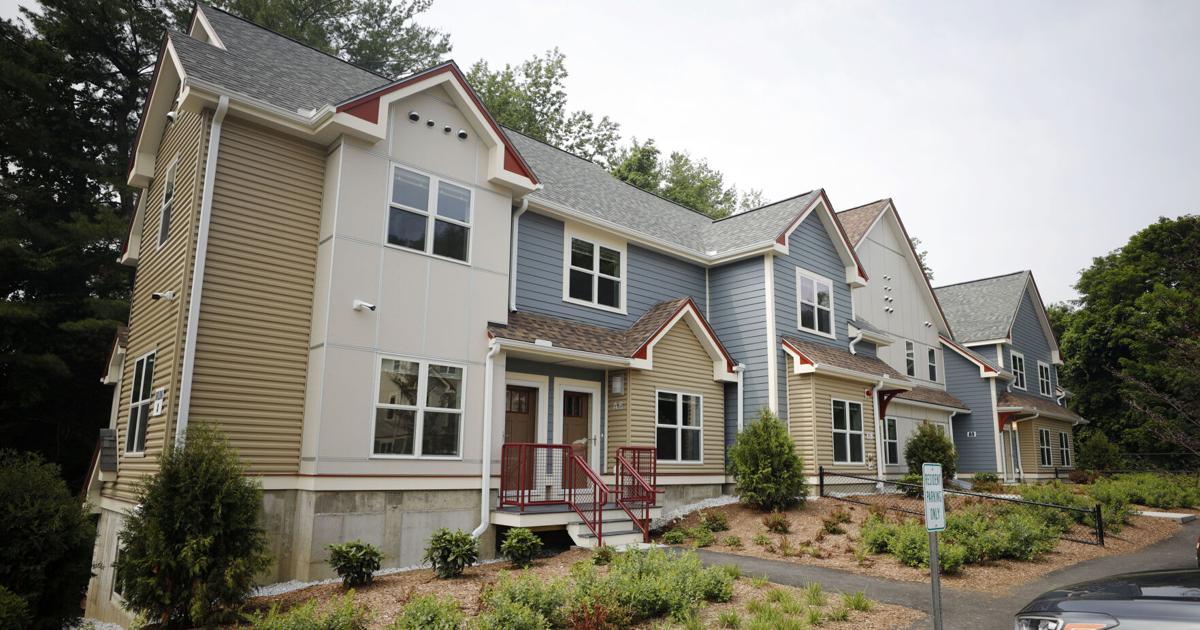
Terrace 592 in Pittsfield is near completion, with final inspections on the horizon for the 41 affordable housing apartments. Candidates say more needs to be done to encourage developers to build up the city's housing stock.
When determining the income restriction level for certain programs and apartments, area median income (AMI) is used. In Berkshire County there are two different catchment area's, one is the Pittsfield Metro Area and the other is the rest of Berkshire County.
The lowest bracket of income restricted housing is at 30 percent, used by the largest housing assistance program in the nation, Section 8. Although the money tracks back to the federal level and the Department of Housing and Urban Development, regional housing authorities and other regional administering agencies (like Hearthway) are the ones who allocate the vouchers.
This program can be split further, as some vouchers are tied to certain apartments while others are attached to a person or family, said Kristin Coyne, the director of portfolio operations for Hearthway.
This program requires people who qualify to pay 30 percent of their gross income toward rent, she said.
If their pay changes, their rent changes too. The rest of the rent is covered by the voucher.
Aside from Section 8, there are other federal voucher programs for specific groups, Coyne said, including assistance for veterans, domestic abuse victims and for family unification.
Another type of rental assistance programs is the Massachusetts Rental Voucher Program (MRVP), which has an income cap of 80 percent AMI. These work similar to Section 8 housing, but, as the name suggests, is administered by the commonwealth.
The higher AMI means this program is available to more people looking for help with rent. Still, a person utilizing this program has to pay 30 percent of their gross income toward rent.
The Windrush Commons, offering 49 affordable housing apartments, in Great Barrington welcomed residents in 2023. The town formed an affordable housing trust in 2017.
Besides voucher programs, there are income-restricted housing options. These apartments come with no assistance for the renter, but the developer and landlord receive tax credits that require them to keep the rents at a certain rate.
"People have to be under a certain income limit to live there and they will keep the rents restricted to essentially paying less for the same space than you would with a private landlord," Coyne said.
This means that income restricted apartments are always attached to the development. Some restrictions last for 15 or 30 years, while others are indefinitely restricted.
Income restricted apartments generally have two AMI thresholds.
One bracket is under 60 percent of AMI, said Coyne.
Since there is no assistance, some apartments will require a potential renter to make a certain amount so they're not cost burdened.
"It's still rent," Coyne said.
The other type of income restricted housing is workforce housing, which has AMI limits from 80 to 120 percent. This type of housing is sometimes seen separate from traditional affordable housing since it targets a more standard earner.
But its vital because "the people who hold the community together, police officers, DWP, staff, nurses, teachers, fall into the middle where there are almost no housing options available to them," said Peter Most, a member of the Great Barrington Affordable Housing Trust.
"It's about housing individuals who were otherwise shut out from the marketplace," he said.
Read the Original Article
This article was originally published by Berkshire Eagle. Click below to read the full article on their website.
Visit Berkshire Eagle