
Yes in God’s Backyard bill would open church land for housing development
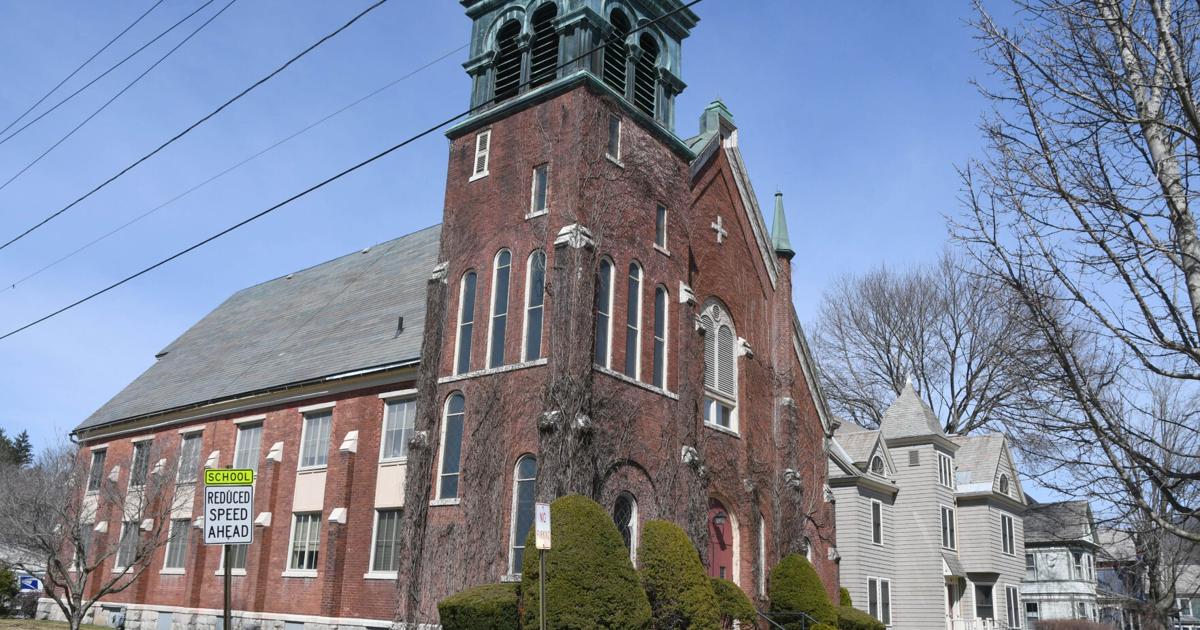
PITTSFIELD — A bill before the state Legislature proposes to open up hundreds of acres of religious land in Massachusetts for the development of housing.
If passed, the so-called Yes in God’s Backyard bill — a nod to the "not in my backyard" attitude — would remove barriers to building housing on land owned by churches, synagogues and mosques. Today, it takes at least a special permit to build on that land, if it’s allowed at all.
For faith-based congregations looking to support their communities by providing affordable housing, the legislation is a "natural fit,” said state Rep. Tricia Farley-Bouvier, a co-sponsor of the bill in the House (H.2347).
Supporters say the approach would place developed parcels on the tax rolls. Religious land is otherwise tax-exempt.
The Yes in God's Backyard bill will help open up acres of land that can be used to develop housing. It will allow for housing development by right on land owned by religious institutions.
The concept is new to Massachusetts, but it’s already law in states like Florida and California. In San Diego, one church allowed its empty, 7,000-square-foot lot to be developed into 25 units of housing for low-income seniors and veterans.
Meanwhile, a bill before the U.S. Senate seeks to make this a nationwide law.
As Berkshire County works to increase its housing stock, could building on religious land help close the 2,000-unit housing gap it faces?
David Moresi, principal of Moresi and Associates, has developed deconsecrated church property — land that no longer has a religious affiliation — in North Adams. He is converting the former Notre Dame church into housing.
An entrance to Notre Dame Residences at 41 Melville St. in Pittsfield. It is one of several church conversions into housing in the city.
Moresi said Massachusetts has stringent building and zoning codes, and working on church property comes with additional restrictions or covenants.
Moresi said the Yes in God’s Backyard bill holds an opportunity for developers to expand housing options in the Berkshires.
"We need to pursue all avenues when it comes to housing development and housing construction," he said.
The Jewish Alliance for Law & Social Action, a Boston-based nonprofit, is actively backing the Yes in God’s Backyard bill.
"For the faith-based community, being able to help provide the housing that we need in the commonwealth is not only an economic question, but a moral question," said Cindy Rowe, president and CEO.
The First, a housing development in Pittsfield, created nine units of housing in a former church, something that required a special permit. The Yes in God's Backyard legislation would allow projects like The First to happen by right.
Rowe said part of her faith’s tradition is to help people achieve their basic needs, including housing.
The Roman Catholic Diocese in Springfield, which has 17 parishes in Berkshire County, did not respond to requests for comment.
The Yes in God’s Backyard bill would create a special zoning district that applies to housing development on land owned by religious institutions. It allows building up to 30 units per acre — or up to 50, if local zoning laws allow.
The legislation does not carry financial incentives.
Although this project was on disused religious land, the development at the former AME Zion Church at 45 Chestnut St. in North Adams shows how religious land can be used to build housing.
Without financial incentives or tax breaks, some pro-housing laws in Massachusetts are underutilized.
In the first five months that Massachusetts greenlit accessory dwelling units — otherwise known as in-law apartments — Berkshire County saw only six building applications. Experts cited high construction costs and the lack of pre-existing water and sewer infrastructure.
Financial help or tax incentives could come later, as happened with accessory dwelling units, said Farley-Bouvier. "That's the typical path."
Without financial incentives, the land made available through Yes in God’s Backyard might not be utilized.
Material costs, labor costs and existing water and sewer infrastructure are big hurdles, said Jim Harwood, president of the Community Development Corp. of Southern Berkshire.
The biggest problem may be financial feasibility.
"By the time you look at your total development costs and you compare it to comparable sales of existing homes in the area, it's not a very good comparison," Harwood said.
Yes in God’s Backyard may fare better in areas like Boston and Worcester where real estate markets are strong, even as construction costs remain similar, Harwood said.
The Lynch Foundation, a Massachusetts-based, Catholic nonprofit that invests in housing, estimated Berkshire County has 2,500 acres of religious land available for Yes in God’s Backyard. The number has been cited by legislators, news organizations and housing lobbying groups.
However, data from the Massachusetts Bureau of Geographic Information, which tracks the size, ownership and tax status of land, puts that figure at about 528 acres of available religious land. Of that, 335 acres belong to the Marians of Immaculate Conception in Stockbridge.
The Rev. Chris Alar, the provincial superior, said the Marians have not vetted the Yes in God’s Backyard legislation.
Even with limitations, supporters say the bill’s value lies in removing longstanding zoning barriers and giving communities where little buildable land exists another path to create housing.
Many agree that something has to be done to address the state's housing crisis.
Farley-Bouvier called it an all-hands-on-deck effort.
"We are bringing as many tools to this battle as we can," she said.
Read the Original Article
This article was originally published by Berkshire Eagle. Click below to read the full article on their website.
Visit Berkshire Eagle