
Trump calls for gas prices to go down ‘IMMEDIATELY!’
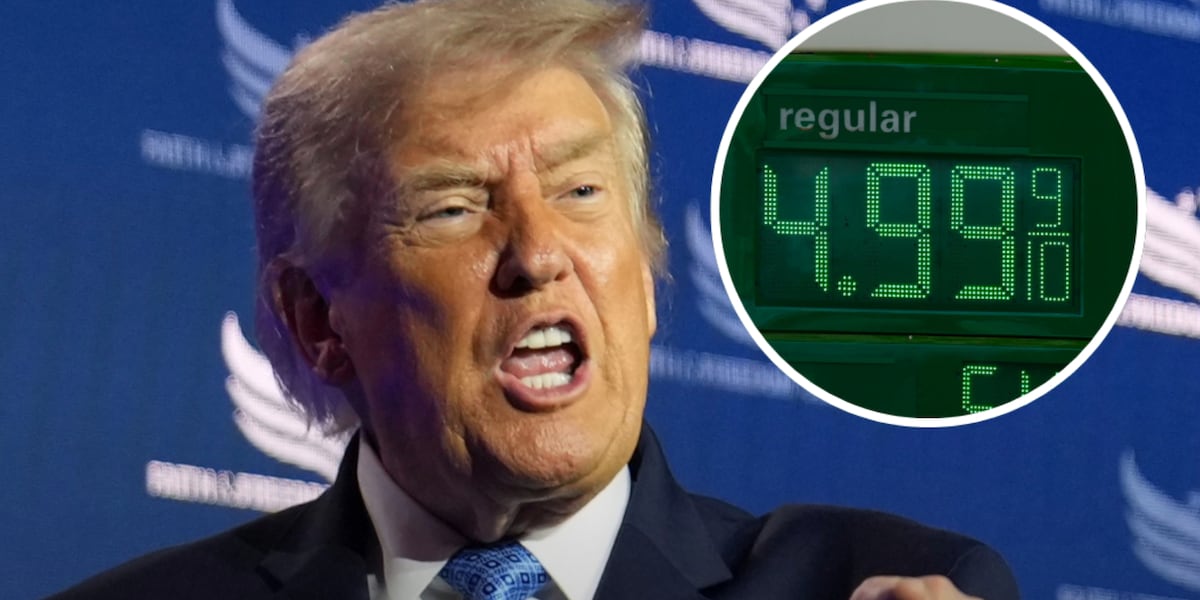
(Gray News/AP) - U.S. gasoline prices decreased by an average of 49 cents a gallon in the last month as expectations rose for an end to the war with Iran. But they’re not falling fast enough for President Donald Trump.
“Gasoline Retailers must get their Prices down, IMMEDIATELY! They’re too high considering that Oil is now at $68 a Barrel, and heading south,” Trump wrote in a post on social media Monday.
Trump, who wants to stave off the economic fallout of the war ahead of midterm elections, is now pointing at oil companies as the culprit.
“The Retailers must quickly react to this statement, and do what they know is right — DROP YOUR PRICE FOR OUR GREAT AMERICAN PEOPLE!” Trump said online.
Trump went on to accuse retailers of gouging customers, saying they should start to target around $2.50 a gallon.
“California should stop charging such heavy taxes on their gasoline,” Trump said. “Soon the tax will be higher than the product itself, and the United States will not stand for it, nor will the People of California, who are being abused by these ridiculous taxes.”
Crude oil is the main ingredient in gasoline, and its cost makes up the bulk of what consumers pay at the pump. But oil companies don’t set gasoline prices; gas station owners do. Those operators often have little choice but to raise pump prices when the cost of oil surges like it did during the war with Iran.
Even after crude prices come down, it can take weeks or longer for market changes to reach refineries and eventually consumers, experts said.
Some components of fuel prices are outside a gas station’s control.
Refineries buy crude oil in advance, and deliveries of that oil take time. Refineries may be processing more expensive supplies weeks or months after market prices fall.
After refining, gasoline travels through pipelines, ships, trucks and fuel terminals before landing at filling stations, further prolonging higher prices for consumers.
While expensive oil was the leading driver of higher gasoline prices in recent months, U.S. gas prices typically tick up a bit at this time of year. Warmer weather brings a shift to summer blend fuels, which are more expensive to refine than the versions sold in colder months. Demand also is greater as more people hit the road.
For the upcoming July Fourth holiday period, AAA forecast 61.4 million Americans traveling at least 50 miles away from home by car, slightly more than the 61.3 million who took road trips last year.
Copyright 2026 Gray Local Media, Inc. All rights reserved. The Associated Press contributed to this report.
Read the Original Article
This article was originally published by Western Mass News. Click below to read the full article on their website.
Visit Western Mass News