
Easthampton council opposes Verizon cell tower near city line with Southampton
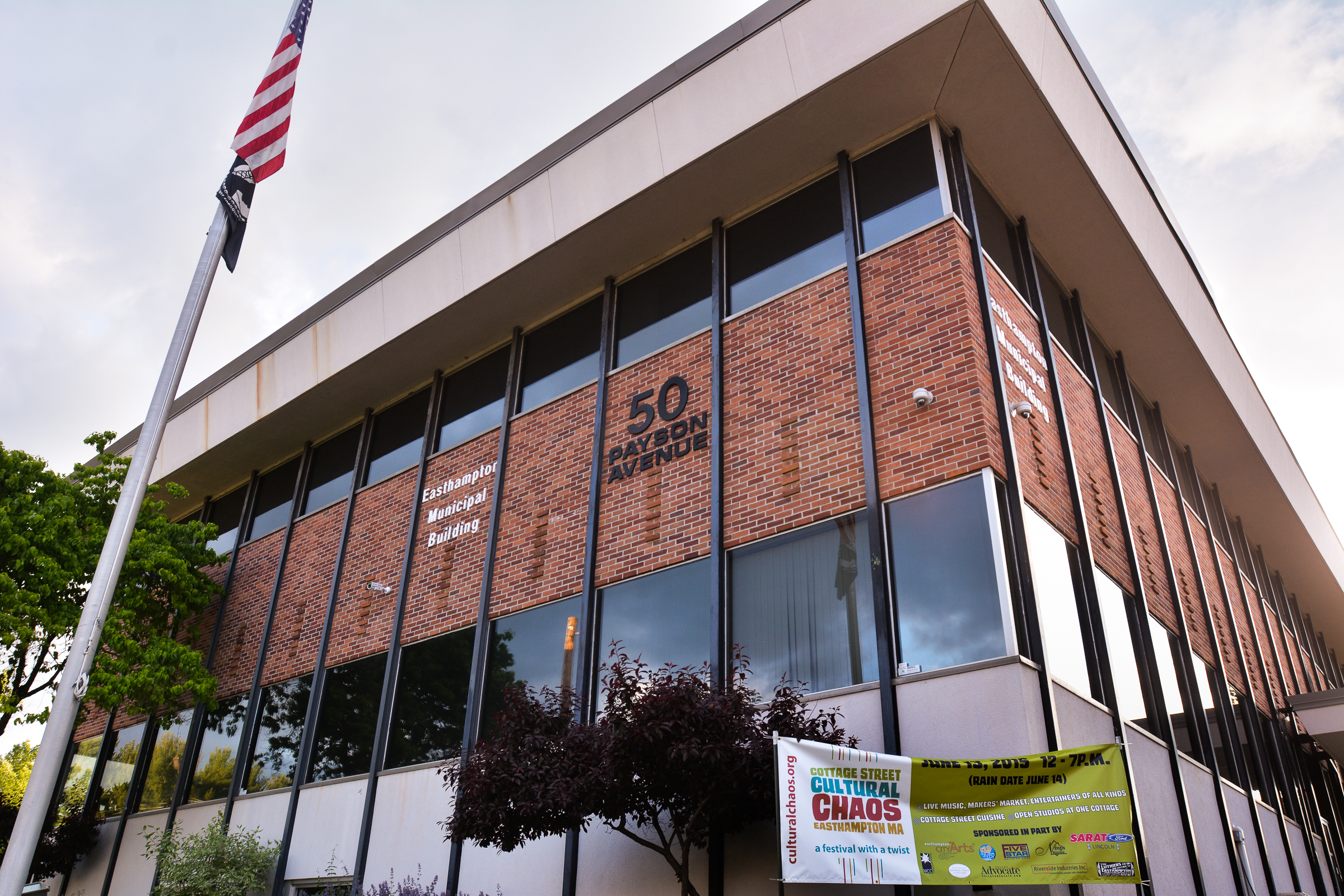
EASTHAMPTON — The City Council is opposing a Verizon cell tower proposed for Cook Road in Southampton, at the Easthampton-Southampton border, after citizens from both communities raised concerns about the project’s potential impacts.
Councilors unanimously approved a resolution June 24 stating that the tower would affect not only Southampton residents but also neighbors in Easthampton, particularly those living in Precinct 5, which borders the proposed site.
The resolution cites concerns about what the project would do to Easthampton property values, potential impacts it would have to “the character” of the neighborhood, the precedent it sets for “private corporate interests” and more.
“The proposed tower would be located immediately adjacent to established residential neighborhoods in Easthampton, placing a large industrial telecommunications structure within direct view of numerous homes and families,” the resolution states.
It continues, “The residents most significantly affected by this proposal are not solely Southampton residents, but also many Easthampton residents whose homes lie within close proximity to the proposed site and who would bear the visual, economic and quality-of-life impacts of the project despite having no vote in Southampton’s municipal decisions.”
The proposed 165-foot cell tower, known officially as a wireless communication facility, would be built on a residential property that includes a horse farm at 1 Cook Road. The property owners are not the applicant, rather, Atlantic Tower LLC of Medfield — an affiliate of Vertex Towers — is applying for a special permit on behalf of Verizon Wireless.
Part of the application also asks the Southampton Planning Board to waive one of town’s zoning bylaws that requires cell towers to be less than 100 feet tall.
The proposed resolution was brought forward by Precinct 5 City Councilor Tamara Smith, Council President Koni Denham and City Councilor At-Large Kiam Jamrog McQuaid. The resolution saw general support from the council but went through one amendment, proposed by City Councilor Thomas Peake.
The amendment struck language regarding the “long-term effects of radio frequency emissions.” Peake said to the best of his knowledge there isn’t sufficient evidence showing documented health concerns from cell towers.
However, Smith, who spearheaded the resolution, said multiple families came to her upon hearing of the proposal with the “fear that there is something that physically could happen” to them.
Several residents from Easthampton spoke against the tower at the Southampton Planning Board’s June 3 meeting, including Biz Holley, expressing concern about the potential health risks. She claims there are 15 Southampton homes and more than 100 Easthampton homes within a 1,500-foot radius of the proposed tower site, which she argues is a dangerous distance from such a structure.
“It really is not just a Southampton matter, it’s affecting your Easthampton neighbors as well so it’s a very impactful decision you’re making for two different communities,” she said at the Southampton meeting
According to an American Cancer Society article from June 2020, there is “no strong evidence” that exposure to radiofrequency from cell towers causes health effects.
“At this time, there’s no strong evidence that exposure to RF [radiofrequency] waves from cell phone towers causes any noticeable health effects. However, this does not mean that the RF waves from cell phone towers have been proven to be absolutely safe. Most expert organizations agree that more research is needed to help clarify this, especially for any possible long-term effects,” the article states.
Cecelia Doucette, founder of Massachusetts for Safe Technology, an organization working to promote the use of biologically safe technology, told the Gazette that there are multiple documented instances where radio-frequency emissions from cell towers led to severe health impacts like nausea, vomiting and headaches. She said radio-frequency emissions are more dangerous for vulnerable populations such as children and older adults.
“It is astounding that man-made radio frequencies are very biologically disruptive,” Doucette said.
Doucette said a clear case happened in Pittsfield in 2022, when several residents reported becoming ill with negative health symptoms including headaches, sleep problems, skin rashes and more, after a cell tower was installed. That led to the Board of Health issuing an emergency cease-and-desist order, according to the Environmental Health Trust.
The order led to a court case, Gilardi v. Orsi, currently in the Massachusetts Supreme Judicial Court, regarding whether the federal Telecommunications Act restricts local health boards from regulating cell tower emissions.
Francis Parisi, an attorney of Parisi Law Associates representing the applicant for the Southampton project, said that there are thousands of these kinds of facilities and the federal government has heavily regulated this technology to encourage the construction of similar towers. Additionally, he said people are exposed to radio frequency every day through things like cellphones and Wi-Fi.
The difference with cell towers, Doucette said, is that residents do not have a choice whether they are exposed to them, as opposed to things like Wi-Fi and cellphones. A professional writer with a master’s in technology, Doucette said she has heard many cases such as the Pittsfield one.
“Once you put a cell tower or a utility smart meter on your house, you’ve lost your right to choose,” Doucette said.
The second public hearing for the cell tower application was scheduled for July 8 at 7 p.m. At the first hearing, Planning Board members said it is unlikely a decision would be made at the second one. Several Easthampton city councilors said they were going to attend the meeting to discuss the tower.
Read the Original Article
This article was originally published by Daily Hampshire Gazette. Click below to read the full article on their website.
Visit Daily Hampshire Gazette