
Mount Holyoke to close language center amid budget cuts
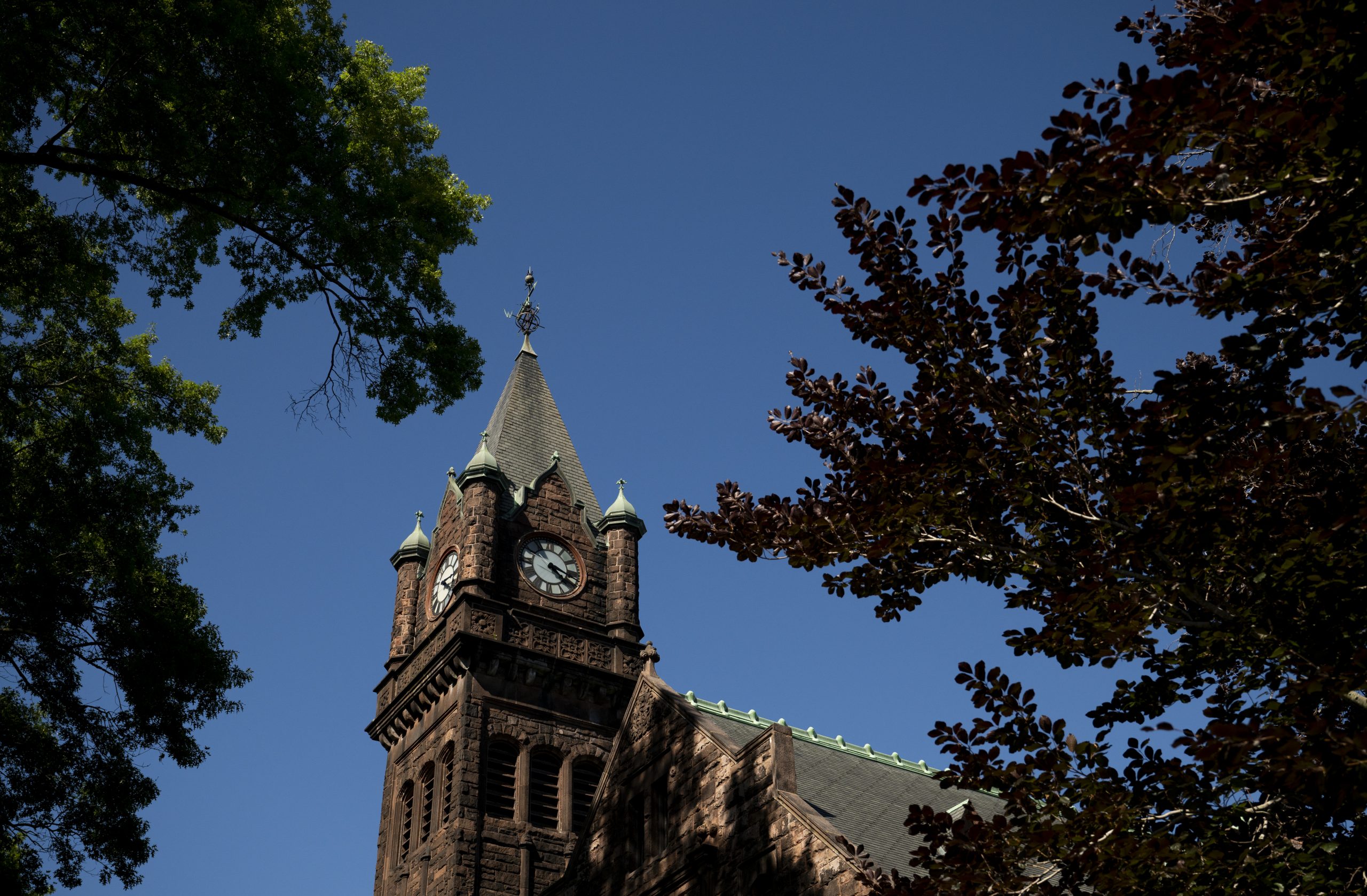
SOUTH HADLEY — A study spot. A movie theater. A cozy lounge area. A tutoring center. A classroom. One room at Mount Holyoke College’s Ciruti Language Center encompassed it all.
The Language and Cultural Commons is the only language center in the Five College Consortium. It helps students fulfilling their language requirement find tutors, introduces less commonly-studied languages to their repertoire and offers important late night study space. Students and faculty say it is one the few permanent physical spaces on campus connecting students across different linguistic backgrounds.
But this cultural hub will no longer exist after Aug. 15, when the college permanently closes the center following the layoff of its director, Jean Janecki, in early July. The college says the closure is part of a broader effort to address a structural budget gap, though it has not disclosed the size of its projected shortfall or named other departments affected by cuts.
It is the second hit to language departments at Mount Holyoke in recent years after the German Studies and Russian and Eurasian Studies programs began their closure in 2023.
“A school that says that it wants to promote diversity, inclusion, global citizens and curiosity for the outside world, it feels hypocritical to axe a space that did just that,” former LCC student staff member Elizabeth Murray said.
In response to the closure announcement, LCC staff member Emma Backbier started a Change.org petition to save the LCC, which currently has 823 signatures. She also created a “SavetheLCC” Instagram that shares student experiences and offers an email template to send to administration.
Mount Holyoke spokesperson Lindsay Atkins said the college is “proactively addressing” the budget gap by cutting expenses and through long-term fiscal planning. While health insurance, utilities and rising operating costs have taken a bigger slice of the budget, Atkins said in a statement that “the College remains financially strong.”
Additionally, she said that “the closure of the LCC is an operational budget decision and does not represent a reduction in the College’s language programming. Language instruction, tutoring, study abroad, advising and language-learning resources will continue.”
The LCC is a branch of the Library, Information and Technology Services Department. There are language textbooks, media labs, printing services and technological literacy tutoring available in the building. Janecki served as a liaison between library services and language departments, keeping instructors up-to-date on the latest software and teaching tools.
But Backbier and Murray liken the LCC to a student organization. As staff members, they planned at least one cultural event a month, like foreign language film nights, Arabic calligraphy and Vietnamese coffee tasting. As part of a cross-cultural buddies program, staff connected two students interested in learning a new language so they could practice with each other.
“You’ll have students learning Korean at the same table, students learning French, and inevitably they talk to each other and learn things from each other,” Backbier said.
After language-related events, students often stayed late into the night. Student Chinese tutor Liz Li would meet her mentees at the LCC, but ended up repeatedly returning to study for the “cozy” atmosphere. Its proximity to the dining commons also attracted people.
“I used to have closing shifts at night and we were open all the way until 11 p.m. every single day except for Saturdays,” Backbier said. “At 11 p.m., I have to kick people out because they still want to hang out in our study rooms and they still want to be talking with their friends.”
In a statement to the Gazette and the larger Mount Holyoke community, college administration said the LCC closure will not impact language education. The resources will remain available through the Williston Library, and student staff will receive new job roles in the Library, Information and Technology Services Department when they return to campus in fall. Global programming will continue through the Diversity, Equity and Inclusion Office.
“The LCC was originally created to support language-learning technology and resources, and its role has shifted dramatically over the years,” Atkins wrote. “The way students access many language-learning resources, software and tools has changed significantly, and many of the supports for student language acquisition already have other homes within the College.”
Yet students and staff say the physical space was key for the success of many students. While large language majors like French have language halls to practice fluency, small departments often relied on the LCC for students to practice their language.
Daniel Brooks, a former Russian professor, used the LCC to provide testing accommodations for students with disabilities.
“LCC became a really valuable place where those kinds of spontaneous interactions could happen,” Brooks said. “I really think that’s what helps students achieve the level of comfort and community that’s really needed for fluency.”
Having all the language resources concentrated in one place increased access to language learning, Backbier said. Murray adds the student staff themselves also served as key resources, with knowledge in not only spoken dialect but computer languages.
“I am concerned that if they can make an administrative decision to axe any department they want, I worry that no one else is safe,” Murray said.
The closure of the LCC is not the first cut to languages Backbier and Murray have witnessed. In 2023, Mount Holyoke announced the sunsetting of their German Studies and Russian Studies Departments due to low enrollment numbers and limited faculty. Kamila Lusupova, a former teaching assistant at the Russian department, said the closure of the department felt like “Когда мстят” — a Russian phrase meaning “when they take revenge.”
“Russian and German departments got cut off and it was definitely not for any other reason than money,” Lusupova said. “And the fact that we’re not bringing enough money to the school.”
“To me it just communicates that the liberal arts education on which Mount Holyoke was founded, in which so many of these path-breaking, important community-building schools operate, the humanities are very much first thing in the chopping block,” she said. “And that sadly makes Mount Holyoke not unique in that regard.”
In a statement, Mount Holyoke pushed back on that characterization, saying the reasons for closing the LCC and phasing out the Russian and German Departments were different.
Read the Original Article
This article was originally published by Daily Hampshire Gazette. Click below to read the full article on their website.
Visit Daily Hampshire Gazette