
Northampton’s green infrastructure agency saves $269K, sets sights on carbon neutrality
NORTHAMPTON — Five years since the city launched its green infrastructure agency, the Department of Climate Action and Project Administration (CAPA), the department has saved the city more than $269,808 in municipal energy costs.
Northampton launched CAPA in 2021 under former Mayor David Narkewicz’s administration, putting the department in charge of setting strategic goals for climate response and managing projects with a focus on energy and sustainability.
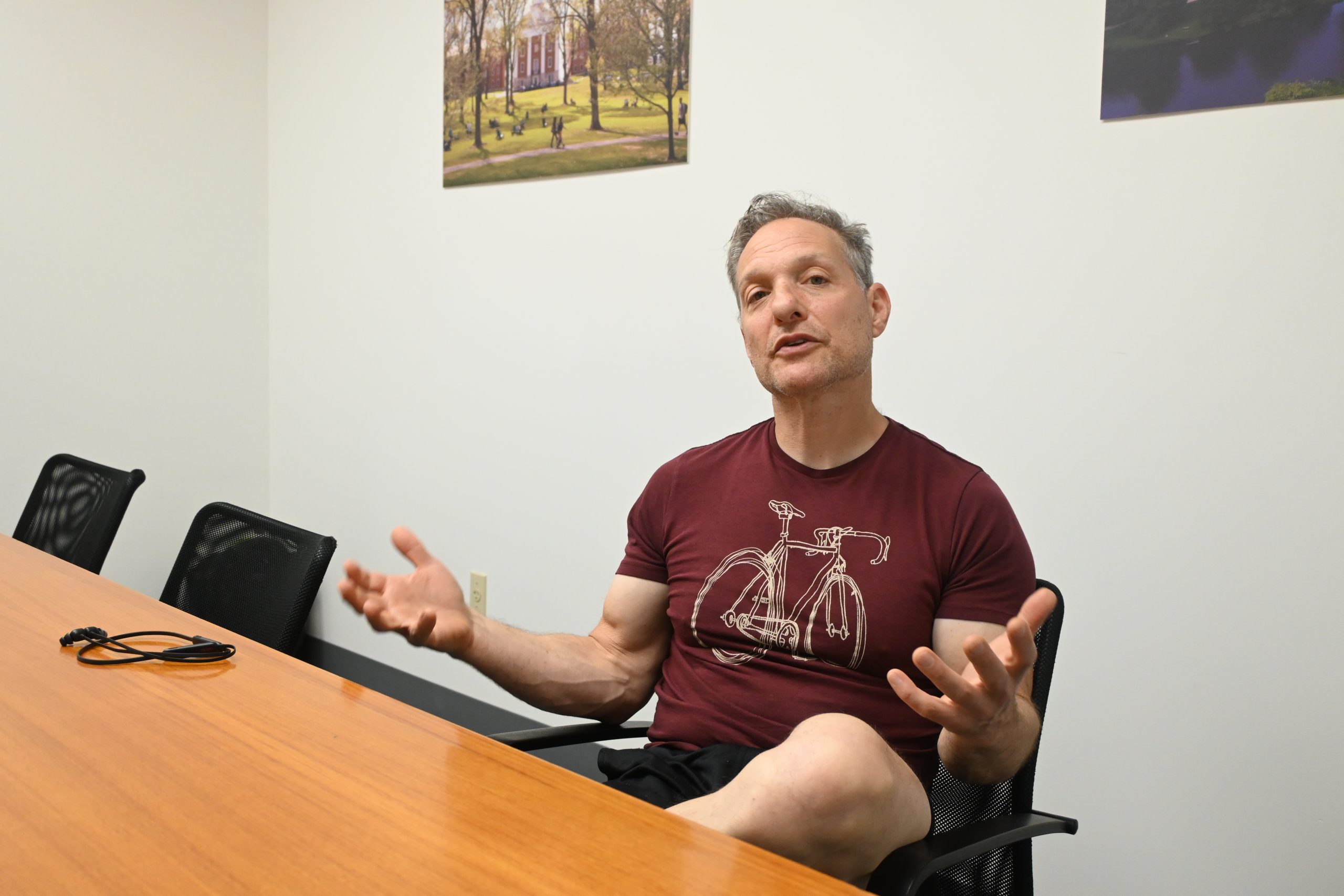
As the department works toward the city’s goal of reaching complete carbon neutrality for city operations by 2030 and a 2050 target for net zero carbon emissions citywide, CAPA Director Dr. Ben Weil sat down with the Gazette to discuss the city’s current and future climate infrastructure and energy projects.
Weil explained that the impacts of climate change, whether they are heat waves or flash flooding, are current and must be addressed on a municipal level sooner rather than later.
“We’re experiencing climate change right now — whether it’s the flash flooding that we have gotten, the amount of rain that falls in a short period of time now tends to be higher. We tend to get these higher bursts, and we don’t have the capacity to move all that water away from our buildings and off the streets at that speed,” Weil said. “We’ve got this thing really happening, and we’re not ready. That’s what we’re dealing with, so now that maybe is too much.”
This summer, heating and cooling infrastructure upgrades in the city’s school buildings remain one of CAPA’s most widespread projects, Weil said, as John F. Kennedy Middle School and Northampton High School are among the city’s highest energy users.
Last summer CAPA converted Leeds Elementary School’s steam heat system to a more efficient and Energy Recovery Ventilator, which provides fresh air while tempering the fresh air with outgoing air. The department also replaced one of the school’s steam boilers with a newer boiler it recovered from the city’s vacant 33 King St. property.
Stating that last summer’s project at Leeds halved the school’s energy consumption, Weil said CAPA plans to upgrade heating and cooling systems in Leeds’ 1990s wing this summer, as well as at the Jackson Street School and JFK Middle School.
“Depending on the year and how things worked, it’s either high school … or JFK Middle School that is the biggest user, one of the two,” he said. “If you take Smith Vocational together as one campus, it’s the biggest user, and then the elementary schools are all in there. All the top users are our schools, before you get down to any of the other buildings or properties or fleets — even our fleets and vehicles don’t compete, so that’s why we’ve got big projects in schools coming fast.”
The Ryan Road Elementary School solar project, in which the city plans to install enough solar power on the school’s roof to supply its entire energy usage, is expected to kick off this summer, along with the installation of a geothermal heating system at Northampton High School, which is expected to cost around $20 million.
Despite hefty costs, Weil explained that if the project can be financed over the course of 20 years, the new system’s expected energy savings will help the city gradually cut down the cost.
“It’s possible that something in that cost range could be essentially cost neutral over 20 years, so that’s the goal,” he said. “There are some things that start to pay back more, so if we can integrate solar onto the roof, we can use that and its payback to help us pay for the more expensive geothermal projects.”
Although Smith Vocational and Agricultural High School remains a quasi-private institution and largely falls out of CAPA’s scope of power, Weil said the school’s D Building is in dire need of repair. He said in the future, he hopes that CAPA will be able to assist with its repair or replacement.
Looking down the pipeline to the next five, 10 or 15 years, Weil said CAPA, alongside the city’s Central Services Department, is working to take an inventory of all municipally owned buildings and address their energy efficiency and best uses.
Weil said that the decision of whether to invest money and time into these projects largely depends on the priorities of the city and its residents. He explained that the city’s aging infrastructure calls into question whether it would be worth it to renovate and enhance the buildings.
The city’s Central Services Department, Weil said, is currently conducting a study on the uses of Northampton’s buildings to determine how, if at all, they can best be adapted for modern use.
“If you think about the municipal buildings as a group — City Hall, Memorial Hall, the Academy of Music, you kind of collect all these buildings, and they’re very old — some of them are historic, none of them are easy to bring down to net zero, and none of them are ideally suited to their current use,” he said. “It’s very hard to go fix a building when you think you might not want to use that building, so I’m hoping that we get good information from that study that can provide us some kind of consensus on what we want to do going forward and where to house all the different offices, how to make sure that the public has good access, in a convenient way, to all the city services and city offices.”
While energy-efficient buildings might bring the city closer to its carbon-neutral goal, Northampton’s street and transportation infrastructure plays a large role in clean energy infrastructure.
In an effort to maximize efficiency in the city’s fleet of roughly 40 light or medium-weight vehicles, Weil explained that CAPA is working with other city departments to create a pool of vehicles that can be used by all city departments.
Weil explained that the city also has made a substantial effort to invest in electric vehicles (EVs), such as Sprinter vans or electric bicycles.
Previously, every city department purchased their own vehicles independently. Weil said this led to inefficiency, as vehicles sat idle because departments were buying to meet occasional peak demands rather than daily needs. By establishing a shared municipal motor pool, the city can dramatically reduce its total vehicle count while still serving every department’s needs.
“Anything that can be an EV is an EV. It’s cheaper for us to get, it’s way cheaper and more convenient for us to operate,” he said. “We’re doing this turnover and we sold a few older vehicles to get rid of them and get some equity back out of them, but so we’re going to turn over the light and medium duty fleet with either EVs or much higher efficiency trucks,” Weil said.
While electric vehicles might be well-suited for DPW vehicles or lighter vans and cars, Weil noted that electric vehicle technology has not yet advanced to the extent that it would be more convenient in snow plows or larger vehicles, which often need to be able to rapidly re-fuel.
Even in private transportation, Weil said that he hopes to, in the future, help steer the city toward bicycle, E-bike, and pedestrian transportation. Creating bike lanes and paths, he said, can make people feel safer traveling by bicycle and might reduce car use.
“We need a bike system that is good for all ages and abilities, which means that you should be confident sending out your eight-year-old on a bike to go over to a friend’s house,” he said. “That whole vision is a part of our climate solution; It’s getting people to use, in this case, the streets, but use the landscape to get around to do the things that they want to do in a way that doesn’t require the combustion of a fuel.”
As climate change brings about an increase in extreme weather events, CAPA, Weil said, also seeks to invest in climate change-resilient infrastructure to mitigate flooding, and encourage large energy users in the city to convert to solar power or other renewable energy sources.
Rising electricity and gas costs, Weil said, will likely de-politicize the push for more affordable renewable energy.
“We’re technologically at a place where we never were before, where actually we have all the tools we need to win and be prepared for the climate that we’re just going to face and mitigate the worst of it,” he said. “We’re in this great position, no matter what the Trump administration does, they can’t stop it.”
Read the Original Article
This article was originally published by Daily Hampshire Gazette. Click below to read the full article on their website.
Visit Daily Hampshire Gazette