Roger Kirwood remembered as visionary who helped bring Northampton back to life
NORTHAMPTON — It was 1974. Main Street was boarded up. Apartments were empty. Very few businesses except for a few pop-ups lingered in the dead town, including a reportedly decrepit bar, Mike’s Tavern.
Then came an insurance salesman, Roger Kirwood. While working for Aetna in Springfield, he would pass by the shabby tavern for work. He saw the place as a diamond in the rough, convinced that with five colleges in a 10-mile radius he could succeed in Paradise City.
After moving into the space, the gamble paid off.
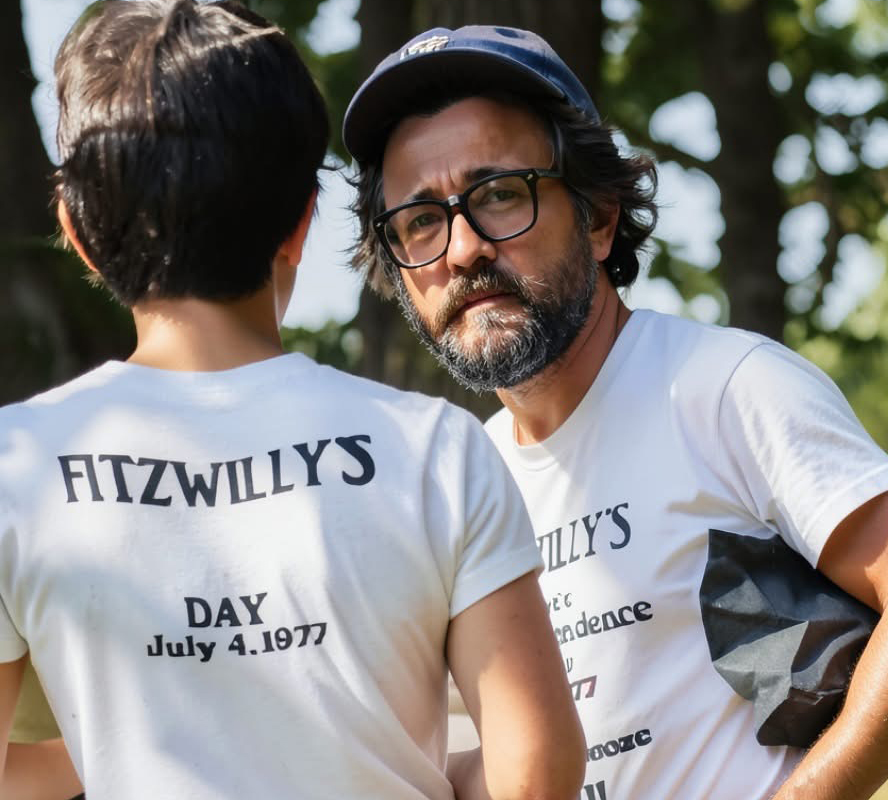
Kirwood, 87, the business visionary who ignited the renaissance of downtown Northampton, died May 22 in Orange, Connecticut, following a decade-long struggle with dementia. Those who knew the man are remembering his legacy more than 50 years after he founded Fitzwilly’s restaurant and bar on Main Street.
Kirwood, a.k.a. Captain Funn, didn’t just personally succeed after owning Fitzwilly’s for 14 years; he sparked a revival along the main artery of Northampton. Within a few years a slew of businesses would come to town, including Thornes Marketplace.
“He always pushed stuff to the edge, and that’s what the town needed,” said Bob McGovern, who opened the downtown bar Packard’s soon after Fitzwilly’s opened. “Fitzwilly’s was like the place to go on a Friday night.”
Owner of Arnold’s Meats Larry Katz gave a sense of how booming the place was. On a weekly basis, Kirwood rang up a grocery tab of $6,000.
“Sixty cases of cooked roast beef, 20 cases of corned beef, and 15 cases of cheesecake …” Katz said, rattling off the orders. Arnold’s, which has major contracts in the area such as UMass Amherst, doesn’t “even sell 60 cases of cooked roast beef now,” he said.
Within Fitzwilly’s, Kirwood drew inspiration from the vibe of TGI Friday’s fern bars for his vision, with the warmth of greenery, brass, copper and wood paneling.
Carpenter Paul Brit remembers walking by Mike’s Tavern in 1974. He saw a bunch of teenaged, long-haired hippies tearing down plaster in the place. After renovation, the ceiling was sprayed black, brand new carpet was installed, church pews were brought in, and Grateful Dead tracks began blaring from a new sound system.
“It took off — whamo! — this place was wild,” said Brit. From Fitzwilly’s opening night people crammed into the 16-foot-wide, hallway-like space before Kirwood expanded, he said.
“This is like New York City,” was Brit’s reaction. “You didn’t see stuff like that.”
Brit was the owner of Rumpelstiltskins, an antique shop which is now Bread Euphoria in Williamsburg. Kirwood collected tons of knickknacks that still fill Fitzwilly’s, many of them from the now-extinct Danbury Fair in Connecticut.
But Kirwood also got a few things off Brit, including a sign that used to hang at the Look Park pool before it closed that read, “No swimsuits allowed in the luncheonette.” A painting of “Captain Funn,” still hangs in the restaurant.
While the interior featured predominantly wood accents, one part of the floor was slate. This was where Kirwood’s parrot, Tom, would hang out. When his widow, Lucia, spoke to the Gazette by phone last week, Tom, now 45, could be heard in the background.
Kirwood invented the term “hospitalitarian” to describe himself as more than simply another restaurateur. And he had a few rules for hospitality.
One: Don’t prep cherry tomatoes. Rather, cut them fresh before a salad goes out because no customer wants a limp tomato. It was also drilled into employees that towels had to be clean, perfectly folded, and bathrooms had to be in pristine shape.
“If the napkins are messed up, the customers see that, and they’re sitting there thinking, ‘if the napkins are messed up, what does the kitchen look like?’” Kirwood said in a Gazette interview in 1984.
Life in the fast lane, whether in partying or in business, was the Kirwood way. And the secret to his success was his magnetic personality and loyalty. Kirwood not only inspired businesses downtown, but he also motivated many people to more seriously pursue their own passions, many of those interviewed shared.
Kirwood set up four Fitzwilly’s restaurants, three of them in Connecticut. The Northampton Fitzwilly’s is the only one surviving.
In addition to trips to Martha’s Vineyard or Block Island, Kirwood would fly between his businesses on his private airplane. Above Fitzwilly’s, Kirwood set up a penthouse where he would host parties. The rooftop, which had a hot tub and a sauna, featured views stretching down Bridge and Main streets.
Lucia Kirwood believes her late husband would want to be remembered as a leader. Kirwood admired Ted Turner, the founder of CNN. Turner’s quote, “Lead, follow, or get out of the way,” was his favorite.
“He was a visionary. He knew people. He knew how to read people,” said Fred Gohr, who is now retired in Florida after selling Fitzwilly’s in 2025. “He was a wonderful man, my mentor.”
A culinary school graduate in the ’70s, Gohr became Kirkwood’s successor as owner in 1988. He began working for Kirwood in Connecticut before becoming a manager in Northampton.
“He was as serious about business as anyone I ever met,” Gohr said.
Laura Radwell, an Easthampton-based artist who was Kirwood’s personal assistant for five years, did hand-drawn calligraphy menus for Fitzwilly’s.
“He was very generous, very kind,” she said about Kirwood. “He made me feel very respected for all my talents.”
Working for Kirwood meant being part of a very high-energy environment. “Make it happen,” was a typical Kirwood mindset, she said. Radwell also described him as wild, woolly and ambitious.
Radwell said he gave her skills that she used throughout her career. She later founded Radwell Communication by Design, an advertising firm, and also worked as a restaurant consultant.
“I took away a tremendous number of skills,” she said. “I think that he dared to dream, he persevered and he was self-confident. It made a difference in my ability to have a vision.”
Katz, of Arnold’s Meats, emphasized Kirwood’s loyalty. He said Kirwood would shoo away salesmen offering cheaper prices. He also mentioned that working with Fitzwilly’s led to his business’s growth.
“He made our company,” said Katz.
McGovern, of Packard’s, reminisced that Kirwood was never a competitor and always a friend.
But during a eulogy, he staged a phone call with the pope, who, according to the joke, said Kirwood did not make it as a saint. “Roger — he didn’t have a shot,” said McGovern.
Kirwood grew up in the Bronx, New York, and moved some 10 times before graduating high school in Scituate.
Lucia Kirwood attributes her husband’s personality to two things: constantly moving and his mom. Kirwood’s mother was a social butterfly, she said.
Moving so much meant that Kirwood grew up needing to either socialize or be alienated.
As a father, Lucia Kirwood described him as “Mr. Mom.” He would make their sons’ lunches and considered no act of service beneath him, she said.
Despite being the life of any party, she said Kirwood’s last decade was extraordinarily different while he suffered from dementia. She took care of him until he needed assistance in a nursing home.
Read the Original Article
This article was originally published by Daily Hampshire Gazette. Click below to read the full article on their website.
Visit Daily Hampshire Gazette