
Springfield cold case solved: DNA names suspect in 1995 killing
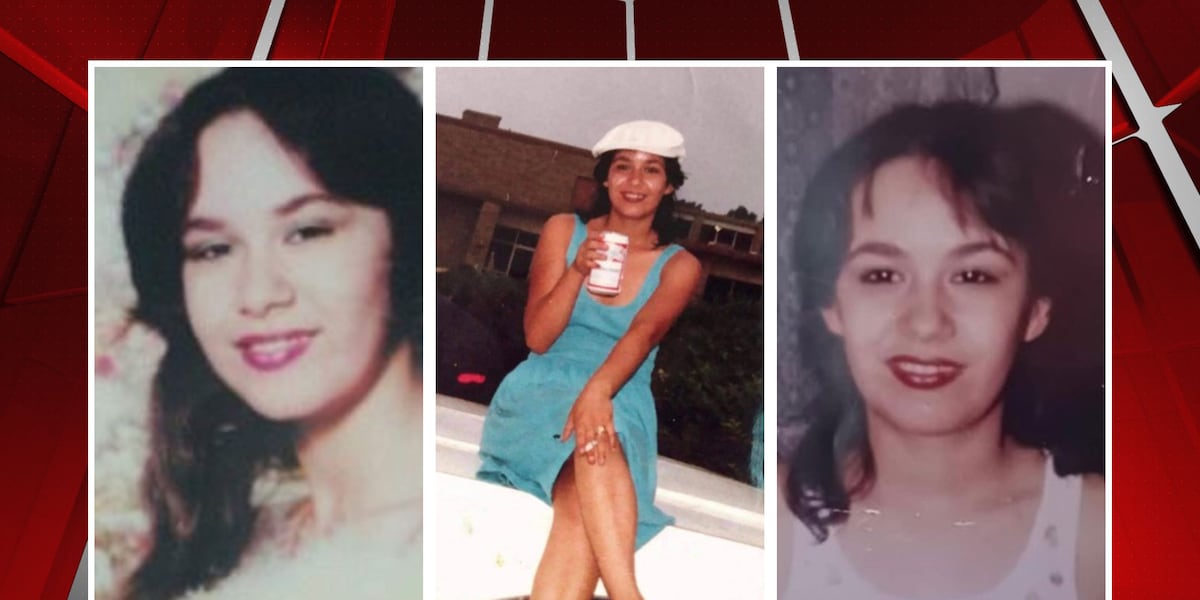
SPRINGFIELD, MA (WGGB/WSHM) – Hampden District Attorney Anthony Gulluni said Wednesday that evidence indicates Joseph Ceravolo Jr. killed 24-year-old Celestina Perez on June 2, 1995. Ceravolo died of natural causes in 2013 at the age of 50, and Gulluni said that if he were alive today, a murder charge would be filed.
On the morning of June 2, 1995, two men walking through Gurdon Bill Park in Springfield discovered Perez’s body in a ravine near Genesee and Warwick Streets. Evidence collected at the scene indicated a violent struggle began near the top of the ravine and continued down the slope. Perez, a mother of four, was dragged to where her body was found.
Investigators documented and collected evidence including blood on twigs, foliage, and dirt on the slope, buttons believed to have come from Perez’s blouse, and her right shoe, found on a path approximately four feet from her body. An autopsy determined Perez died of asphyxiation caused by manual strangulation and blunt-force trauma to the head. Her death was ruled a homicide.
Despite interviews with Perez’s family, friends, and those who had been with her in the hours before her death — along with a neighborhood canvassing and a review of available leads — authorities were unable to identify her killer.
Over the last two years, the D.A.’s Unresolved and Unidentified Case Investigation Unit identified Perez’s case as one that could benefit from renewed investigative work and advances in DNA testing. Because blood evidence collected in 1995 suggested the suspect may have injured themselves during the attack, investigators considered preserved bloodstains on Perez’s clothing significant.
“That made the preserved bloodstains on her clothing particularly significant when the case was reexamined,” said Payton North, spokesperson for the D.A.’s office.
Earlier forensic testing had focused on swabs collected during the autopsy. A 2009 examination of that evidence did not yield sufficient DNA, and no additional testing was conducted at that time.
Investigators requested retesting of Perez’s preserved clothing. Work by the Massachusetts State Police Crime Laboratory detected blood on her underwear and developed a major male DNA profile suitable for entry into the Combined DNA Index System (CODIS). That profile — which excludes an estimated 99.99 percent of the population — reportedly matched Ceravolo, who was 32 years old and living in Springfield at the time of Perez’s death.
Gulluni then authorized independent testing by DNA Labs International. A separate bloodstain on a different area of Perez’s underwear produced the same major male DNA profile.
“The probability that an unrelated person selected at random would be included as a contributor to that profile was approximately one in 130 million,” North added.
Ceravolo also could not be excluded as a contributor to a DNA mixture developed from another bloodstain on the outside pocket of Perez’s jeans.
The renewed investigation also found that Ceravolo lived within a short walk of the park in 1995 and was not incarcerated or known to be in a hospital or treatment facility when Perez was killed.
“The investigation also documented a history of assaultive behavior, including a violent domestic assault committed weeks after Perez’s death that resulted in his arrest, prosecution, and conviction,” North said.
Because Ceravolo is dead, no arrest or prosecution is possible. Gulluni said he directed investigators to continue their work and seek independent forensic confirmation before concluding that the homicide investigation into Perez’s death is officially closed.
“Even when a suspect cannot be prosecuted, we have an ethical obligation to the victim’s family, to the public, and to the person identified to ensure that our conclusion rests on a thorough investigation and reliable evidence,” Gulluni said. “Because Ceravolo is deceased, there can be no courtroom verdict. That is a painful limitation, and it is not the outcome Celestina or her family deserves, but there is now an answer. There is no longer any mystery and, after 31 years, the murder of Celestina Perez is no longer unresolved.”
Before releasing his findings Wednesday, Gulluni and investigators met with Perez’s family. Her nephew, Jose Reyes, issued a statement on behalf of the family.
“Today, my family closes a chapter that has remained open for 31 years. During all this time, we lived with questions, pain, uncertainty. We never stopped remembering our dear Celestina, our aunt, our sister, our mother, our friend and we never stopped hoping that, one day, the truth would come to light,” Reyes said. “Today, that day has arrived. Although nothing can bring her back to us, erase the suffering we have lived, or deliver the full accountability in court that should have happened years ago, knowing the truth allows us to take a final step towards justice and begin to find a little peace.”
In speaking of efforts of local and state investigators, past and present, to try and solve Perez’s case, Gulluni noted: “This case and the conclusion we reached validates why we do this work. Why we dedicate days, weeks, months, and years to these victims and their cases and the justice they so deserve…Celestina Perez was a mother, a daughter, a sister, and an aunt. She was loved. Her life mattered. Today, after 31 years, we can finally say that the person responsible for taking her life has been identified. This is why we never forget. Why we never quit.”
Copyright 2026 Western Mass News (WGGB/WSHM). All rights reserved.
Read the Original Article
This article was originally published by Western Mass News. Click below to read the full article on their website.
Visit Western Mass News