
Speaking of Nature: Rendezvousing with the wren family: Revisiting my noisy, adorable backyard neighbors for a nest update
I received a lot of positive feedback on my last house wren column and I thought that it might be fun to revisit the little family and give you an update on their progress. It also happens, quite randomly, that house wrens have been a regular topic of conversation among my colleagues at work. There seems to be general agreement on two points regarding house wrens: first, they are very cute, and second, they are very noisy. If you know anything about house wrens, then you will have to acknowledge that both are true.
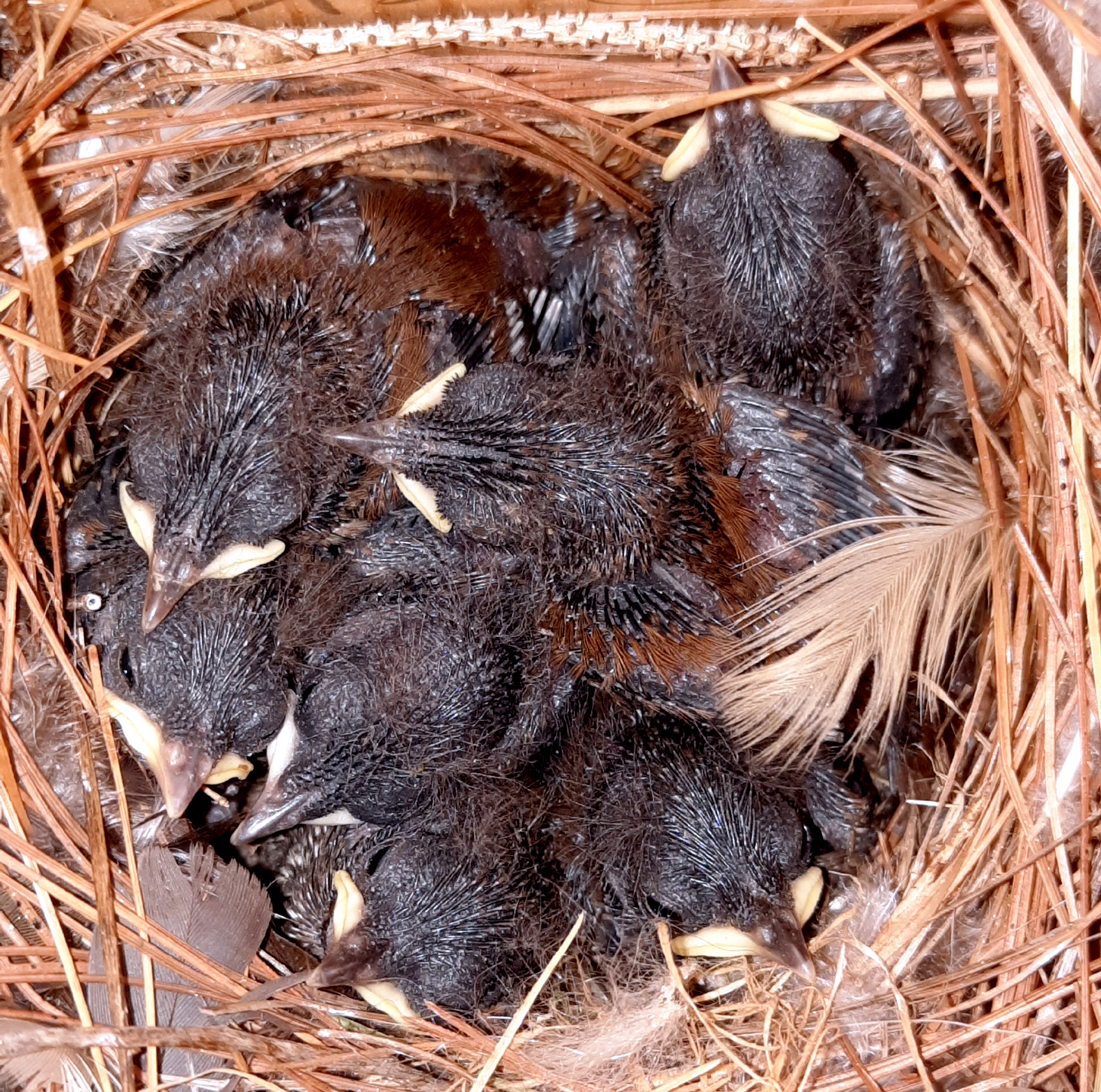
First, let’s check in on on the pair of wrens that are nesting in that new box that I designed. When last I wrote about this adorable couple, they were happily tucked into their new home and they had an impressive clutch of seven shiny brown eggs. Since that last column, the eggs have hatched and the nest is now filled with seven tiny chicks. This has resulted in a noticeable change in the behavior of the adults. While the warm weather previously allowed the female to take occasional breaks from incubation, she has now moved into an exceptionally vigilant period of guard duty.
The nest box is attached to a white pine that is on the north side of my garage. If I walk over to that side of the house now, I notice something a little different. Where I once could easily see the dark circle that is the 1-inch diameter entrance hole, I now see a rather uniform brown surface. Where did the entrance hole go? Well, it is still there, but an adult is always plugging up the entrance like a little cork.
When I approach the nesting site, I eventually reach a point where I can distinguish bird from box. I am also met with a withering glare of the utmost contempt. In situations like this, I will generally turn around, reposition myself near the corner of the garage and wait for a moment when the adult birds are occupied with their efforts to gather food for their tiny brood. Once an opening is available, I will walk over and take a peek in the box. The last time that I did this I managed to take a quick snapshot of the nest, now filled with chicks.
However, the moment was incredibly brief; the ever-vigilant adults swooped in and gave me quite an earful. They were not pleased in the slightest that I was anywhere near their little family, making quite a fuss over my presence.
Because I don’t want to cause the wrens any undue stress, I make my visits infrequent and brief. Yet, even after I retreated back to my garage, the male was on full territorial-defense mode and he sang his guts out for the next five minutes or so. This brings me to the unique song of the house wren.
Sounding like a staccato burst of chipping and chattering, the house wren’s song is easily identifiable and remarkably loud. How such a tiny bird — adults average a body length of 4 to 5 inches, a wingspan of 6 inches, and a weight of a mere 0.4 ounces — can generate so much noise is a mystery to me. Some adult birds, like blue jays, can be extremely loud, while others, like Savannah sparrows, are ridiculously quiet. One might naturally assume that larger birds make louder noises, but this notion is turned on its ear where house wrens are concerned. You might not always see them, but you will always hear an adult male if he is in the neighborhood.
House wrens are insectivorous birds, which means that they spend most of their time looking for small insects and larvae to feast upon. When a female is sitting on eggs, the male will have to work hard to provide enough food for himself and his mate. When the eggs first hatch, the male will have to up his game a little, bringing tiny insects to his hungry chicks. As the chicks grow, it will become necessary for both adults to search for food. There may come a moment when food deliveries are made every two to three minutes from sunup to sundown.
Utter mayhem erupts when the chicks finally fledge from the nest because there is no order or organization to their movements. They disperse and the parents now have to locate their offspring in an attempt to feed them. At some point, the female will start the process of setting up shop in a new nest. I find it very surprising that the females often take up with new males at the same time. House wrens do not appear to form attachments that are durable. Even if a second nest is attempted with the same male, the pair will part ways at the end of the summer and start over with new mates the following year.
The chicks of all passerine birds grow at an astounding speed and by the time this story is published the little wrens may already have fledged. I will try to get one last photo of the baby birds before they leave the nest, but I won’t bother them once they are fully feathered. My goal is to get a photo of them with their eyes open, but with only the beginnings of feathers showing. If you think that I should run one last story about my House wrens, then let me know via email. If you’ve had enough of the wrens and would like to request a different topic, then let me know via email. There really isn’t a wrong answer when the natural world is involved.
Bill Danielson has been a professional writer and nature photographer for 28 years. He has worked for the National Park Service, the US Forest Service, the Nature Conservancy and the Massachusetts State Parks and he currently teaches high school biology and physics. For more information visit www.speakingofnature.com, Speaking of Nature on Facebook, or the Speaking of Nature Podcast.
Read the Original Article
This article was originally published by Daily Hampshire Gazette. Click below to read the full article on their website.
Visit Daily Hampshire Gazette