
As Democratic Socialists gain ground nationally, a local chapter is growing too
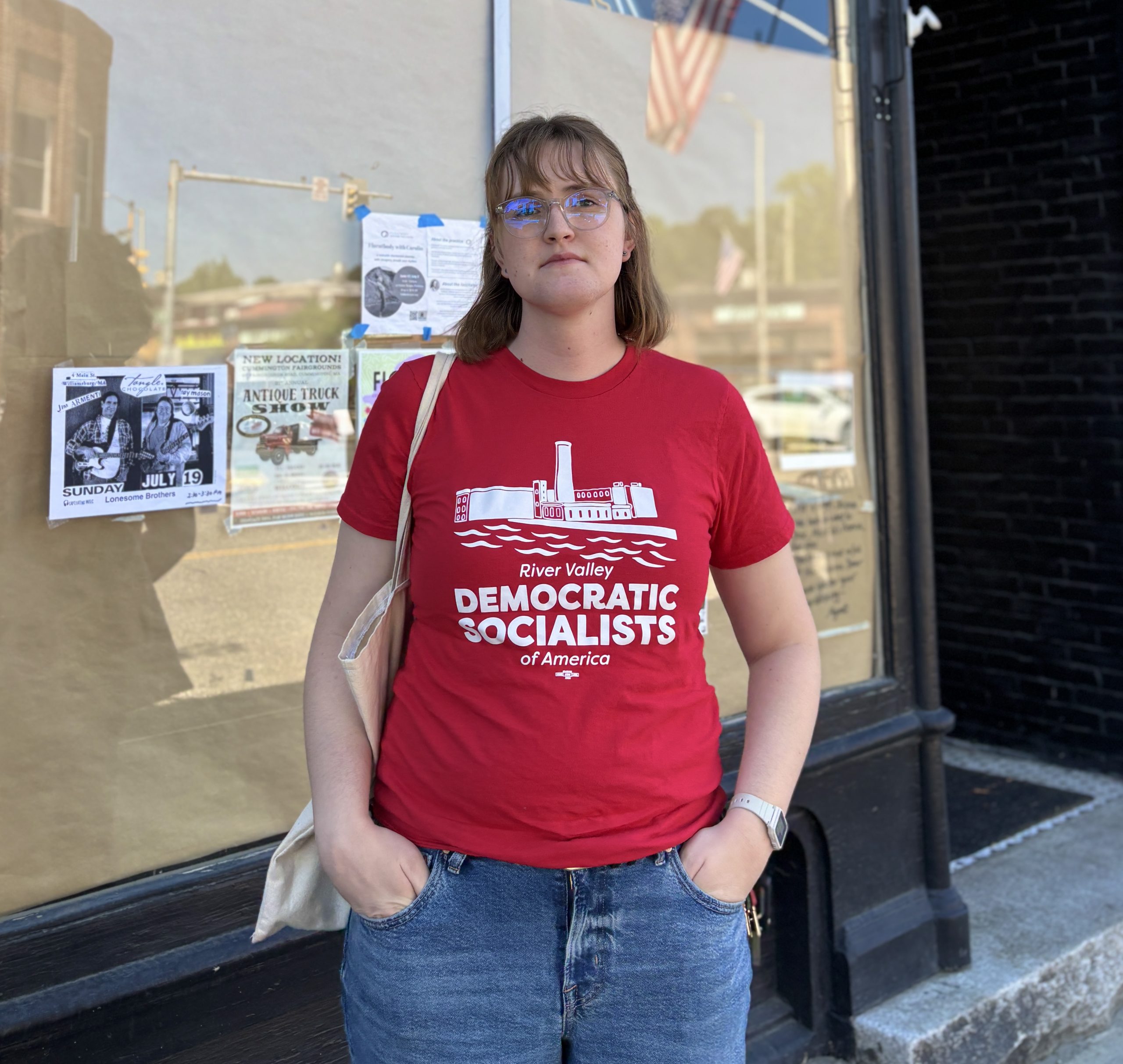
Democratic socialist Sasha Morsmith doesn’t see much of a distinction between Democrats and Republicans. For her, they are the “two capitalist parties.”
And increasingly, she is not alone.
As co-chair of the River Valley Democratic Socialists of America (RVDSA), which spans Hampshire, Franklin and Hampden counties, she has watched the organization gain traction, especially in recent months.
The local chapter, founded in 2017, has grown from about 300 members at the start of 2025 to 500 members, including 30 new members in the last month alone.
This surge has been accompanied by more DSA candidates in local elections, and some of them have gained seats. Jill Brevik won a spot on the Town Council in Amherst, and Tom Hendrickson was reelected to the Agawam City Council.
During the last election season in Northampton, two DSA candidates were on the ballot but lost. Niko Letendre-Cahillane ran for City Council in Ward 1 and Will O’Dwyer ran for an at-large seat. According to Morsmith, they didn’t have the time to fully introduce their platforms to voters.
And this is also far from a local springtime for the DSA, as Democratic Socialist candidates gain popularity around the country.
In mayoral races within the past year, Zohran Mamdani toppled Andrew Cuomo, the scion of a political dynasty, on his way to becoming New York City mayor. Katie Wilson won an upset victory to lead Seattle last fall. And this month, Nithya Raman clinched a spot in the November runoff against Los Angeles Mayor Karen Bass.
In Colorado, Melat Kiros, a Democratic Socialist, unseated Diana DeGette, the long-serving U.S. representative, in the state’s deep-blue first congressional district, centered on Denver. Pennsylvania Democrats picked Chris Rabb, a progressive state representative, as the party’s candidate for its third congressional district.
“DSA is a political home for those who truly believe that a better future is possible,” said RVDSA co-chair Adrien Rescia. “We are working towards a world with free healthcare, affordable housing, and where people are empowered to live a life they are proud of without needing to work a 60-hour work week just to put food on the table.”
Morsmith has spent the past decade organizing, first serving as president of a grocery store union in Burlington, Vermont, then participating in pro-Palestinian advocacy while in college before joining DSA after moving to western Massachusetts in 2022.
While the organization supports union campaigns and other social movements, Morsmith said its primary focus when canvassing is talking directly with voters about economic issues.
“We’re talking about how people have been left behind by the capitalist parties, and we are trying to build an alternative that’s based on expanding democracy for working-class people,” she said. “That’s based on having a society that meets the needs of its people, especially its most vulnerable populations, instead of protecting the wealthy as they enrich themselves off the labor of working-class people.”
The chapter has also canvassed against statewide ballot proposals it says would reduce funding for public services. This includes a proposed reduction of the state income tax rate from 5% to 4%, which would reduce state revenues by about $5 billion annually. That proposal was struck down by the Massachusetts Supreme Judicial Court.
If state revenues decline, Morsmith said local communities could bear much of the brunt. She assumes that there would be cuts to funding for road repairs, fewer grants for infrastructure improvements for towns, and cuts to services such as healthcare programs, housing assistance and education.
“Obviously we don’t know what decisions the state legislature will make, but based on past austerity moments, that’s kind of what we anticipate,” she said.
Rescia said that the “egregious acts” of the Republican-led Trump administration have certainly ignited more followers to DSA.
But Democrats are not off the hook.
Morsmith criticized Democratic elected officials, arguing that the party often fails to enact policies they campaign on.
“Democratic politicians often will say the right thing and then they do something different. When they’re talking to a working-class voter, they’ll talk about affordability or the cost of healthcare. But then when they’re actually in power, they’re finding excuses not to pass things like Medicare For All or other policies that will benefit working-class people,” she said. “They have a different message when they’re talking to their wealthiest donors.”
Morsmith said Democratic Socialist candidates reject political action committee money and donations from special interest groups.
“I see one of the core differences as accountability, and the other core difference is our long-term vision of the society we want to build,” she said.
That vision, Morsmith said, includes greater worker control over workplaces, stronger unions and limiting corporate influence in government.
Looking ahead, Morsmith said the chapter plans to continue expanding its membership and organizing efforts.
“I think I would highlight that DSA is an organization that anyone can join and get involved in. We are not a staff-driven organization. Nobody in the local chapter is getting paid to do the work that we do,” she said. “We believe that more and more people need to be involved in the political process because we’re never going to have the money to compete with established politicians. But we’re seeing around the country that through mass participation, we can still win.”
Reporting from the Associated Press was used in this story.
Read the Original Article
This article was originally published by Daily Hampshire Gazette. Click below to read the full article on their website.
Visit Daily Hampshire Gazette