Columnist Rev. Andrea Ayvazian: Ideas for healing divisions and finding common ground
In the spring of 1970, I was a first-year student at Oberlin College in Ohio, and the campus was consumed by protests against the Vietnam War when a group of campus anti-war activists received an unusual invitation from a minister in Elyria, a working class city adjacent to Oberlin: would we be willing to meet with members of her congregation, most of whom supported the war.
The pastor said that she had heard comments critical of the Oberlin students who spent so much time marching, protesting, and holding teach-ins against the war. She said that the criticism of the college students was hard for her to hear, and she wondered if a group of us might come to her church for a workshop that she would lead, to see if the two opposing sides could find some common ground.
After meeting and debating whether this was a good idea or not, a group of us agreed to go to the church and participate in the workshop.
I remember it well. First, the pastor asked us agree to some ground rules: no raising our voices; no trying to persuade or convince other people of your position; speak from your own experience; and no walking out.
There were many exercises. The one I remember most vividly involved the pastor inviting those who chose to line up facing one another — those who supported the war on one side, those who opposed the war on the other.
While we were facing someone with whom we did not agree, the pastor gave these instructions: each one of you, in turn, tell the other person something you appreciate about them.
At first there was silence. Then we did exactly that. “I appreciate that you are passionate about your beliefs,” people said. “I appreciate that you have listened deeply today.”
Then we were told to tell the other person something we had learned from them that day. “I learned that you are a local firefighter and you admire people who are willing to sacrifice for their community,” I said to my partner.
After a long afternoon together, the pastor surprised everyone and said, “You do not expect this next part, and you can opt out of this invitation. But I want you to know that we have dinner being brought to the church in minutes and everyone is invited to stay for a delicious supper together.”
My friends and I stayed. We scattered among the church members, and we talked, and even laughed. It is hard to fight with people you are having dinner with.
This experience has been very much on my mind lately as I think about the bitter feelings generated by the recent municipal elections, and I have heard from many friends about their distress. I was further reminded of that time at Oberlin when a local friend called me and said, “Andrea, our city is so divided. There is so much anger, so much finger-pointing; it’s like we have two opposing sides in this place that we love. Do you have any good ideas about how we might mend the torn fabric of our community?”
I told her that I did not have any great ideas. But I said that I would talk to friends and colleagues and ask for their suggestions.
For days after the election, I talked to people on Main Street, folks at my gym, diners at local cafes, and those browsing books at the library. I asked them if they had any ideas for helping to help repair the divisions in our city that became so evident in the recent election.
The people I spoke to had some great ideas.
What follows is a listing of some of the suggestions I heard. Thank you to the good souls who engaged with me and offered these recommendations for mending the polarization that exists in our city today.
These are all good ideas. Maybe we could organize one, two, or all seven of them.
I do not have the answer to how we can mend, repair, and heal the fractures in our community at this time. I know the divisions are there, and I know they are serious. I also believe that if we want to be a united city that moves forward with positive energy and mutual respect, we need some gatherings, listening sessions, town hall and ward meetings— whatever — to break through the us vs. them divide.
I know that for me, a workshop decades ago in Elyria, Ohio, made a huge impact on my thinking when a group of people with wildly opposing views struggled together to find common ground.
Northampton, let’s keep thinking about ways to listen deeply to one another, and move forward as partners toward our shared goal of caring for the good people in this vibrant city, and creating a healthy and mutually supportive community.
Let’s make some of these good ideas happen.
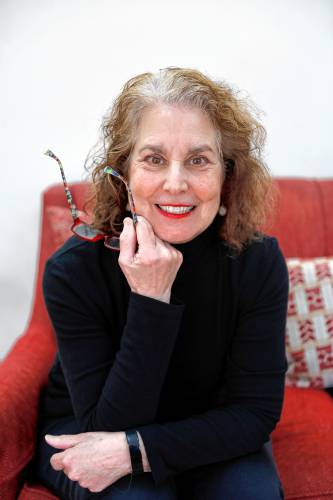
The Rev. Andrea Ayvazian, Ministerial Team, Alden Baptist Church, Springfield, is also founder and director of the Sojourner Truth School for Social Change Leadership.
Read the Original Article
This article was originally published by Daily Hampshire Gazette. Click below to read the full article on their website.
Visit Daily Hampshire Gazette