
One pro, lots of cons; Trump's proposed 50-year mortgage explained
PITTSFIELD — Earlier this week, President Donald Trump floated a new solution to the housing crisis: a 50-year mortgage. While it could potentially lower monthly payments, it also could leave homeowners in a race between paying off the loan and death.
The announcement came over Trump's social media app, Truth Social, in the form of an image depicting the words "30-year mortgage" over the late Franklin D. Roosevelt's portrait. Next to Roosevelt was a picture of Trump, with the words "50-year mortgage" above his head, hinting at a possible lengthening of mortgage terms.
A 50-year mortgage comes with lower monthly payments. But the length of the loan means massive increases in interest payments, slower-building equity and a loan that might outlive the lender.
Plus, the ability for the mortgage help ease housing is debatable at best. And all of that depends on whether a 50-year mortgage could be actualized.
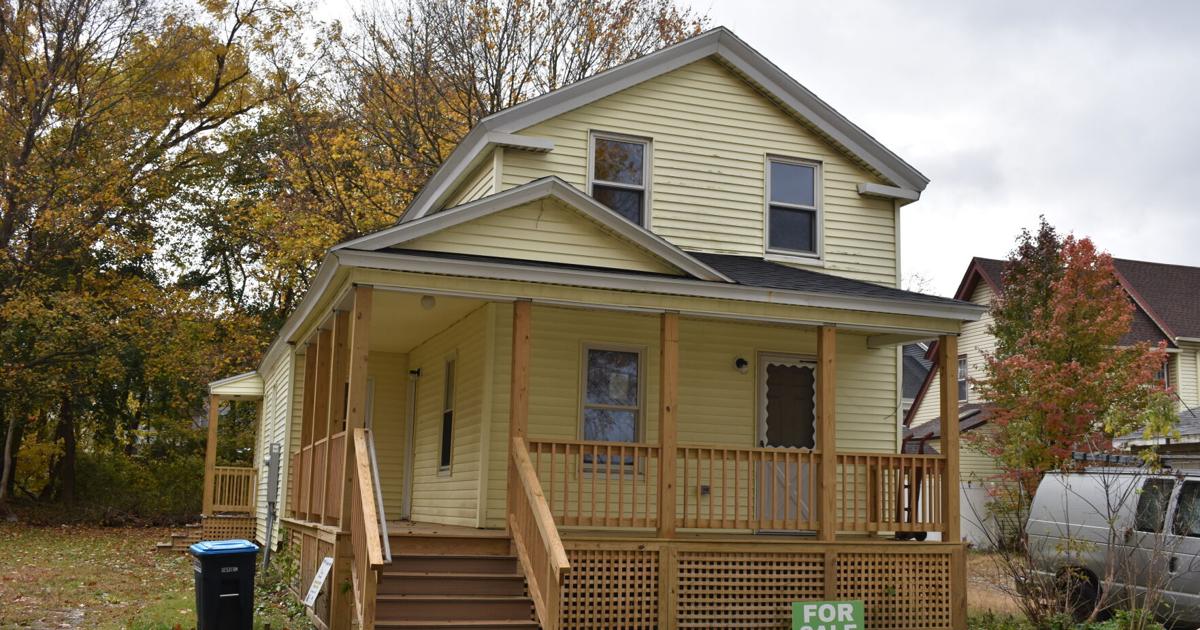
A home at 17 S. Church St., which was renovated by West Side Legends and is now listed for sale, had its first open house Oct. 28.
The upside of a 50-year mortgage is simple: lower monthly payments, hopefully enough to open homeownership to more people.
In the Trump administration, some — like Bill Pulte, the director of the Federal Housing Finance Agency — see it as "a complete game changer." A sentiment he posted to his X account.
Local banks see the thought process behind the move too.
"Pursuing the 50-year mortgage is really an attempt to give more people access to homeownership," said Chuck Leach, the president and CEO of Lee Bank.
"But I really don't think ultimately it's a very responsible solution," he said.
A lot of problems arise when lengthening the mortgage term to 50 years.
Notably, "the amount of total interest that person would pay to a bank or some other financial institution would be double," Leach said.
Take a first-time homebuyer looking for a home in Berkshire County.
The average price is around $500,000. A first-time homebuyer puts down, on average, around 10 percent and would have an interest rate of 6.25 percent.
A person using a 30-year mortgage on this home would pay $547,461 in interest.
Using a 50-year mortgage to purchase the same home, the buyer would pay more than $1 million in interest alone.
That scenario assumes the interest rates would be the same on both loans, but rates increase with duration of the loan.
"It's called duration risk," Leach said. "And in any sort of financing arrangement or any debt, the longer you go out, in theory, the rate should go higher."
Another issue with the loan is the length itself.
The median age of the first-time homebuyer is now 40, and the life expectancy for an American is 80.
This means a 50-year loan outlives its average borrower by 10 years. Meaning if an average person were to buy a home using this loan, they would die before ever actually owning their home.
"I can really only think of the negatives," Leach said. "It's just not sound financial management."
Although the 50-year mortgage would burden an individual with a larger amount interest paid and follow them for life, could the mortgage help the housing landscape as a whole?
"It doesn't really treat the root problem in any way, shape or form," Leach said.
Looking locally, many issues in the housing sphere derive from the stock, including affordability. Homes are still in hot demand, driving prices up, pushing homeownership out of reach for many first-time homebuyers.
"I think arguably, it perpetuates the problem because people are going to feel that they're going to afford more, which means listing prices stay elevated," Leach said.
A sign shows that a home has been sold.
Of course, this all depends on the realization of the 50-year mortgage, which has some hoops to get through.
Under the Dodd-Frank Act — which came in the wake of the 2008 financial crisis — any mortgage longer than 30 years doesn't fall under the definition of a qualified mortgage, meaning Fannie Mae and Freddie Mac can't buy the loans.
Fannie and Freddie are an essential part of the mortgage process, backing around 70 percent of homes, according to The New York Times.
And without significant policy change — which could take upward of a year to implement — many banks wouldn't support 50-year mortgages, wrote Jaret Seiberg, a housing policy analyst at TD Cowen, which was reported by The Washington Post.
As of now, the 50-year mortgages are still just an idea floated on Truth Social. If they do come to fruition, the length and interest of the mortgage heavily burden the individual without having a larger impact on the housing crisis.
The mortgage isn't addressing the root of the crisis, Leach said, it's "playing around with financing tricks to make the payment more affordable."
Read the Original Article
This article was originally published by Berkshire Eagle. Click below to read the full article on their website.
Visit Berkshire Eagle